Emergencies
Leaking Toilet at the Base: Causes and Fixes
Water pooling around your toilet base? Learn the common causes, how to tell them apart, and what to do before floor damage sets in.
Published 1 July 2026
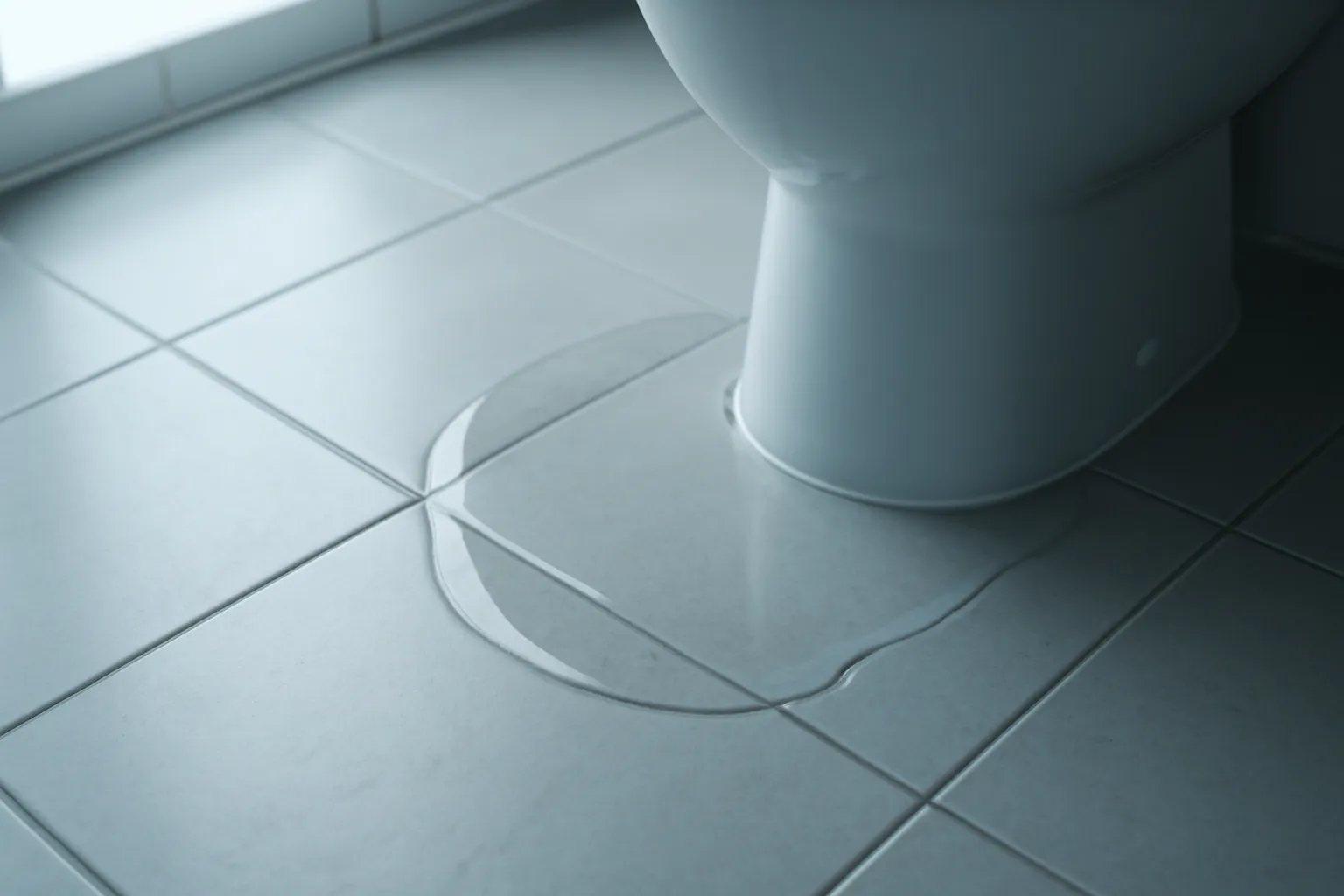
Finding water pooling around the bottom of your toilet is one of those problems that is easy to ignore — until the floor underneath starts to rot or the ceiling below begins to stain. Act promptly and you will almost certainly save yourself a much bigger repair bill.
This guide walks you through the most likely causes, how to identify which one you are dealing with, and what you can safely do yourself before a plumber arrives.
Why Is Water Appearing Around the Toilet Base?
There are three main culprits. They can look identical from the outside but have very different fixes.
1. A Failed Wax or Foam Seal (Pan-to-Floor Joint)
The toilet pan sits on a wax ring or foam seal that creates a watertight connection between the pan outlet and the soil pipe in the floor. Over time — or if the toilet has ever rocked slightly — this seal compresses, cracks, or shifts out of position.
Signs it is the seal:
- Water appears only when the toilet is flushed
- There may be a faint sewage smell at floor level
- The toilet wobbles even slightly when you sit on it
This is the most common cause of a toilet leaking at the base and requires the toilet to be lifted and the seal replaced.
2. A Loose or Leaking Water Supply Connection
The flexible supply hose connects the cistern or the wall stop-tap to the toilet. If this fitting is loose or the hose itself has split, water can run down the outside of the cistern and collect at the base, making it look as though the leak is coming from the floor joint.
Signs it is the supply connection:
- Water appears constantly, not just when flushing
- You can see dampness on the hose or at the fitting when you look closely
- Tightening the supply nut by hand (not overtightening) sometimes stops it immediately
This is often the easiest fix: a new flexible hose costs a few pounds and can be swapped without moving the toilet.
3. A Cracked Toilet Pan
Porcelain can crack from impact, from age, or from overtightened fixing bolts. A crack in the pan body or base will allow water to seep out with every flush.
Signs it is a cracked pan:
- You can see a visible hairline crack, often near the base or the fixing points
- The leak is localised to one spot rather than spreading evenly
- Drying the pan completely and flushing reveals exactly where water emerges
A cracked pan cannot be permanently repaired — the toilet will need replacing.
How to Check Which Problem You Have
- Dry the floor thoroughly with old towels.
- Check the supply hose first — run your hand along it and look for drips.
- Flush the toilet and watch where water first appears. If it comes from the base immediately after flushing, the seal or pan is the likely cause.
- Gently press down on the toilet rim — any rocking movement points strongly to a failed floor seal.
- Inspect the pan with a torch for cracks, especially around the fixing bolt holes.
What You Can Do Right Now
- Turn off the water supply to the toilet using the isolation valve on the supply pipe (a flat-head screwdriver slot, turned 90°). This limits further water damage.
- Mop up standing water as quickly as possible. Water sitting on a timber floor can cause serious structural damage within hours.
- Do not use the toilet until the source of the leak is confirmed. If the seal has failed, flushing is pushing waste water under your floor.
- Place old towels or a tray around the base to catch any remaining seepage.
When to Call a Plumber
If the supply hose is the culprit and you are comfortable replacing it, that is a reasonable DIY task. Everything else — lifting the pan, replacing the floor seal, or fitting a new toilet — involves disconnecting the soil pipe and carries a real risk of making things worse if done incorrectly.
You should call us straight away if:
- The floor feels soft or spongy around the toilet (structural damage may already be occurring)
- There is a sewage smell, indicating the soil pipe seal has failed
- The pan is cracked
- You cannot locate or operate the isolation valve
- The leak is severe or getting worse
Worried About Floor Damage?
Water and timber subfloors are a bad combination. Even a slow leak that has been present for a few weeks can soften joists and rot floorboards. The sooner the leak is stopped, the less remedial work you will need.
If you are in the TW postcode area — covering Twickenham, Teddington, Richmond, Hounslow, Staines and surrounding areas — our team is available around the clock.
Call Emergency Plumbers TW any time on 07360 268948. We answer 24/7 and your details go straight to a local plumber.