How-to
Shutting Off the Water Main in a UK House: Every Type of Stopcock
Learn how to shut off your house water main quickly. Covers every stopcock type found in UK homes, from lever valves to external stop taps.
Published 4 August 2026
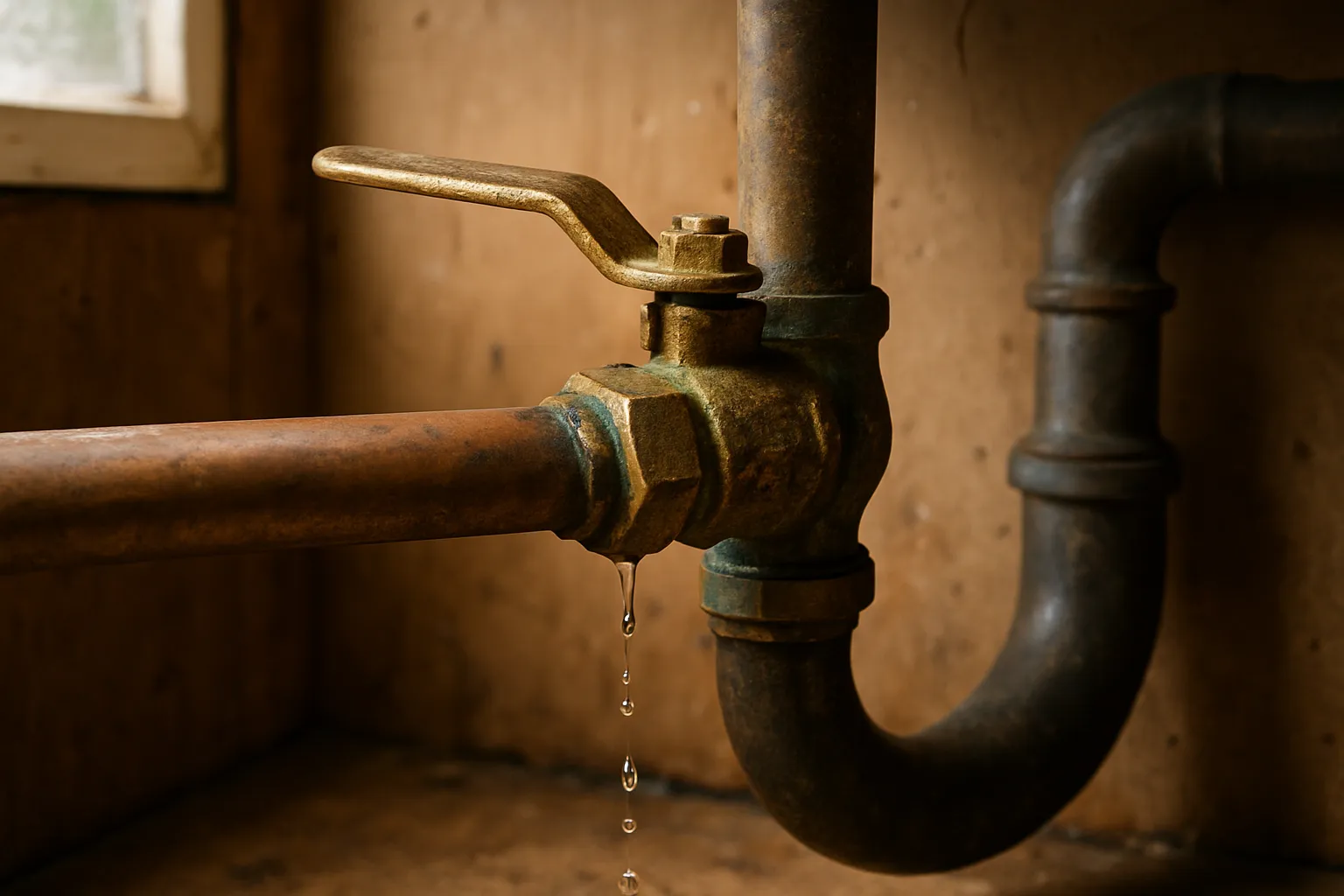
When a pipe bursts or a fitting fails, the first thing you need to do is stop the water. Knowing exactly how to shut off your house water main — and which type of valve you are dealing with — can make the difference between a minor inconvenience and a seriously flooded room. This guide covers every stopcock type you are likely to find in a UK home.
Why You Need to Know This Before an Emergency
Most people only look for their stopcock after water is already spraying. By then, stress makes a simple task feel impossible. Take five minutes now to locate and test every valve in your home. If it is stiff or will not move, call a plumber to service it before you need it in a hurry.
The Internal Stopcock (Inline Ball Valve or Gate Valve)
This is the most common type in UK homes. It sits on the rising main — the pipe that brings mains-pressure water into your property — usually found:
- Under the kitchen sink
- In a utility room or airing cupboard
- Behind a panel in a bathroom
- In a downstairs toilet
Two sub-types exist:
Traditional Gate Valve (older properties)
Recognised by its round, wheel-shaped handle. Turn it clockwise to close. Gate valves require multiple full rotations and can seize up if left untouched for years. If yours is stiff, do not force it — you may shear the spindle.
Quarter-Turn Ball Valve (modern standard)
Has a flat lever handle. When the lever is in line with the pipe, water flows. Turn it 90 degrees across the pipe to shut off. One quarter-turn is all it takes. These are far more reliable than gate valves and much less likely to seize.
The External Stop Tap (Boundary Stop Tap)
This valve is owned and maintained by your water supplier. It sits in a small underground chamber — usually at the edge of your property near the pavement, covered by a small metal or plastic lid marked WATER.
- You need a long-handled stop tap key (a T-bar tool) to reach it
- Turn clockwise to close
- If it is corroded or stuck, contact your water supplier — do not force it
Use the external stop tap when your internal stopcock is inaccessible, seized, or has failed.
The Draught-Exclusion or Service Valve (Inline Isolation Valve)
These small valves are fitted on individual supply pipes to appliances — dishwashers, washing machines, toilet cisterns, and under-sink water filters. They are not your main shut-off, but they let you isolate a single appliance without cutting water to the whole house.
- Identified by a slot-head screw in the body of the pipe fitting
- Use a flathead screwdriver: when the slot is in line with the pipe, it is open; across the pipe, it is closed
- Turning one of these will not shut off your mains supply
The Loft Tank Valve (Float Valve and Gate Valve)
Older UK homes with a cold water storage tank in the loft have a separate gate valve on the pipe feeding down from the tank. Closing this valve isolates the cold taps and toilet cisterns fed by gravity from the tank, but does not shut off the mains-pressure supply to the kitchen cold tap or the rising main.
If you have a combi boiler and no loft tank, you can ignore this type entirely.
The Drain-Down Valve
Sometimes found alongside the internal stopcock, this is a small brass fitting with a square or slot-head outlet. It is not a shut-off valve — it is used to drain the pipework once the supply has been isolated. Do not mistake it for your stopcock.
Step-by-Step: Shutting Off the Water Main in an Emergency
- Go straight to your internal stopcock — under the kitchen sink is the most common location.
- Turn it clockwise (gate valve) or quarter-turn across the pipe (ball valve).
- Open a cold tap on the ground floor to confirm the pressure has dropped.
- If the internal stopcock has failed or cannot be reached, go to the external stop tap at the property boundary and use a stop tap key.
- Call a plumber to repair the fault and service the stopcock if it was difficult to operate.
What If My Stopcock Is Seized?
A seized stopcock is surprisingly common, especially in properties built before the 1990s. Do not use excessive force — you risk snapping the spindle and making the situation worse. Instead:
- Apply a small amount of penetrating oil around the spindle and wait 10 minutes
- Try gentle, alternating pressure rather than brute force
- If it still will not move, use the external stop tap and call a plumber
A Note on Combination Boilers
If you have a combi boiler, it draws directly from the mains. Shutting off the internal stopcock will cut the cold feed to the boiler as well. This is fine in an emergency, but let your plumber know so they can repressurise the system correctly once the repair is done.
You Are More Prepared Than You Think
Locating and understanding your stopcocks takes less than ten minutes — and it is time genuinely well spent. If you find a valve that is seized, missing, or in an unusual location, a plumber can inspect it quickly and put things right before you ever need it in a crisis.
If you have an active leak right now, shut off the nearest valve you can reach and call us immediately on 07360 268948. We cover the TW postcode area around the clock, every day of the year.