Emergencies
Shared Drains in Terraces and Semis: Your Rights When Next Door's Habits Block Your Drain
Who pays when a shared drain blocks? Understand your rights, Thames Water's 2011 rules, and how to resolve neighbour disputes over blocked drains.
Published 19 July 2026
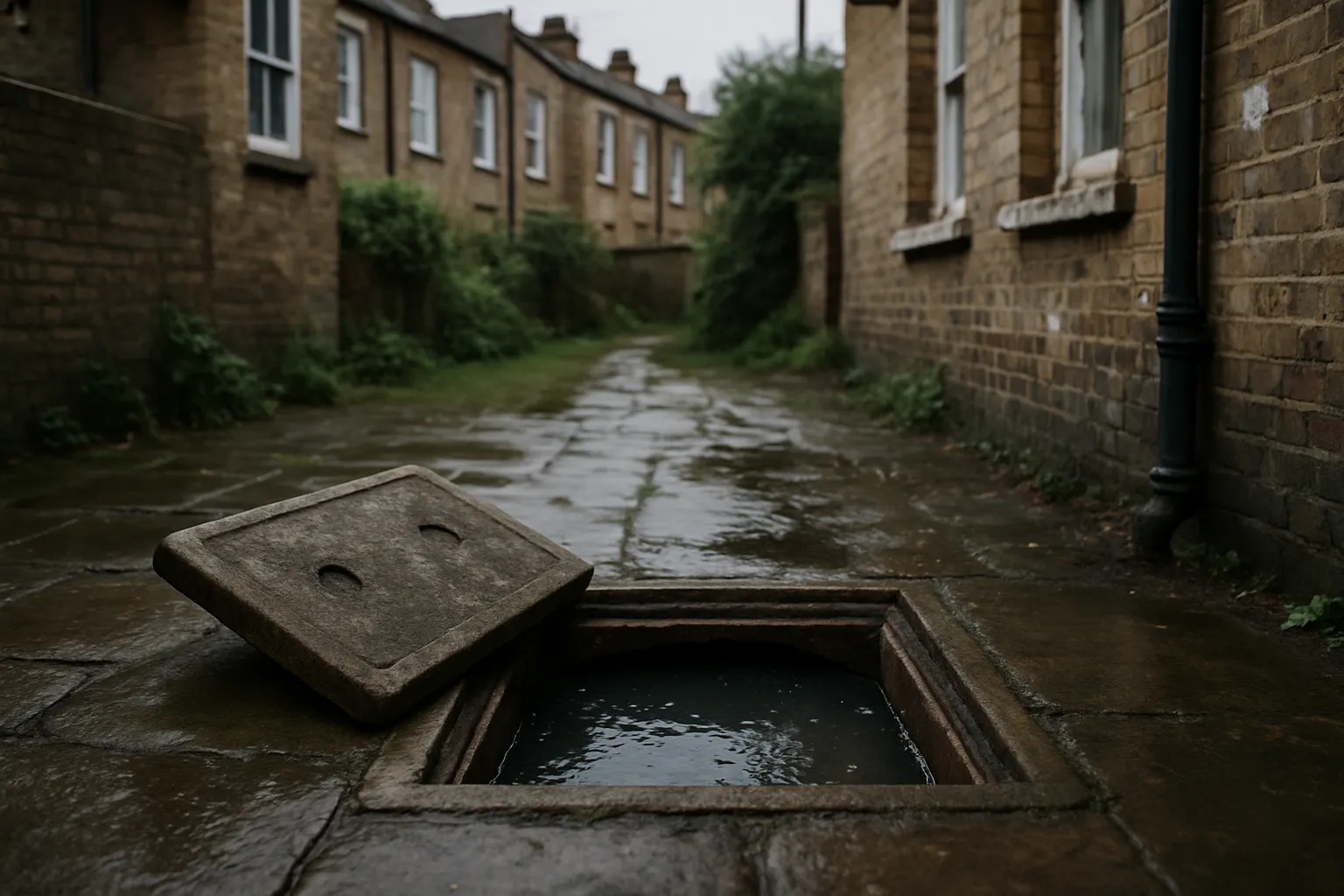
When Your Drain Backs Up and It Is Not Your Fault
Few things are more frustrating than standing in a flooded bathroom knowing the problem started next door. Shared drainage is a fact of life in the terraced streets and semis of Isleworth, Twickenham, Hounslow and most of the TW postcode area — and when one household causes a blockage on a shared run, the consequences land on everyone connected to it.
This guide explains who owns what, what changed in 2011, and how to get the drain cleared without falling out with the neighbours.
Private Drains vs. Shared Sewers: The Key Distinction
Understanding the terminology saves a lot of confusion.
- Private drain — the pipe that carries waste from your property to the boundary of your curtilage, or to where it joins another pipe. This is your responsibility alone.
- Shared sewer (lateral drain) — a pipe that carries waste from more than one property. Since October 2011 this is almost certainly the responsibility of your water and sewerage company, not you.
What Changed in October 2011
Before October 2011, shared pipes between the boundary and the public sewer were often the joint responsibility of the connected properties. The Water Industry (Schemes for Adoption of Private Sewers) Regulations 2011 transferred the vast majority of these shared lateral drains to water companies — in the TW area that means Thames Water.
In practice: if the blockage is in the section of pipe that serves more than one property, Thames Water is normally responsible for clearing it at no charge to you. You can report this directly to them on their 24-hour helpline.
How to Work Out Where the Blockage Is
Before calling anyone, it helps to narrow down the location.
- Check your inspection chamber (the small manhole in your garden or just inside your boundary). If it is backing up, the blockage is likely downstream — on the shared run or at the public sewer.
- Ask your neighbour whether they have any drainage symptoms. If their drains are running freely, the blockage is probably on your private section.
- Look for the pattern. A blockage caused by fat, wipes or foreign objects in the shared run usually affects all connected properties around the same time.
If the chamber is clear and only your own fixtures are slow, the problem is inside your private drain — and that is your responsibility to fix.
Who Pays for What
| Situation | Responsible party |
|---|---|
| Blockage in your private drain (serves only your property) | You |
| Blockage in a shared lateral drain (serves two or more properties) | Thames Water (since Oct 2011) |
| Damage caused by tree roots from your neighbour’s tree | Potentially your neighbour — seek legal advice |
| Blockage caused by your neighbour putting prohibited items down their drains | Thames Water clears it; civil dispute possible |
Keeping It Civil With Your Neighbour
Most shared-drain disputes come down to habits rather than malice. Cooking fat, “flushable” wipes and food waste are the most common culprits in the TW area’s older clay-pipe networks.
A Few practical suggestions
- Start with a friendly conversation. Explain what you have found and that it affects you both. Most people are receptive once they understand the impact.
- Share information, not blame. Pointing out that wipes and fat cause blockages is more effective than accusing someone of causing the current one.
- Document the problem. Photograph the blocked chamber, note dates and symptoms, and keep any correspondence. This is useful both if Thames Water need evidence and if the issue becomes a civil matter.
- Involve Thames Water early. If you believe the blockage is on the shared run, report it to Thames Water. Their investigation will establish where the problem lies, which removes the argument from between neighbours and puts it in the hands of a neutral third party.
When You Need a Plumber Rather Than Thames Water
Thames Water will deal with shared sewers, but there are situations where you need an emergency plumber first:
- The blockage is on your private drain and sewage is backing up into your home right now.
- You need the drain cleared urgently and cannot wait for Thames Water’s response window.
- You want a CCTV drain survey to confirm exactly where the blockage is before reporting it.
- There is structural damage — a collapsed or cracked pipe — that needs repair beyond a simple clearance.
A good plumber will give you a written report including the cause of the blockage, photographs, and the location of the fault. That written record belongs to you and is worth keeping for your own files.
Your Next Steps
- Check your own inspection chamber to locate the blockage.
- If it is on the shared run, report to Thames Water.
- If it is on your private drain — or if sewage is backing up into your home right now — call a plumber.
- Keep a record of everything: dates, photographs, correspondence.
If you are dealing with a blocked drain right now in Isleworth or anywhere across the TW area, call us on 07360 268948. We are available 24 hours a day, seven days a week, and we can be with you quickly to clear the blockage and give you a clear written account of what we found.
Our sister drainage firm Drainiacs deal with the money side in shared drains: who actually pays when it blocks.