Emergencies
Sewage Backup in the Home: Health, Safety and Cleanup
Sewage backup is a serious health hazard. Learn why it happens, how to stay safe, what to do first, and when to call an emergency plumber.
Published 7 July 2026
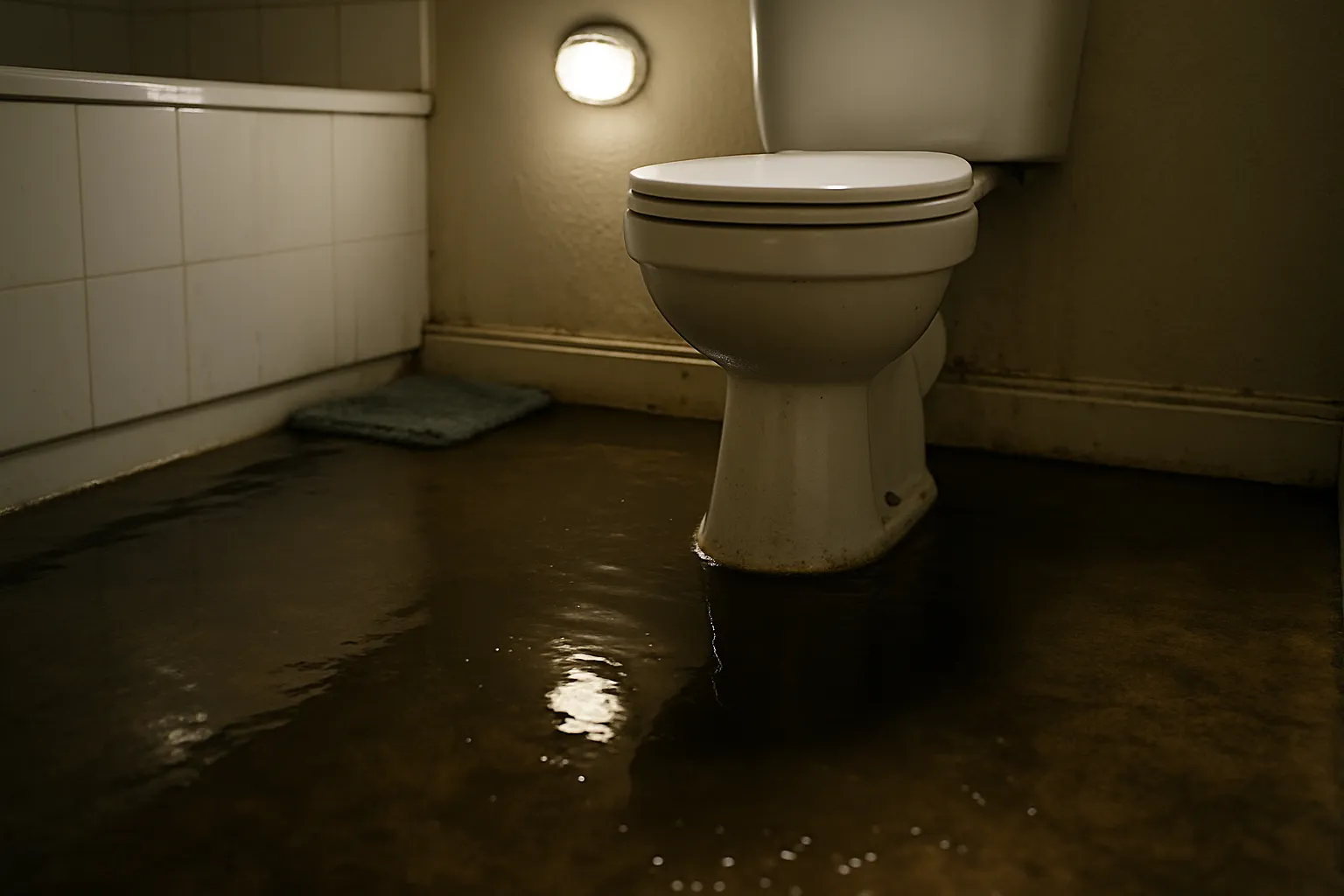
Raw sewage backing up into your home is one of the most distressing plumbing emergencies you can face. It is also one of the most hazardous. The good news is that acting quickly and calmly — in the right order — limits both the health risk and the damage to your property.
Why Sewage Backs Up
Understanding the cause helps you explain the situation clearly when you call for help, and it tells you whether the problem is inside your property or further down the shared sewer.
Common causes include:
- A blockage in your household drain or soil pipe — often caused by accumulated fat, wipes, or foreign objects
- A collapsed or cracked section of underground pipework
- Tree root intrusion into older clay or earthenware pipes
- A blockage in the public sewer that causes wastewater to reverse back up through the lowest point in your home (usually a ground-floor toilet or bath)
- Heavy rainfall overwhelming a combined sewer system
If neighbours are also affected, the blockage is likely in the shared sewer and you should contact Thames Water as well as an emergency plumber.
The Health Risks — Take Them Seriously
Sewage contains bacteria (including E. coli and Salmonella), viruses, and parasites. Contact with contaminated water — even briefly — carries a genuine infection risk, particularly for young children, elderly people, and anyone with a compromised immune system.
Do not:
- Wade through sewage water without full protective equipment
- Allow children or pets anywhere near the affected area
- Use contaminated taps, showers, or appliances until the system has been cleared and inspected
- Eat or drink anything that may have been in contact with the water
Immediate Steps to Take
1. Stop Using Water in the Property
Turn off taps, do not flush toilets, and avoid running appliances such as washing machines or dishwashers. Every litre of water you add to the system makes the backup worse.
2. Protect Yourself Before You Enter the Area
Put on rubber gloves, rubber boots, and if possible eye protection. If the smell is very strong or the area is enclosed, open windows and doors before entering — hydrogen sulphide gas can build up in confined spaces.
3. Turn Off Electricity to Affected Rooms
If sewage has reached the floor and there are plug sockets, appliances, or cables at low level, switch off the electricity at the consumer unit for those circuits before entering. Do not attempt this if you would need to stand in water to reach the fuse board.
4. Call an Emergency Plumber
A sewage backup is not a DIY fix. The blockage needs to be located, cleared, and the pipework inspected — often with a CCTV drain survey — to confirm there is no structural damage. Call us on 07700 137648 and we will attend as quickly as possible, day or night.
5. Document Everything for Insurance
Before any cleanup begins, take photographs and video of all affected areas and items. Note the time the backup started and what rooms are involved. This record is essential for a home insurance claim.
Cleanup: What Happens After the Drain Is Cleared
Once the blockage has been cleared and the drain confirmed to be flowing freely, the cleanup process can begin. This is not ordinary mopping up.
Professional sewage cleanup typically involves:
- Removing standing water using specialist extraction equipment
- Bagging and disposing of contaminated soft furnishings, carpeting, and non-salvageable materials
- Disinfecting all hard surfaces with appropriate biocidal products
- Drying the structure thoroughly to prevent mould growth
- Air testing or hygiene swabs if required by an insurer
Some emergency plumbing companies work alongside specialist remediation contractors, or your insurer may arrange this separately. Ask when you call so you know what to expect.
Insurance and Your Rights
Most standard home insurance policies cover sudden and accidental escape of water, which can include sewage backup. Check your policy wording for “trace and access” or “drain cover” sections, as these vary significantly between insurers.
Key points:
- Report the incident to your insurer as soon as possible — many have a 24-hour claims line
- Keep all receipts for emergency work, temporary accommodation, or protective equipment
- Do not throw away contaminated items until your insurer has confirmed you can — they may want to assess them
- If the blockage is in the public sewer, Thames Water has a responsibility to rectify it at no cost to you
When to Call Us
If you have sewage backing up into your home right now, stop reading and call 07700 137648. We cover the TW postcode area around the clock, including Twickenham, Richmond, Teddington, Hounslow, Feltham, Staines, and Isleworth.
A sewage backup will not resolve itself, and the longer wastewater sits in your home, the greater the structural and health consequences. We will locate the blockage, clear it, and advise you honestly on next steps — including whether a CCTV drain survey is needed to check for underlying pipe damage.
You do not have to deal with this alone.