Maintenance
How to Avoid an Escape of Water Claim in the First Place
Practical steps to prevent escape of water damage at home: stopcock exercise, isolation valves, hose checks, freeze protection and holiday shut-off.
Published 23 July 2026
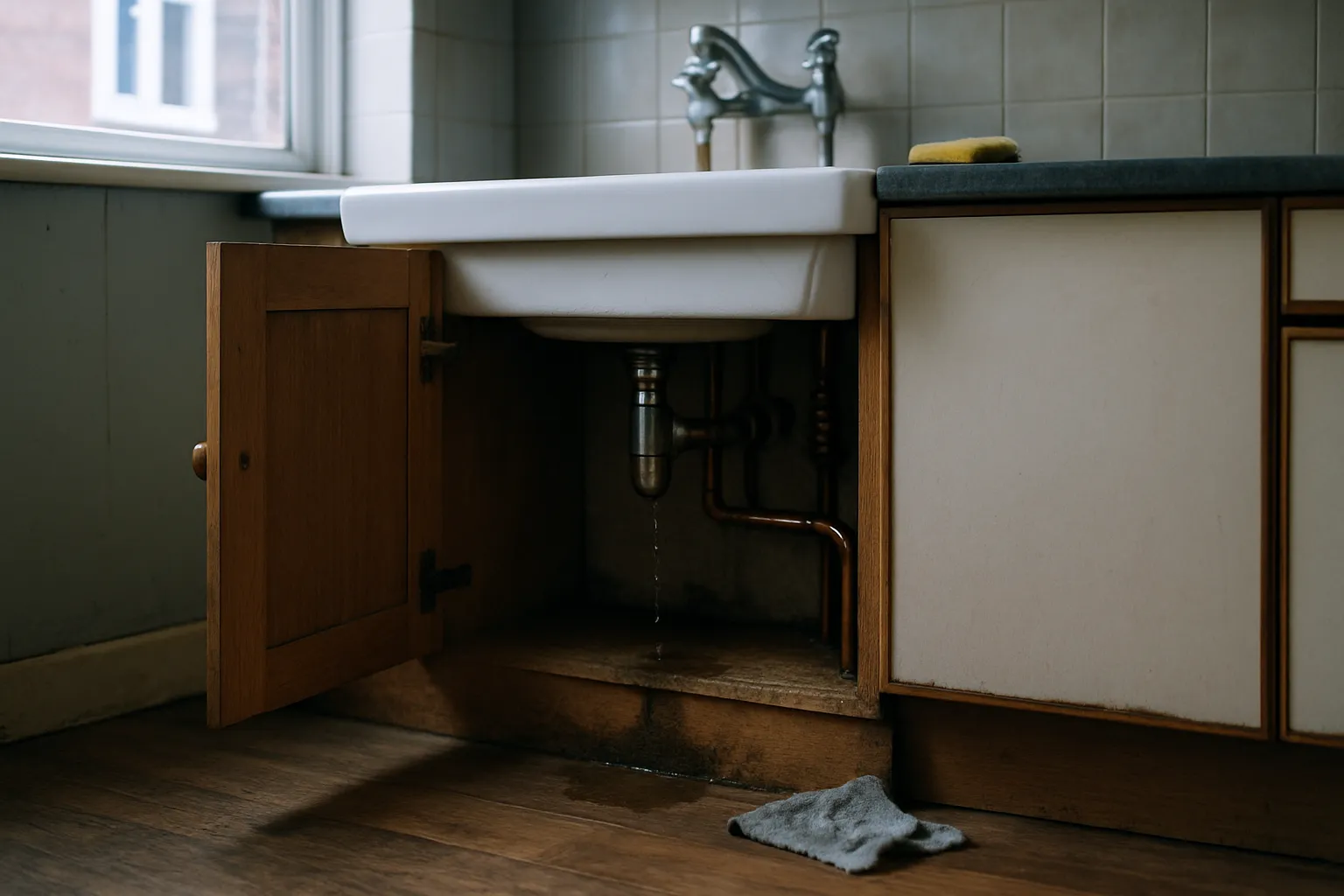
Why Bother Preventing an Escape of Water?
Escape of water is consistently one of the most expensive categories of home insurance claim in the UK. A slow leak behind a wall or under a floor can cause structural damage, rot, mould and ruined possessions long before anyone notices. Even when an insurer pays out, you still face the disruption, the excess, and the potential impact on future premiums.
The good news is that most escapes of water are preventable. A handful of simple habits — most of them free — dramatically reduce the risk.
1. Exercise Your Stopcock Every Six Months
Your stopcock (the mains shut-off valve, usually under the kitchen sink) is the single most important piece of plumbing kit in your home. In an emergency, turning it off stops every leak fed by the rising main.
The problem: stopcocks that are never touched can seize solid. When you actually need it, it will not move.
What to do: Turn it fully clockwise until it stops, then back a quarter-turn. Do this twice a year — pick a date you will remember, such as when the clocks change. If the handle is stiff, dripping or corroded, have a plumber replace it before it fails.
2. Know Where Your Isolation Valves Are
Modern plumbing uses individual isolation valves on appliances and fixtures — washing machines, dishwashers, toilets, under-sink supplies. A flat-head screwdriver turned a quarter-turn shuts off the water to just that appliance without affecting the rest of the house.
- Locate every isolation valve in your home now, while nothing is wrong.
- Check that each one actually turns. A seized valve is useless in a flood.
- Label them with a marker pen or small sticker so anyone in the house can find the right one quickly.
3. Replace Washing Machine and Dishwasher Hoses
Burst washing machine hoses are one of the most common causes of escape of water damage. The standard braided hoses supplied with most machines have a recommended service life of around five years, yet many households run them for a decade or more.
Signs a hose needs replacing:
- Visible cracking, bulging or discolouration
- Any damp patch or mineral staining around the connection
- The hose is more than five years old and you cannot remember when it was last changed
Replace old rubber hoses with stainless-steel braided versions — they are inexpensive and far more resistant to sudden failure. Our guide on burst washing machine hoses covers what to do if one fails before you can replace it.
4. Protect Your Pipes From Freezing
Frozen pipes burst. When they thaw, the split opens and water pours out — often into a ceiling below. This is entirely preventable.
Key steps:
- Insulate any pipes in unheated spaces: loft, garage, under suspended floors, outside walls.
- Keep your heating on a low background temperature (at least 12 °C) during cold snaps, even if you are away.
- Know the signs of a frozen pipe: no water from a tap during or just after a cold spell, or a bulging section of visible pipework.
Our cold-weather plumbing checklist walks through the full winter preparation routine in detail.
5. Shut Off the Water When You Go on Holiday
A week away is long enough for a slow drip to become a serious flood. Before you leave:
- Turn off the mains stopcock.
- Open a cold tap to release pressure in the pipes.
- Leave the heating on a frost-protection setting if there is any chance of cold weather.
- Ask a trusted neighbour to check the property every couple of days if you are away for more than a week.
Some insurers require you to shut off the water for absences over a certain number of days — check your policy wording.
6. Check Under Sinks and Around Toilets Regularly
A slow drip from a compression fitting or a weeping toilet cistern connection can run for months unseen. Make it a habit to open under-sink cupboards and look — and feel — for damp. Check the floor around the base of the toilet and the wall behind it. Catch a small leak early and the repair is straightforward; leave it and you may be looking at damaged flooring and cabinetry.
7. Consider a Smart Leak Detector
Battery-powered water sensors placed under sinks, behind appliances and near the boiler will sound an alarm the moment they detect moisture. Some systems link to a motorised valve that automatically shuts off the mains. They are not expensive and can catch a leak within minutes rather than days.
If a Leak Does Happen
Even with every precaution in place, plumbing can fail. If you find a leak:
- Turn off the stopcock immediately.
- Turn off the electricity at the consumer unit if water is near any electrics.
- Open taps to drain down the system and reduce pressure.
- Call a plumber.
If you need to document the damage for your own records — photographs, cause of the leak, extent of moisture — a professional plumber can provide a written report of what they found and what they repaired. That paperwork belongs to you and is yours to use however you need.
If you are dealing with an active leak right now, call us on 07360 268948. We cover the TW postcode area around the clock and can be with you quickly to stop the damage and get things back under control.