Maintenance
Outside Tap Leaking or Frozen: Fixes and Prevention
Outside tap leaking or frozen solid? Step-by-step fixes for garden tap leaks and frost damage, plus tips to prevent it happening again.
Published 6 July 2026
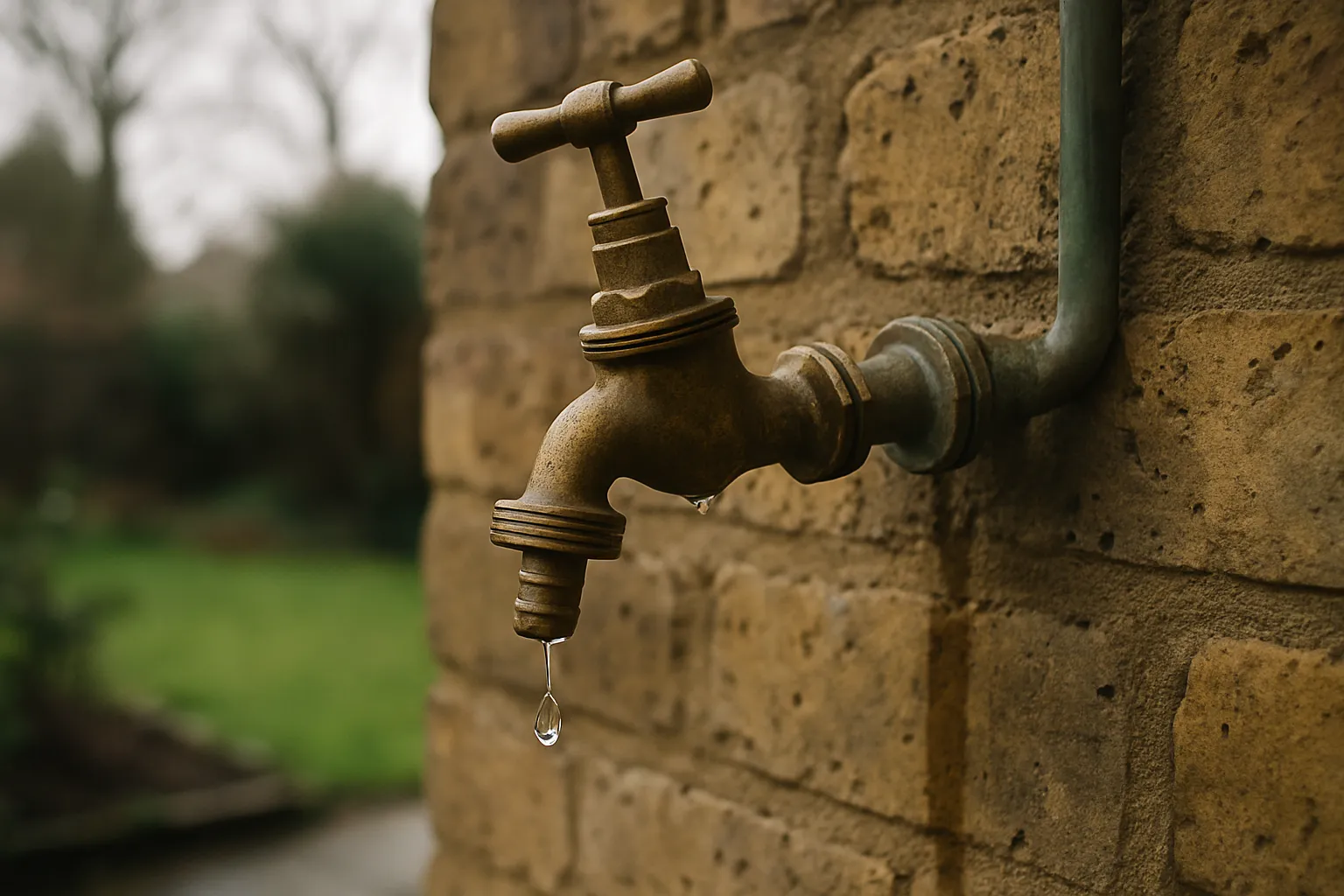
Outside Tap Leaking or Frozen? Here’s What to Do
An outside tap is one of those fittings you barely think about until something goes wrong. A steady drip wastes more water than most people expect, and a tap frozen solid in winter can crack the pipework behind the wall — leading to a much bigger repair job. This guide walks you through the most common problems, what you can do yourself, and when it makes sense to call a plumber.
Why Outside Taps Are Vulnerable
Outside taps sit exposed to the elements. Unlike indoor pipework, they are not protected by the warmth of your home. In winter, any standing water in the supply pipe or the tap body can freeze and expand, cracking fittings or the tap itself. In summer, worn washers and loose glands are the usual culprits behind a persistent drip.
Dealing with a Leaking Outside Tap
Step 1 — Identify where the leak is coming from
There are three common leak points:
- The spout — drips when the tap is closed. Usually a worn jumper washer.
- The gland (around the spindle) — water seeps out around the handle when the tap is turned on. The gland packing needs tightening or replacing.
- The back plate or pipework — water appears on the wall or inside the house near where the pipe comes through. This is more serious and needs a plumber promptly.
Step 2 — Isolate the supply
Before you do anything else, find the isolating valve for the outside tap. It is usually a small inline valve on the supply pipe, often in the garage, under the kitchen sink, or in a utility cupboard. Turn it a quarter-turn so the slot is across the pipe. If you cannot find a dedicated isolating valve, you may need to turn off the mains stopcock.
Step 3 — Replace the washer or tighten the gland
With the supply isolated and the tap opened to release pressure:
- Unscrew the tap head or cover to expose the headgear nut.
- Use an adjustable spanner to unscrew the headgear and lift it out.
- The jumper washer sits at the bottom of the headgear — prise it off and fit a new one (standard sizes are widely available at hardware shops).
- For a gland leak, tighten the gland nut a half-turn at a time until the weeping stops, or repack it with PTFE tape wound around the spindle.
- Reassemble, restore the supply, and check.
If the tap body itself is cracked or corroded, replacement is the better option.
Dealing with a Frozen Outside Tap
Do not force it
Turning a frozen tap handle hard can shear the spindle or crack the body. Leave it alone until the ice has thawed.
Thaw gently
Apply gentle warmth — a warm (not boiling) damp cloth, or a hair dryer on a low setting held at a distance. Work from the tap back along the exposed pipe. Never use a naked flame.
Check for damage once thawed
Once water flows freely, look carefully at the tap body, the back plate, and the pipe inside the house for any hairline cracks. Even a small crack will leak once the water pressure returns. If you spot damage, isolate the supply and call a plumber before turning the water back on fully.
Prevention: Getting Ready for Winter
A few straightforward steps each autumn will save you a cold-weather headache:
- Isolate and drain the outside tap before the first hard frost. Turn off the isolating valve, open the tap to drain residual water, then leave the tap in the open position overnight so any remaining water can escape.
- Fit an outside tap cover — foam or fleece covers are inexpensive and available at most DIY stores. They provide a useful buffer against light frosts.
- Consider a frost-proof tap if you are replacing an old one. These have a long spindle that seats the washer inside the wall, keeping the water well away from the cold outside air.
- Lag the supply pipe where it runs through an unheated space such as a garage or loft.
- Check the back plate seal each spring. A deteriorating sealant around the wall entry point lets cold air in and damp out.
When to Call a Plumber
Most washer replacements are a manageable DIY job. Call a plumber if:
- The tap body or supply pipe is cracked
- Water is appearing inside the house near the pipe entry point
- You cannot locate or operate the isolating valve
- The leak is at the back plate and water is tracking into the wall
A leak left running — even a slow drip — can cause damp, mould, and structural damage over time. It is always cheaper to deal with it early.
If your outside tap has burst, is leaking heavily, or you cannot isolate the supply, call us now on 07360 268948. We cover Twickenham, Richmond, Teddington, Hounslow, Feltham, Staines and the surrounding TW postcode area, 24 hours a day.