Emergencies
Fatbergs Start in Your Kitchen: How Grease Blocks Your Street's Sewer
What actually happens when fat goes down the drain — and how kitchens in the TW area contribute to the fatbergs blocking shared sewers.
Published 18 July 2026
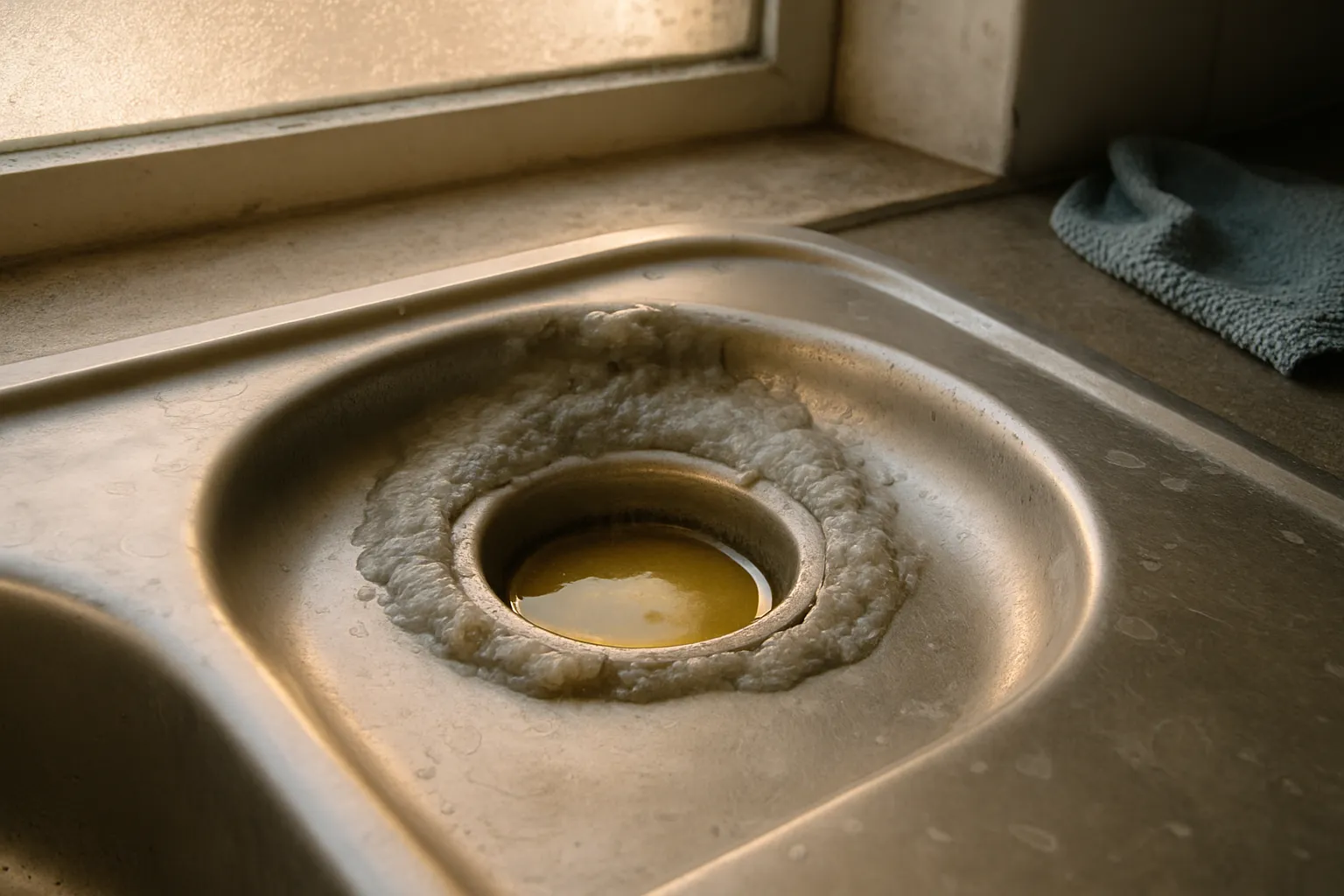
That Pan of Cooled Fat Seems Harmless — It Isn’t
You’ve just finished a roast. There’s a puddle of liquid fat in the tray, still warm and runny. Tipping it down the kitchen sink feels like the quickest solution. It’s liquid, after all. It’ll wash away.
It won’t. And by the time you realise that, the problem is no longer just yours.
What Actually Happens to Fat in Your Pipes
Hot fat is a liquid. The moment it meets the cool walls of your drain pipe — usually within the first metre or two — it begins to solidify. Not all at once, but layer by layer, every time you do it.
Think of it like this: your drain pipe is a sock. Every pour of fat, every greasy plate rinsed without wiping, every splash of cooking oil adds another thin layer to the inside of that sock. Slowly, the opening gets smaller. Water slows. Eventually it stops.
That’s the sock-of-doom visual — and it’s not an exaggeration. Cut open a domestic drain that hasn’t been maintained and you’ll often find the bore reduced to little more than a finger-width, caked in a grey, waxy, foul-smelling crust.
From Your Kitchen to the Street
Your home’s drain connects to a shared lateral drain, which connects to a public sewer. The fat you pour away doesn’t stay in your pipe. It travels — slowly, sticking to everything it touches — until it meets fat from your neighbour’s kitchen, and the one next to that.
In the sewer, fat combines with wet wipes (even so-called “flushable” ones), food scraps, soap residue, and anything else that shouldn’t be there. The mixture binds together, hardens, and grows. The result is a fatberg: a solid, sometimes enormous mass of congealed waste that can block a sewer completely.
Thames Water regularly clears fatbergs from sewers across the TW area — Richmond, Twickenham, Hounslow, and beyond. These blockages don’t appear overnight. They are built, slowly and collectively, by households doing exactly what seems harmless: rinsing the pan.
The Signs Your Kitchen Drain Is Already Affected
- Water drains slowly from the sink, especially after washing up
- A gurgling sound from the plug hole after the water drains
- An unpleasant smell rising from the sink, even when it’s not in use
- Water backing up into the sink when the dishwasher runs
Any of these is a warning. A partial blockage will become a full one. And a full blockage — particularly in a shared drain — can cause wastewater to back up into your kitchen or neighbouring properties.
What to Do Instead of Pouring Fat Away
Cool it, bin it
Let fat cool and solidify in the pan or in an old tin. Scrape it into the bin. It takes thirty seconds.
Wipe before you wash
Use a piece of kitchen roll to wipe greasy pans and plates before they go near water. The less fat that enters the drain, the better.
Use a sink strainer
A basic mesh strainer catches food particles before they enter the pipe. Empty it into the bin, not the sink.
Don’t rely on hot water
Running hot water while pouring fat does not dissolve it. It simply carries it slightly further down the pipe before it cools and sticks.
What If the Damage Is Already Done?
If your kitchen drain is slow or blocked, don’t reach for chemical drain cleaner as a first response. Caustic products can damage older pipes and rarely shift a solid grease blockage completely — they may just create a temporary gap that closes again.
A professional drain inspection will tell you exactly what you’re dealing with. Depending on the severity, the solution might be a high-pressure water jet to clear the pipe, or — for older, heavily furred pipes — a CCTV survey to check the condition of the pipe itself before any work begins.
A Local Problem Worth Taking Seriously
The TW postcode covers a dense mix of Victorian terraces, converted flats, and newer builds — all sharing drainage infrastructure that was not designed for the volume of cooking waste modern households produce. When one household pours fat away regularly, the risk is shared by everyone connected to the same sewer run.
The good news is that it’s one of the most preventable plumbing problems there is. Cool it, bin it, and your pipes — and your neighbours’ — will thank you.
If your kitchen drain is already slow or blocked, don’t wait for it to become a full emergency. Call us on 07360 268948 — we’re available 24 hours a day across the TW area and can assess the blockage quickly and honestly.
To see what that grease becomes, our sister drainage firm Drainiacs performed a fatberg autopsy on lumps jetted out of local sewers.