Emergencies
Blocked Soil Stack in a Terraced House: Why Every Flush Makes It Worse
A blocked soil stack in a terraced house affects every flat at once. Understand why it happens and what to do before the next flush makes things worse.
Published 17 July 2026
The One Pipe That Serves the Whole House
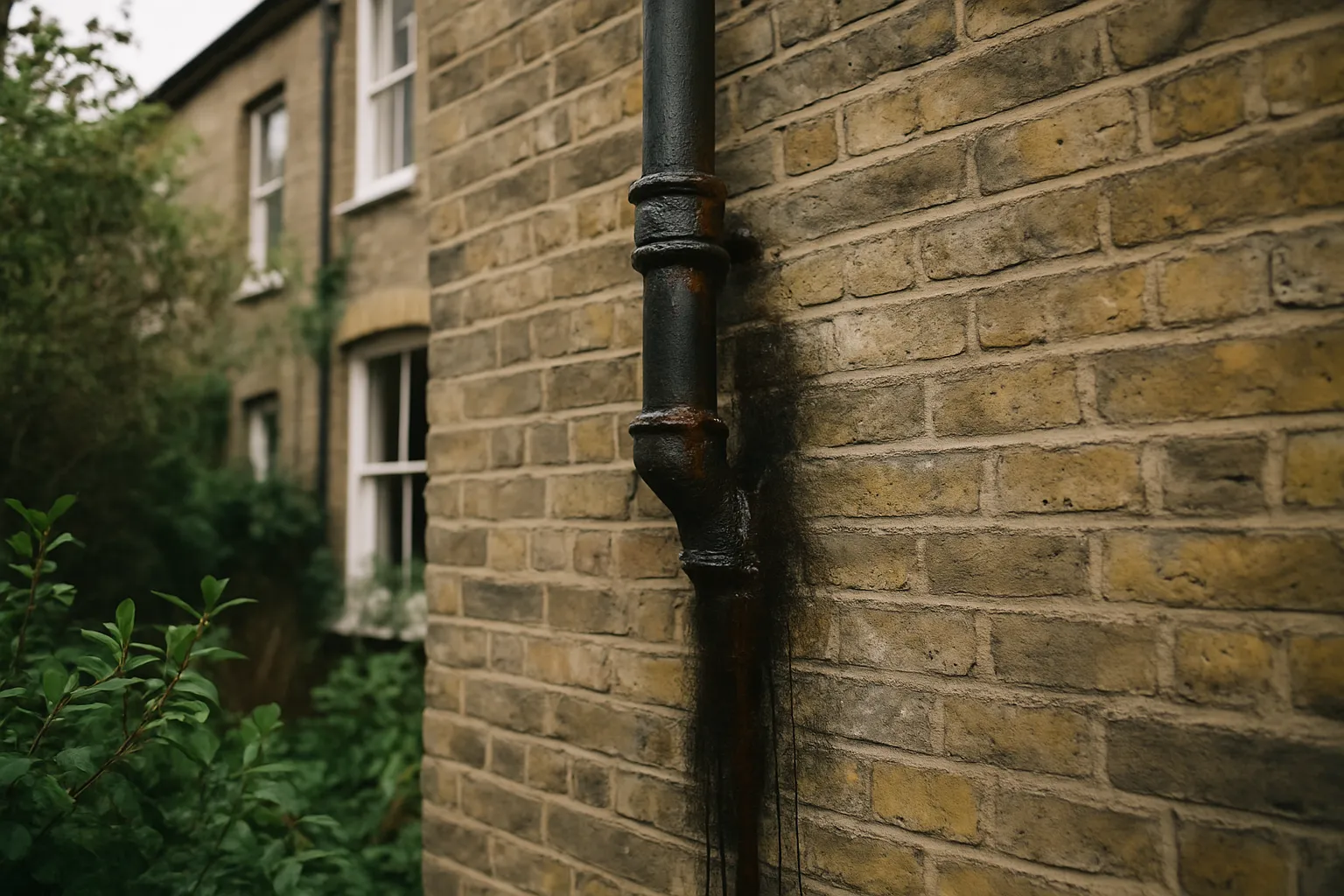
Most Victorian and Edwardian terraces in the TW postcode area — Brentford, Isleworth, Twickenham and beyond — were built with a single vertical soil stack running from the roof down to the underground drain. Every toilet, bath, and basin in the building feeds into that one pipe. When it is clear, nobody notices it. When it blocks, the whole house knows about it very quickly.
If you are in a ground-floor flat and raw sewage is backing up into your bath or toilet while your upstairs neighbour has just flushed, this guide explains exactly why that is happening and why stopping usage immediately is the right call.
How a Shared Soil Stack Works
The soil stack is typically a 100 mm or 150 mm cast-iron or uPVC pipe fixed to the rear elevation or tucked inside an internal duct. Waste from each floor joins the stack at a swept junction, and gravity does the rest. At the base, the stack connects to the underground drain and then to the public sewer.
Because every appliance in the building discharges into the same vertical pipe, a blockage anywhere in the stack creates a dam. Waste from above has nowhere to go — so it finds the lowest available outlet. In a converted terrace, that is usually the ground-floor flat’s toilet pan or bath trap.
Why Every Flush Makes It Worse
This is the part that catches people out. When a neighbour flushes upstairs, they add a surge of water and waste on top of whatever is already sitting above the blockage. That hydraulic pressure pushes the backed-up material further into your bathroom. Each flush is effectively pumping more sewage towards you.
Until the stack is cleared, every flush in the building increases the risk of an overflow.
The practical steps while you wait for a plumber:
- Stop using all toilets, baths, showers, and sinks in your own flat immediately
- Knock on your neighbours’ doors and ask them to do the same — even a single flush from the top floor can tip the balance
- If sewage has already surfaced in your bath or toilet, do not try to flush it away; you will make the overflow worse
- Open windows for ventilation and keep people, especially children, away from the affected fittings
Common Causes in Period Terraces
Root Intrusion and Deteriorating Cast Iron
Many terraces still have their original cast-iron stacks, now well over a hundred years old. The internal surface corrodes and roughens, snagging wipes, hair, and grease. Tree roots from rear-garden planting can crack joints at ground level and grow into the pipe.
Accumulated Wet Wipes and Sanitary Products
Even products labelled “flushable” do not break down reliably in older, narrower pipework. In a multi-occupancy terrace the cumulative load from several households is considerable.
Offset Joints and Bellied Sections
Settlement in Victorian terraces can cause pipe joints to shift slightly out of alignment. These offsets create a ledge where solids catch and build up over months or years until the stack blocks completely.
Grease Build-Up at the Base
Kitchen waste from multiple flats often shares the same stack or connects close to its base. Grease cools, solidifies, and gradually narrows the pipe until flow stops.
What Professional Clearing Involves
A blocked soil stack is not a job for a plunger or a bottle of drain cleaner. A plumber will typically:
- CCTV survey — a camera is passed down the stack to locate the blockage and assess the pipe condition
- High-pressure water jetting — a jetting nozzle breaks up the obstruction and flushes debris to the underground drain
- Root cutting (if needed) — a rotating cutter removes any root intrusion before jetting
- Post-clear camera check — confirms the stack is fully open and identifies any structural issues needing repair
The whole process usually takes one to three hours depending on the severity and the access available.
Documenting the Incident
If sewage has entered your flat, take photographs of every affected area before any cleaning begins. Note the time the problem started, which fittings were affected, and whether any belongings were damaged. Keep this record for your own use — your insurer will typically ask for evidence of the cause and the extent of any damage when you make a claim.
Your plumber should provide a written report noting the location and cause of the blockage, the method used to clear it, and any observations about pipe condition. That document belongs to you and is yours to use as you see fit.
Act Quickly — This Will Not Resolve Itself
A blocked soil stack in a terraced house is a genuine emergency. The longer it sits, the greater the pressure build-up, the higher the risk of an overflow, and the more likely it is that sewage will reach flooring, skirting boards, and subfloor timbers.
If you are in the TW area and your soil stack is blocked right now, call us on 07360 268948. We are available 24 hours a day, seven days a week, and we cover Brentford, Isleworth, Twickenham, Hounslow, and the surrounding postcodes. The sooner the stack is cleared, the sooner every flat in the building is back to normal.
Terraces have their own drainage quirks. Our sister drainage firm Drainiacs explain period terrace drain problems in TW.