Emergencies
Blocked Kitchen Sink That Keeps Coming Back? The Grease Problem Nobody Talks About
Find out why your kitchen sink keeps blocking despite clearing it. Grease moves, cools and re-sets deeper in the pipe. Here is how to fix it properly.
Published 18 July 2026
Why Does Your Kitchen Sink Keep Blocking?
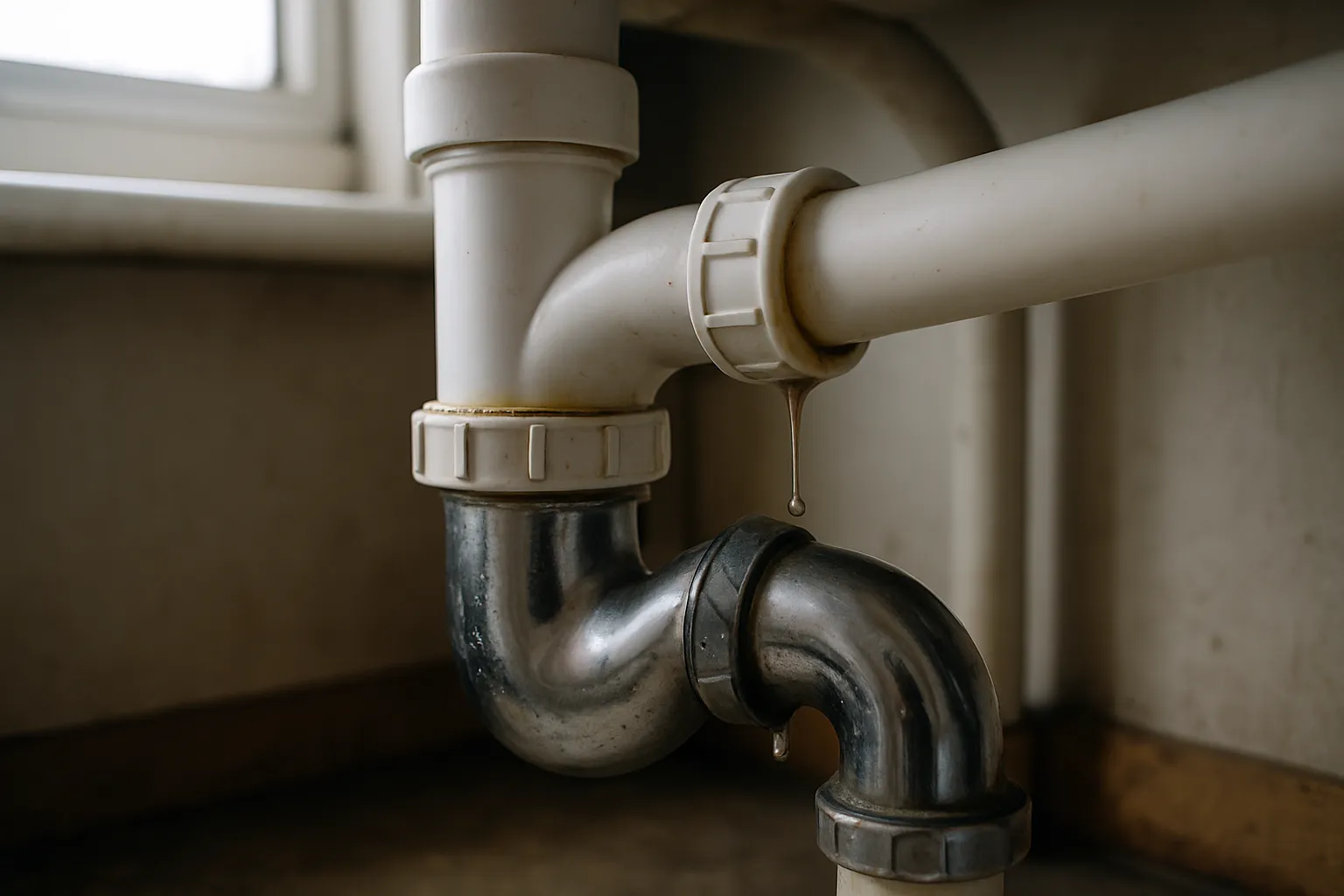
You pour boiling water down the drain, or reach for the plunger, and the sink clears. A week or two later it blocks again. This is one of the most common plumbing frustrations we hear about across the TW postcode area, and the reason is almost always the same: grease.
Not grease that is sitting at the plughole. Grease that has travelled further into the pipe, cooled down, and set solid — usually at a bend, a joint, or wherever the flow slows.
Understanding why this happens makes it much easier to fix it for good.
What Grease Actually Does Inside a Drain
When you pour hot cooking fat, oil or greasy water down the sink, it is liquid and flows freely. The problem starts about a metre or two into the pipe, where the temperature drops. At that point:
- The fat begins to solidify against the pipe wall
- Each subsequent pour adds another thin layer
- Over weeks and months, the opening narrows
- Eventually, even water struggles to get through
This is why the blockage keeps coming back in roughly the same place. You have not removed the deposit — you have simply softened the surface of it enough for water to push through temporarily.
Why DIY Methods Often Fall Short
Boiling water and washing-up liquid
Hot water melts the surface of a grease deposit and dish soap emulsifies a thin layer. This can restore flow, but the bulk of the deposit stays in place. As soon as cooler water runs through, the grease re-sets, sometimes a few centimetres further along the pipe.
Chemical drain cleaners
Most off-the-shelf products are alkaline (caustic soda based) or acidic. They can break down some organic matter, but a thick, established grease deposit is surprisingly resistant. You may clear enough to restore flow without touching the core of the blockage. There is also a risk of damage to older pipework and plastic traps if products are left too long or used repeatedly.
Plunging
A plunger shifts blockages by creating pressure. Against a soft grease plug it can work, but it tends to push the deposit further along rather than remove it. That is why the next blockage often forms a little deeper in the system than the last.
The Fix: Remove the Deposit, Do Not Just Move It
The only reliable way to clear a recurring grease blockage is to physically remove the buildup. The two professional approaches are:
Drain rodding with a suitable head — a plumber or drain engineer feeds rods into the pipe and breaks up the deposit mechanically, then flushes the debris through.
High-pressure water jetting — a jet of water at controlled pressure scours the pipe walls clean, removing grease, soap scum and debris in one pass. This is the most thorough method for established grease buildup and leaves the pipe walls clean rather than just the central channel open.
A CCTV drain survey can also be useful if the blockage keeps returning despite clearing, as it will show exactly where the deposit is forming and whether there is a structural issue (a sagging pipe, a poor joint, a partial collapse) that is making grease accumulate in one spot.
Preventing Grease Blockages From Returning
Once the pipe is clear, a few habits make a significant difference:
- Never pour cooking fat or oil down the sink. Let it cool, collect it in a container, and put it in the bin.
- Wipe greasy pans with kitchen paper before washing them.
- Run the hot tap for 30 seconds after washing up to push any residual grease further along before it can set.
- A monthly flush of very hot (not boiling) water with a squirt of washing-up liquid can help maintain a recently cleared pipe — but this is maintenance, not a substitute for proper clearing if the problem has already taken hold.
When to Call a Plumber
If your kitchen sink has blocked more than twice in a few months, DIY methods are unlikely to give you a lasting result. The deposit is almost certainly well established and sitting at a point you cannot reach with a plunger or a bottle of drain cleaner.
A recurring blocked kitchen sink is also worth attending to promptly. A slow drain can become a completely blocked drain without much warning, and an overflow from a kitchen waste pipe can cause damage to units, flooring and the structure beneath.
If your sink is blocked right now, or you are fed up with it coming back time and again, give us a call. We cover Sunbury and the surrounding area around the clock.
Call Emergency Plumbers TW: 07360 268948 — available 24 hours a day, 7 days a week.
When the grease is beyond the trap, our sister drainage firm Drainiacs clear blocked sinks and toilets with jetting rather than chemicals.