Emergencies
Blocked Drains Kew: What Locals Should Try Before Calling
Blocked drain in Kew? Learn what to check first, why Victorian shared drains cause repeat blockages, and when to call a plumber. Local advice for TW9.
Published 25 July 2026
Blocked Drains in Kew: What to Check Before You Pick Up the Phone
A blocked drain is one of those problems that can feel urgent the moment water stops moving — and in Kew, where many streets sit above Victorian-era drainage networks, it can be more complicated than a simple clog. This guide walks you through what you can safely check yourself, what is best left to a professional, and exactly when to stop trying and call for help.
Why Kew Has More Than Its Fair Share of Blocked Drains
Kew’s housing stock is a big part of the story. The roads closest to Kew Gardens — Lichfield Road, Sandycombe Road, Mortlake Road and the streets feeding off them — were largely built in the late Victorian and Edwardian periods. That means:
- Shared drainage runs. Many terraced and semi-detached properties share a single underground drain that crosses several gardens before reaching the public sewer. A blockage in one house can back up into a neighbour’s property.
- Older pipe materials. Clay and pitch-fibre pipes are common. They crack over time, and cracks let in tree roots.
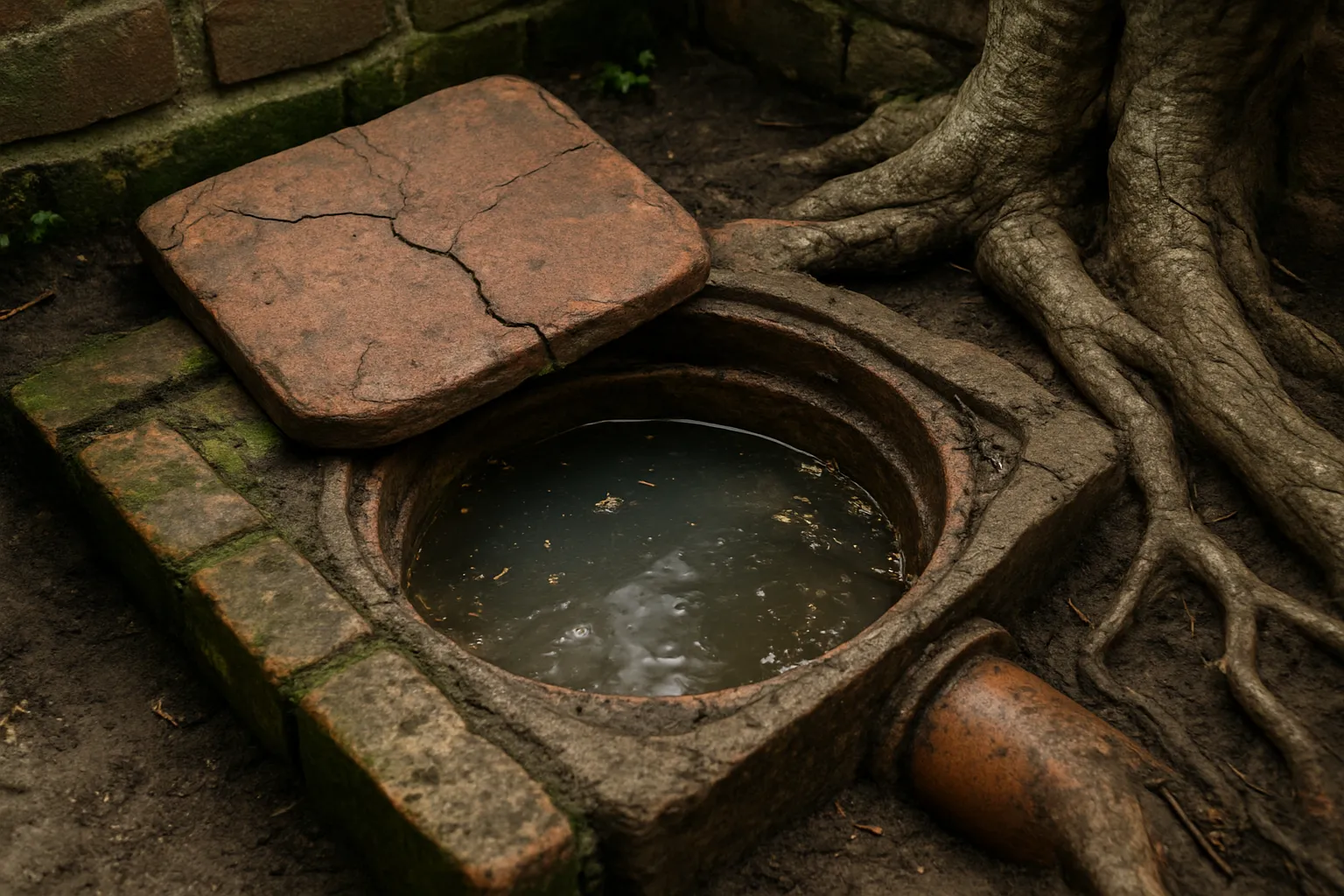
- Tree roots from nearby green spaces. Kew Gardens and the surrounding streets are heavily planted. Fine root tendrils from plane trees, limes and ornamental species seek out any joint or crack in a drain and colonise the pipe from the inside.
- Mature street trees. The London Borough of Richmond upon Thames maintains a large urban tree canopy along Kew’s residential streets — beautiful, but hard on old pipework.
None of this means a blockage is inevitable, but it does mean that a recurring blocked drain in Kew is worth investigating properly rather than just clearing and hoping for the best.
Step-by-Step: What to Try Yourself First
1. Identify where the problem actually is
Before reaching for a plunger, work out whether the blockage is inside your property or in the shared drain outside.
- If only one fixture is slow (a single sink or shower), the blockage is almost certainly in the waste pipe close to that fitting.
- If multiple fixtures are backing up at the same time, or if water is rising in an outside inspection chamber, the blockage is further down — possibly in a shared drain.
Lift the cover of your nearest external inspection chamber (usually a small square cover in the garden or driveway). If the chamber is full of water, the blockage is downstream of it. If it is empty, the problem is between the chamber and the house.
2. Try a plunger for isolated sink or basin blockages
A cup plunger works well on sinks and basins. Block the overflow with a damp cloth to build pressure, then plunge firmly several times. This is safe, costs nothing, and clears a surprising number of simple grease or soap blockages.
3. Use a kettle of hot (not boiling) water for kitchen sinks
Grease and cooking fat solidify in kitchen waste pipes, especially in cooler weather. Pouring a full kettle of hot water slowly down the drain can soften and shift a fresh grease build-up. Do not do this if you have plastic push-fit waste fittings under the sink — very hot water can soften the seals.
4. A drain rod for accessible outdoor blockages
If your inspection chamber is full and you have a set of drain rods, you can attempt to rod the drain yourself toward the blockage. Push rods in the direction of flow (away from the house) and rotate clockwise only — anticlockwise unscrews the rods and leaves them in the pipe. Stop if you meet firm resistance; forcing rods into a root mass or collapsed pipe will make things worse.
When to Stop and Call a Plumber
There are clear situations where DIY attempts are not appropriate:
- Water or sewage is backing up into the house — this is a health hazard and needs professional clearance.
- The blockage keeps returning — a recurring blocked drain in Kew almost always indicates root ingress or a structural defect in the pipe. A CCTV drain survey is the only way to know for certain.
- You cannot locate the blockage — if chambers are clear but drains are still slow, the problem may be in a shared section that requires the right access equipment.
- You suspect a shared drain — working on a shared drain without knowing its layout can cause problems for neighbouring properties.
- There is any sign of subsidence or sinkholes near the drain run — stop immediately and call.
For a blocked drain plumber in Kew who can attend quickly and carry out a proper investigation, call 07360 268948 — we are available 24 hours a day, seven days a week.
A Note on Shared Drains and Neighbour Responsibility
Since October 2011, Thames Water took over responsibility for most shared private sewers in London. If a blockage is in a section of drain shared between two or more properties and it connects to the public sewer, Thames Water may be responsible for clearing it. However, the drain serving only your property up to the boundary remains your responsibility. If you are unsure, a plumber can inspect and advise you on where the responsibility boundary lies before any work begins.
The Bottom Line
Most simple blockages in Kew — a slow kitchen sink, a sluggish shower — are worth a quick attempt with a plunger or hot water before calling anyone. But if the problem is in a shared Victorian drain, if roots are involved, or if sewage is backing up, professional equipment is needed and delay only makes things worse.
If you are in any doubt, call us on 07360 268948. We will tell you honestly whether it is something you can handle yourself or whether we need to come out.
Blocked drains in Kew are cleared by our sister drainage firm Drainiacs. Their blocked drains Kew page has the local details.