How-to
Why Your Hot Water Runs Out Too Fast
Hot water running out too quickly? Learn the common causes — from undersized cylinders to faulty thermostats — and when to call a plumber.
Published 30 June 2026
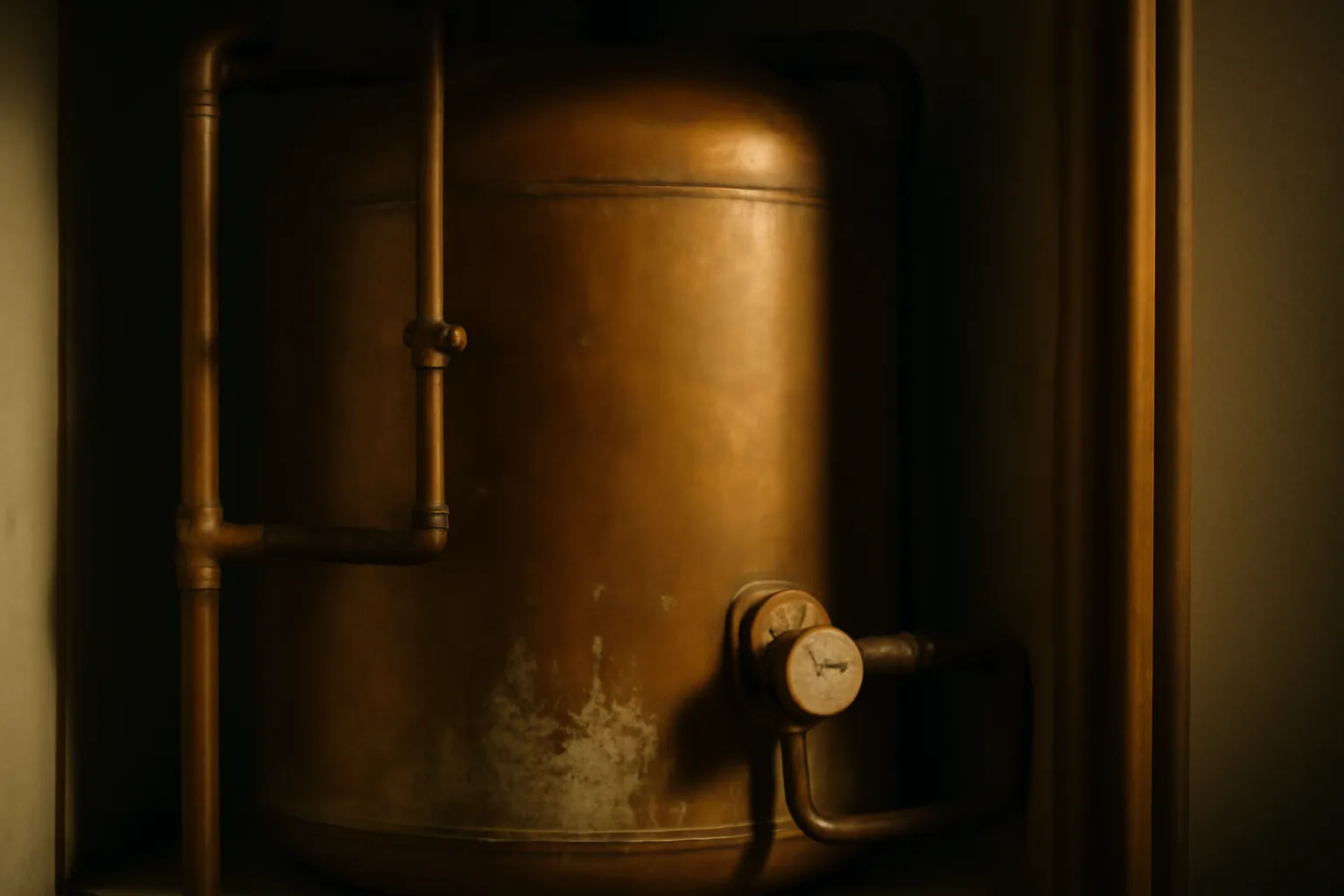
Few things are more frustrating than a lukewarm shower halfway through your morning routine. If your hot water runs out faster than it used to — or never seems to last long enough — there is usually a straightforward explanation. This guide walks through the most common causes so you know what you are dealing with before you pick up the phone.
First: What Type of System Do You Have?
The cause of your problem often depends on whether you have a combi boiler or a hot water cylinder (also called a stored hot water system).
Combi Boiler
A combination boiler heats water on demand, directly from the mains. There is no storage tank. If your combi struggles to keep up, the issue is almost always with the boiler itself — its output rating, a failing component, or low mains pressure feeding it.
Hot Water Cylinder
A cylinder stores a set volume of pre-heated water, ready to use. Once that volume is used up, you must wait for it to reheat. Most problems with “not enough hot water” in UK homes come down to the cylinder — its size, its thermostat, or its heating element.
Common Reasons Your Hot Water Runs Out Too Fast
1. Your Cylinder Is Simply Too Small
A standard single-person flat might have a 90–120 litre cylinder. A family of four really needs 180–210 litres or more. If your household has grown — new people, a new bathroom, a teenager who showers for twenty minutes — your existing cylinder may never have been adequate for current demand.
What to do: Count up your peak daily usage. A typical shower uses around 8–12 litres per minute. If the maths does not add up, a larger cylinder or a second unit may be the answer.
2. A Faulty Cylinder Thermostat
Your cylinder has a thermostat strapped to its side that tells the heating element or coil when to stop heating. If that thermostat is reading incorrectly, the water may cut off at 45 °C instead of 60–65 °C — giving you noticeably less usable hot water before it feels cold.
Signs of a failing thermostat include water that is warm but never properly hot, or a cylinder that never seems to finish heating.
What to do: A plumber can test and replace a cylinder thermostat relatively quickly. Do not attempt to bypass it — the thermostat also protects against scalding and Legionella risk.
3. A Failed Immersion Heater Element
If your cylinder relies on an electric immersion heater and the element has partially failed, it may still heat some water — just not all of it. You might get ten minutes of hot water where you used to get thirty.
Signs: The top of the cylinder feels warm but the middle and bottom stay cold.
4. Sediment Build-Up
Over time, limescale and sediment collect at the bottom of a cylinder, particularly in hard-water areas like much of the TW postcode. This layer insulates the water from the heat source, making the system far less efficient.
Signs: Rumbling or popping sounds from the cylinder when heating; water takes much longer than usual to heat up.
What to do: A plumber can flush or descale the cylinder. In severe cases, replacement is more cost-effective.
5. Your Combi Boiler Is Undersized or Struggling
Combi boilers are rated by their hot water flow rate (in litres per minute). A small boiler running multiple outlets — a shower, a bath tap, and a kitchen tap all at once — will simply run out of capacity. The water does not run out exactly, but it becomes noticeably cooler.
Older combis also lose efficiency as heat exchangers scale up or components wear, meaning they produce less hot water from the same gas input.
6. Crossed Connections or a Faulty Mixing Valve
Occasionally, cold water bleeds into the hot supply through a faulty thermostatic mixing valve (TMV) or a crossed connection. The result feels like the hot water runs out, when actually cold is diluting it at the source.
Quick Checks You Can Do Yourself
- Check the thermostat dial on the side of your cylinder — it should be set to around 60 °C.
- Run the hot tap alone (no mixer) to see whether the water gets genuinely hot before it cools.
- Listen to your cylinder while it heats — unusual noises suggest sediment.
- Check your boiler pressure gauge if you have a combi — low pressure affects performance.
When to Call a Plumber
If you have checked the basics and the problem persists, it is time for a professional to take a look. Cylinder thermostats, immersion elements, and mixing valves are all straightforward repairs for an experienced plumber — but they do need to be done correctly to keep your system safe and efficient.
If your hot water has stopped entirely, or if you can smell anything unusual near your boiler, treat it as an emergency and call straight away.
Emergency Plumbers TW are available 24 hours a day, 7 days a week across Twickenham, Richmond, Teddington, Hounslow, Feltham, Staines and the surrounding TW area.
Call us now on 07360 268948 and we will talk you through what is happening and get someone to you as quickly as possible.