How-to
How to Bleed a Radiator (and Why Your Heating Is Cold at the Top)
Step-by-step guide to bleeding a radiator, fixing cold spots at the top, and repressurising your boiler afterwards. Covers the TW postcode area.
Published 30 June 2026
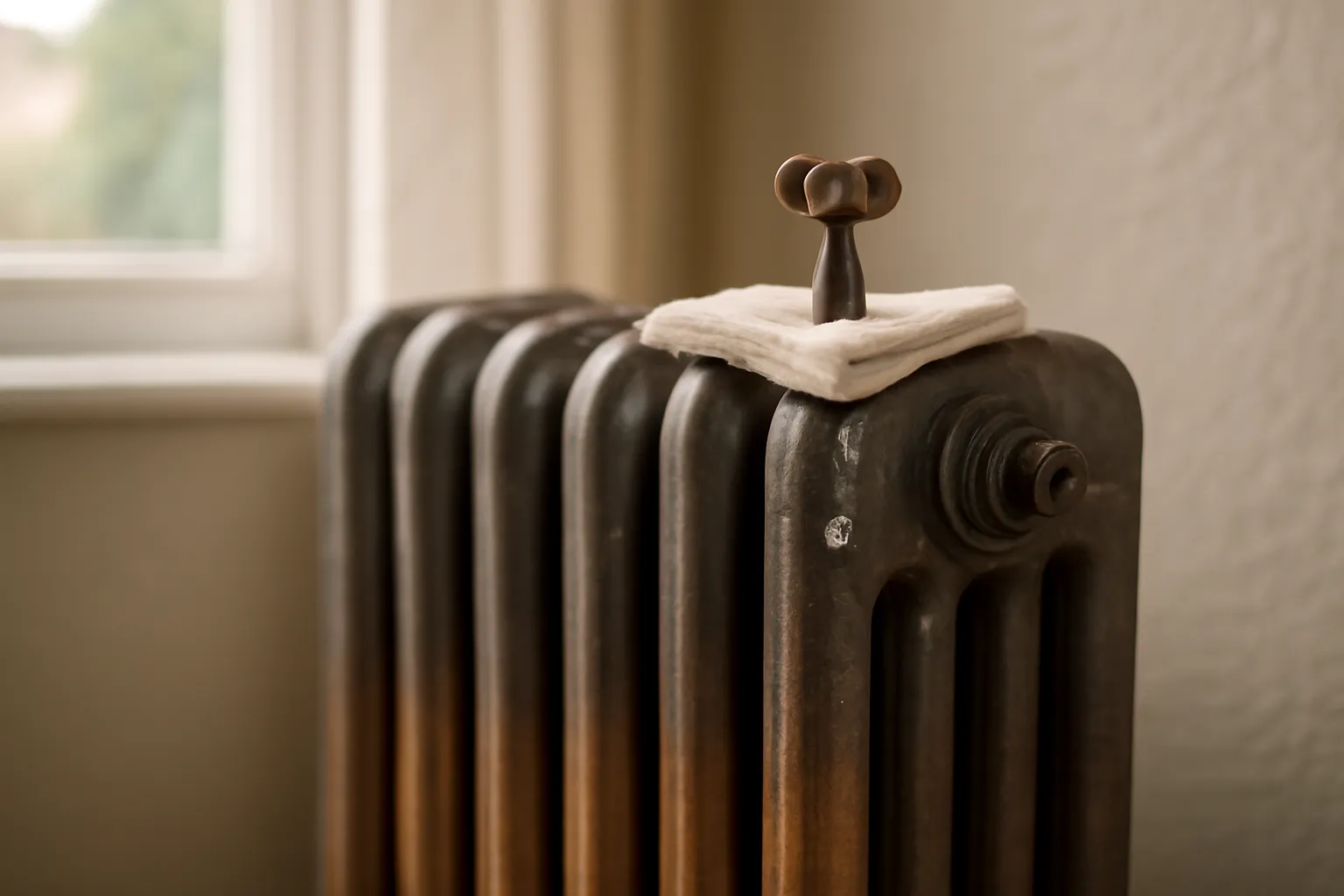
Why Is My Radiator Cold at the Top?
If your radiator is warm at the bottom but cold — or even stone-cold — at the top, the most likely cause is trapped air. Over time, small amounts of air work their way into your central heating system. Because air is lighter than water, it rises and collects at the highest point of each radiator, preventing hot water from filling the whole panel.
The fix is straightforward: bleeding the radiator releases that trapped air and lets hot water back in.
What You Will Need
- A radiator bleed key (available from any DIY or hardware shop for under £2, and often supplied with a new radiator)
- A small cloth or old towel
- A container or bowl to catch drips
Step-by-Step: How to Bleed a Radiator
1. Run Your Heating and Identify the Problem Radiators
Turn your central heating on and let the system warm up fully — allow at least 10–15 minutes. Once hot, go around each radiator and feel across the surface. Any radiator that is cold at the top but warm lower down needs bleeding.
Turn the heating off and let the radiators cool for 20–30 minutes before you begin. Working on a hot radiator risks scalding from escaping steam or water.
2. Locate the Bleed Valve
The bleed valve is a small square-headed fitting, usually found at one of the top corners of the radiator. It may have a plastic cap over it.
3. Place Your Cloth and Container
Hold your cloth or container directly below the bleed valve to catch any water that escapes.
4. Open the Bleed Valve
Insert the bleed key into the valve and turn it anti-clockwise — typically a quarter to half a turn is enough. Do not remove the valve entirely.
You should hear a hissing sound as trapped air escapes. Keep the key in place and hold your cloth ready.
5. Wait for a Steady Stream of Water
Once the hissing stops and a thin, steady trickle of water appears, all the air has been released. At this point, turn the key clockwise to close the valve firmly. Do not overtighten — snug is sufficient.
Wipe away any drips and replace the plastic cap if there was one.
6. Repeat for Every Radiator That Needs It
Work through each cold radiator in the same way. If you have a two-storey home, it is generally good practice to bleed downstairs radiators first, then move upstairs.
Step 7: Repressurise Your Boiler
This is the step many people forget — and skipping it can leave your heating working poorly or trigger a boiler lockout.
Bleeding radiators releases water along with the air, which drops the pressure in your sealed central heating system. Check your boiler’s pressure gauge (usually on the front of the unit). The needle should sit between 1 and 1.5 bar when the system is cold.
If the pressure has dropped below 1 bar:
- Locate the filling loop — a short braided hose connecting the mains water supply to the boiler, usually underneath the unit.
- Open the valves on either end of the filling loop slowly until you hear water entering the system.
- Watch the gauge and stop filling when the needle reaches approximately 1.2–1.5 bar.
- Close both valves securely and remove or store the filling loop if it is the detachable type.
Consult your boiler manual if you are unsure where the filling loop is or how your particular model works.
After Bleeding: Check Your Radiators Again
Turn the heating back on and let everything warm up. Your previously cold radiators should now heat evenly from top to bottom. If a radiator is still cold at the top after bleeding, or if it is cold all over, there may be a different issue — such as a faulty thermostatic radiator valve (TRV), a circulation pump problem, or a build-up of sludge in the system.
When to Call a Plumber
Bleeding radiators is a safe DIY task in most cases, but call a professional if:
- You cannot locate or turn the bleed valve without forcing it
- Water pours out rather than trickles, or is discoloured and black (a sign of sludge)
- Your boiler pressure drops again very quickly after repressurising — this can indicate a leak
- The boiler shows an error code or will not fire up after you repressurise
- You are uncomfortable working around the boiler or filling loop
If you are dealing with a more serious heating problem — no hot water, a leaking radiator, or a boiler that has cut out — we are available around the clock across the TW postcode area. Give us a call on 07360 268948 and we will get someone to you as quickly as we can.