Emergencies
Where Is My Stopcock? How to Find and Test It
Not sure where your stopcock is? This guide covers the most common locations in UK homes, how to test it works, and why it matters in an emergency.
Published 30 June 2026
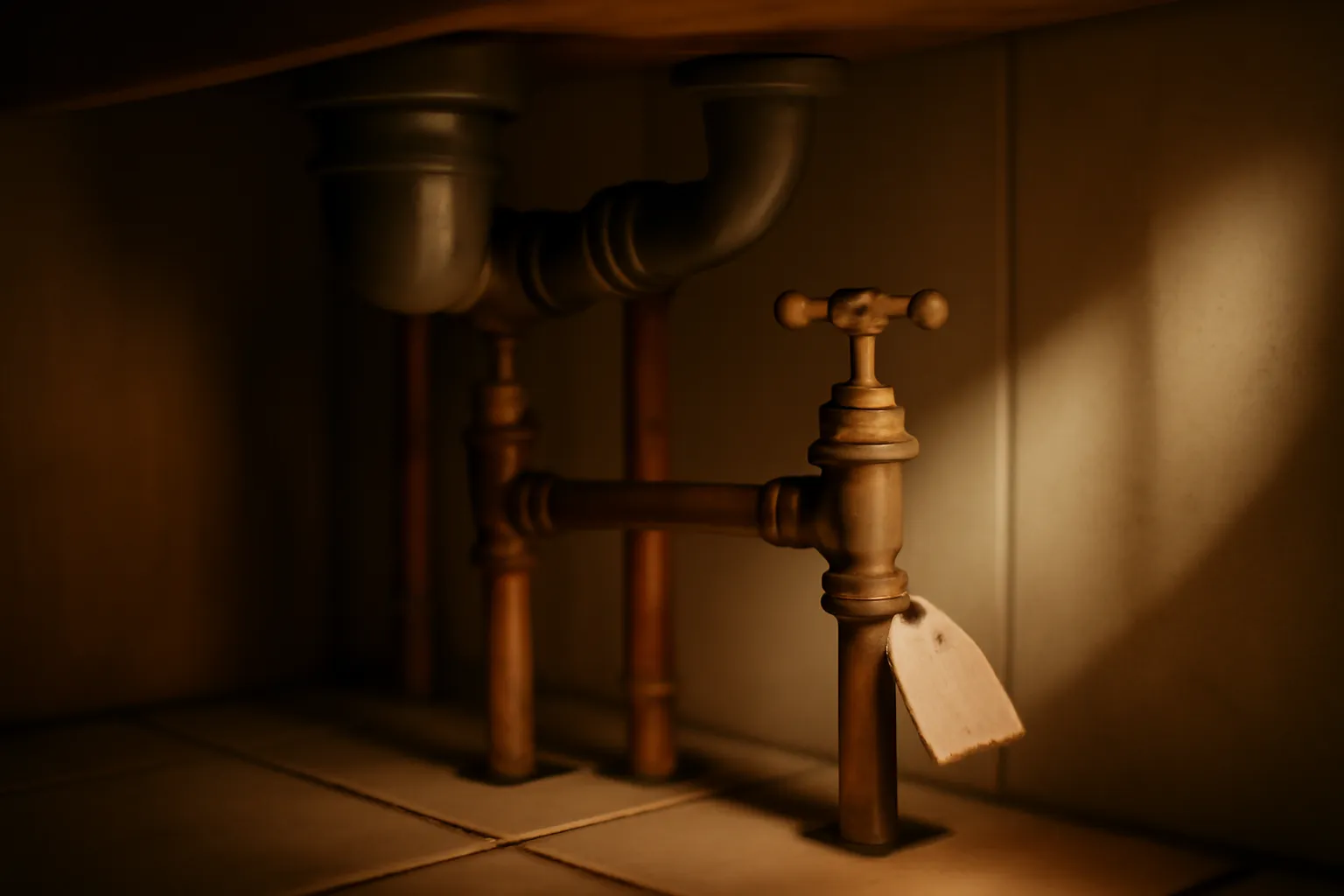
When a pipe bursts or a fitting fails, the first thing you need to do is shut off the water. That means you need to know exactly where your stopcock is — before the water is already spreading across the floor. This guide will help you find it, check it works, and feel confident you can act quickly if the worst happens.
What Is a Stopcock?
A stopcock (sometimes called an internal stop valve) is a tap-like valve that controls the flow of mains water into your home. Turn it clockwise and the water stops. Turn it anticlockwise and it flows again. It is usually a brass or plastic valve with a flat-head slot or a small handle.
Common Locations in TW-Area Homes
There is no single standard position, but these are the most likely places to check:
- Under the kitchen sink — the most common location in UK houses. Look at the back of the cabinet, near the cold water pipe running up from the floor.
- In a downstairs bathroom or cloakroom — sometimes under the basin or behind the toilet cistern.
- In the hallway or under the stairs — particularly in older properties and Victorian terraces common across Richmond, Twickenham and Isleworth.
- In a utility room or garage — if your home has one, check near where the water main enters the building.
- In a cellar or basement — less common in this area, but worth checking if you have one.
- In a purpose-built meter box — some newer properties, including flats in Hounslow and Feltham, have the stopcock inside a small box on an outside wall or in a communal cupboard.
If you live in a flat, your individual stopcock may be inside your own unit (often under the kitchen sink), but there will also be a building-wide isolation valve controlled by the landlord or managing agent.
What About the External Stopcock?
There is also a stopcock outside your property, usually beneath a small metal cover in the pavement or front garden. This is the Water Authority’s valve and is operated with a special long-handled key. You are entitled to use it in an emergency, but a plumber will typically have the correct tool. Your internal stopcock should always be your first port of call.
How to Test Your Stopcock
Finding it is only half the job. A stopcock that has not been turned in years can seize solid, which is no use at all in an emergency. Here is how to check it:
- Locate the valve and clear any items stored in front of it.
- Turn it clockwise (right) slowly and firmly. Do not force it.
- Check a cold tap elsewhere in the house — the flow should reduce or stop.
- Turn it back anticlockwise (left) to restore the supply.
- If it is stiff, apply a small amount of penetrating oil around the spindle, wait a few minutes, and try again gently.
What If It Will Not Move?
Do not apply excessive force — you risk snapping the spindle or cracking an old fitting. Call a plumber to replace or free the valve before you actually need it in a hurry. This is a straightforward job and far cheaper than dealing with a flooded home.
Why Every Household Member Should Know This
Emergencies rarely happen at convenient moments. If a pipe bursts while you are out, a partner, teenager, or houseguest needs to be able to act immediately. Take two minutes to show everyone in your home where the stopcock is and how to turn it. A quick demonstration now could prevent thousands of pounds of water damage later.
A Few Extra Tips
- Label it — a piece of masking tape marked “WATER OFF” costs nothing and saves precious seconds.
- Keep the area clear — a stopcock buried behind cleaning products is a stopcock you cannot reach in time.
- Check it annually — make it part of the same routine as testing your smoke alarms.
If You Have a Burst Pipe Right Now
Turn off your stopcock immediately, then turn off your boiler and any electrical circuits in affected rooms at the consumer unit. Put down towels or containers to catch water and move valuables clear. Then call us.
We cover the TW postcode area around the clock — Twickenham, Richmond, Teddington, Hounslow, Feltham, Staines, Isleworth and surrounding areas. If you have a burst pipe or any other plumbing emergency, call 07360 268948 now and we will get someone to you as quickly as possible.