Emergencies
Burst Water Pipe in Kew? Here's What to Do Right Now
A burst water pipe in Kew needs fast action. Follow these steps to limit damage, find your stopcock, and get emergency help.
Published 25 July 2026
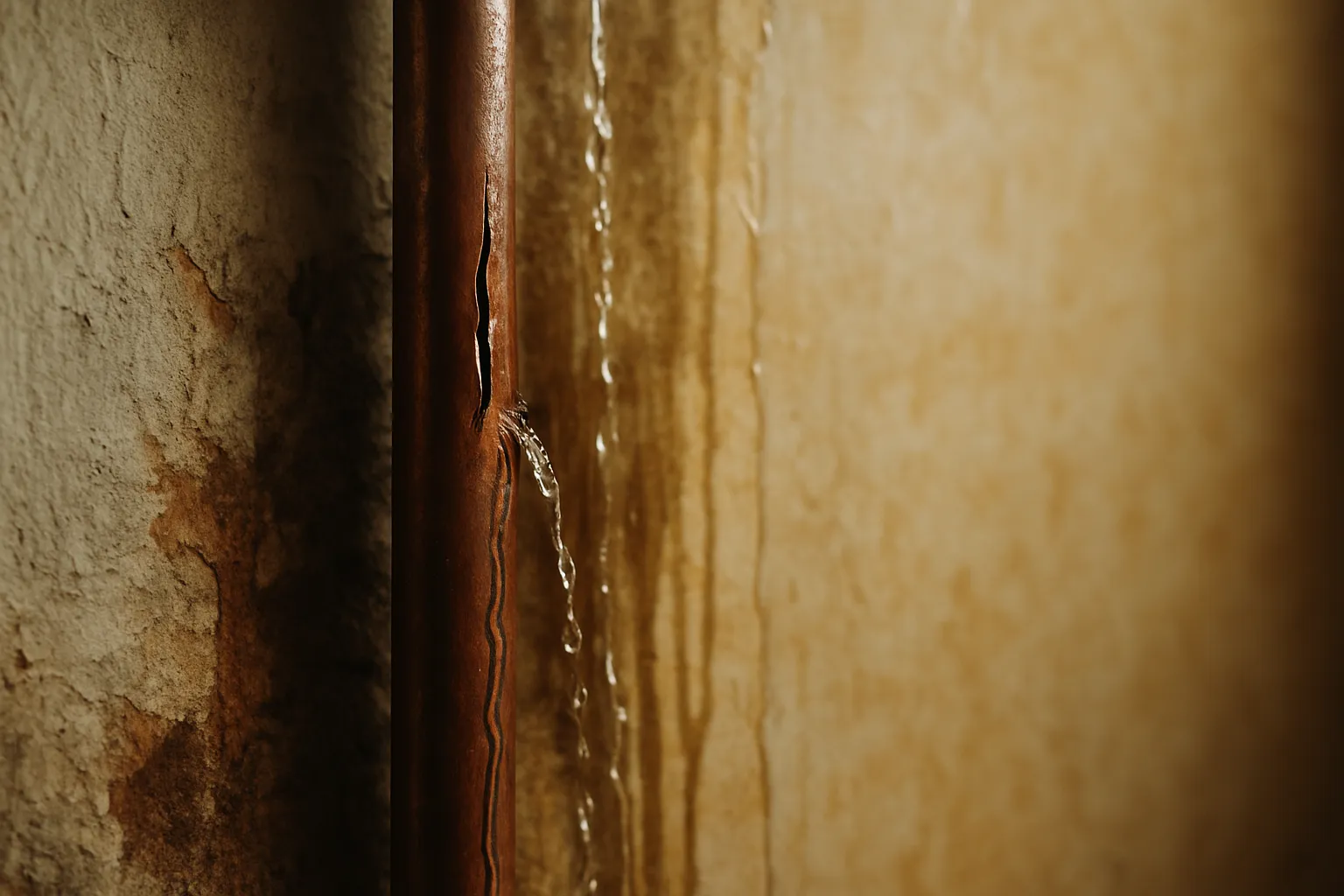
A burst pipe can go from a drip to a flood in minutes. If water is actively spraying or pooling, skip to the steps below — read the background later. If things are under control for now, this guide will help you understand what you are dealing with and what to do next.
Step 1: Turn Off Your Water Supply Immediately
Your first job is to stop more water entering the burst section of pipe. Find your internal stopcock and turn it clockwise until it stops.
Common stopcock locations in Kew properties:
- Under the kitchen sink (most common in post-war semis and modern flats)
- In the airing cupboard, often on the pipe feeding the cold water tank
- Under the stairs or in a ground-floor cupboard
- In the bathroom, behind a panel or beneath the basin pedestal
Kew has a large stock of Victorian and Edwardian terraced houses, many of which have been converted into flats. In converted properties, individual flat stopcocks are sometimes in awkward spots — a communal cupboard on the landing, inside a service duct, or even in the basement. If you cannot find yours, turn off the external boundary stopcock instead. This is usually set into the pavement or front garden, beneath a small metal cover marked “water”. You will need a long-handled stopcock key to reach it, though a flat-headed screwdriver sometimes works in a pinch.
Step 2: Reduce the Pressure in the Pipes
Once the stopcock is off, open the cold taps on your ground floor. This drains residual water from the pipes and reduces the pressure still pushing through the burst. Do not open hot taps at this stage — you do not want to drain your hot water cylinder unnecessarily.
Step 3: Switch Off Electrics If Water Is Near Wiring
Water and electrics are a dangerous combination. If water is coming through a ceiling, near a fuse box, or close to any sockets or light fittings, switch off the circuit at your consumer unit (fuse box). If you are unsure which circuit to isolate, switch off the mains. Do not re-enter a room where water and live electrics may be in contact until a professional has confirmed it is safe.
Step 4: Contain the Water and Start Documenting
Lay down towels, use buckets, and move furniture and valuables away from the affected area. Then take photographs and short video clips of:
- The visible burst or leak point
- Any water damage to ceilings, walls, floors and belongings
- The stopcock location and position
- Any damp patches or staining
This visual record belongs to you. It is the evidence your insurer will typically ask for when you contact them to report a claim. Keep it somewhere safe.
Step 5: Call an Emergency Plumber
Once the water is off and the immediate risk is contained, call a plumber to assess and repair the damage. A burst pipe is not a job to leave until morning — exposed pipework can freeze again overnight (particularly relevant in Kew during cold snaps), and damp left untreated encourages mould within 24 to 48 hours.
Call us now: 07360 268948 — we cover Kew and the surrounding TW postcode area around the clock.
Why Kew Pipes Are Particularly Vulnerable
Victorian and Edwardian Pipework
Much of Kew’s housing stock dates from the late 19th and early 20th centuries. Original lead or iron supply pipes — where they have not been replaced — are more prone to corrosion, joint failure, and splitting under pressure. Even properties that have been partially replumbed may have older sections hidden inside walls or beneath floors.
Converted Flats
Kew has a significant number of large houses converted into flats. Shared supply pipes, poorly documented stopcocks, and pipework routed through multiple dwellings can make tracing a burst more complex. If you live in a converted flat and cannot find your stopcock, contact your freeholder or managing agent immediately — and call us so we can help locate and isolate the source.
Proximity to the Thames
Properties close to the river and Kew Green can sit on ground that retains moisture. This affects external pipework and underground supply lines, which can shift slightly with seasonal ground movement and develop hairline cracks over time.
What Happens When We Arrive
We will locate the burst, confirm the isolation is correct, and carry out the repair. Once the work is done, we provide a written record of the cause, the scope of repair, and any photographic evidence we have taken — all for your records. What you do with that documentation is entirely up to you.
A burst pipe is stressful, but taking the right steps in the first few minutes makes a real difference to the outcome. If you are still dealing with an active leak in Kew right now, do not wait — call 07360 268948 and we will get someone to you as quickly as possible.