Emergencies
What to Keep in a Home Plumbing Emergency Kit
Pipe tape, a stopcock key, buckets and more — here's exactly what to keep at home so you're ready for any plumbing emergency.
Published 1 July 2026
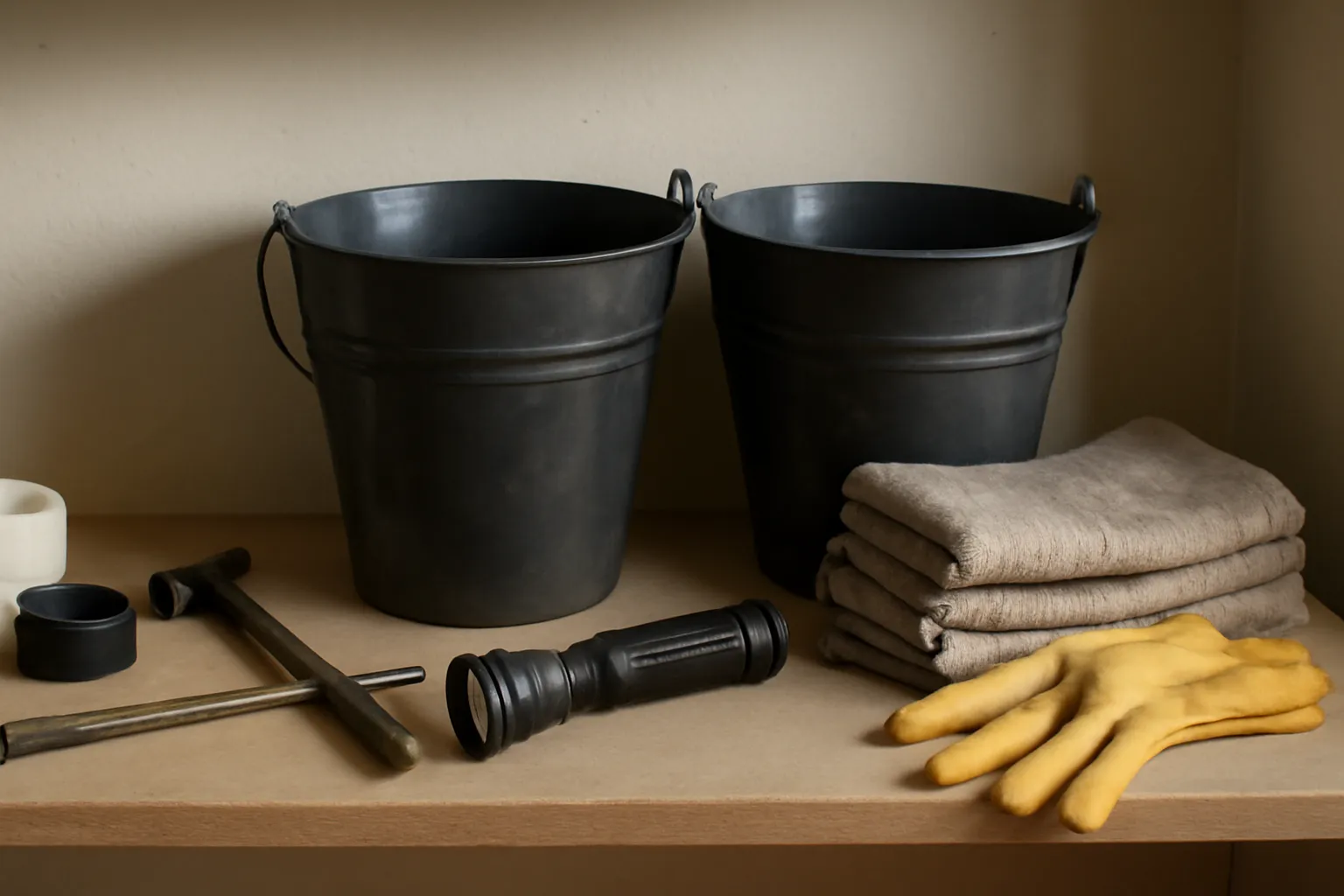
A plumbing emergency rarely gives you any warning. One moment everything is fine; the next, water is spreading across the kitchen floor or dripping through a ceiling. Having a small kit of basic supplies ready can make the difference between a manageable incident and serious water damage — and it can buy you valuable time while you wait for a professional to arrive.
This guide covers exactly what to keep, where to store it, and how to use each item.
The Essential Items
1. Stopcock Key
Your internal stopcock — the valve that shuts off your entire water supply — is the single most important thing to locate and operate in any leak emergency. In older properties the stopcock can be stiff or awkward to reach. A stopcock key (also called a water key or service key) gives you extra leverage and is essential if your stopcock is under floorboards or behind a panel.
Before an emergency happens, find your stopcock, check it turns freely, and keep your key nearby.
2. PTFE Tape (Plumber’s Tape)
A roll or two of PTFE thread-seal tape costs almost nothing and takes up no space. Wrapped tightly around a leaking threaded joint, it can slow or stop a minor drip while you arrange a proper repair. It is not a permanent fix, but it can prevent a small weep from becoming a flood.
3. Pipe Repair Tape or Epoxy Putty
For a pinhole leak or a small crack in a pipe, self-amalgamating silicone tape or a two-part epoxy putty can provide a temporary seal. Again, these are stopgap measures only — always have a plumber inspect and make a permanent repair — but they can save your flooring and belongings overnight or over a weekend.
4. Buckets (at Least Two)
A couple of sturdy buckets belong in every home. They catch drips from a leaking ceiling, collect water while you isolate a supply, and are useful for bailing in a worst-case scenario. Keep them accessible rather than buried in a cupboard.
5. Old Towels and Absorbent Cloths
A stack of old towels can be used to soak up water quickly, protect flooring, or create a temporary barrier around a leak. Microfibre cloths are especially absorbent. Keep a dedicated set in your kit so they are always available.
6. A Torch
Water and electricity are a dangerous combination. If a leak reaches a fuse box or you need to work under a sink in a dark cupboard, a reliable torch (with fresh batteries or a charged USB battery) is essential. Do not rely solely on your phone’s torch.
7. Rubber Gloves
Protective rubber gloves keep your hands safe if water is contaminated — particularly relevant if a drain or toilet is involved — and they give you a better grip on wet fittings.
8. A Waterproof Notepad or Laminated Card
Write down the following and keep it with your kit:
- Location of your internal stopcock
- Location of your external stop tap (usually near the boundary of your property)
- Location of individual isolation valves under sinks and behind toilets
- The emergency plumber’s number: 07360 268948
In a stressful moment, having this information written down rather than trying to recall it from memory is genuinely useful.
Where to Store Your Kit
Choose somewhere accessible to all adults in the household — not locked away or buried under other items. A small waterproof box or a handled crate kept in the utility room, under the stairs, or in the airing cupboard works well. Tell everyone in the house where it is.
What to Do First in an Emergency
- Turn off the water at the internal stopcock.
- Turn off any nearby electrics at the fuse board if water is near sockets or fittings.
- Apply your temporary fix — tape, putty, or towels — to slow damage.
- Call a professional to carry out a permanent repair.
A Kit Helps, But It Is Not a Substitute for a Plumber
Temporary repairs keep the situation under control, but they are not permanent solutions. Pipe tape can fail; epoxy putty has limits. Any leak, burst pipe, or sudden drop in water pressure should be assessed by a qualified plumber as soon as possible to prevent hidden damage to your structure, insulation, or electrics.
If you are dealing with a burst pipe or a leak you cannot control right now, call us any time — day or night — on 07360 268948. We cover the TW postcode area around the clock and can be with you quickly.