Emergencies
What to Do When a Pipe Bursts at Night
Woken up by a burst pipe? Follow this calm, step-by-step guide to stop the damage and stay safe until help arrives.
Published 28 June 2026
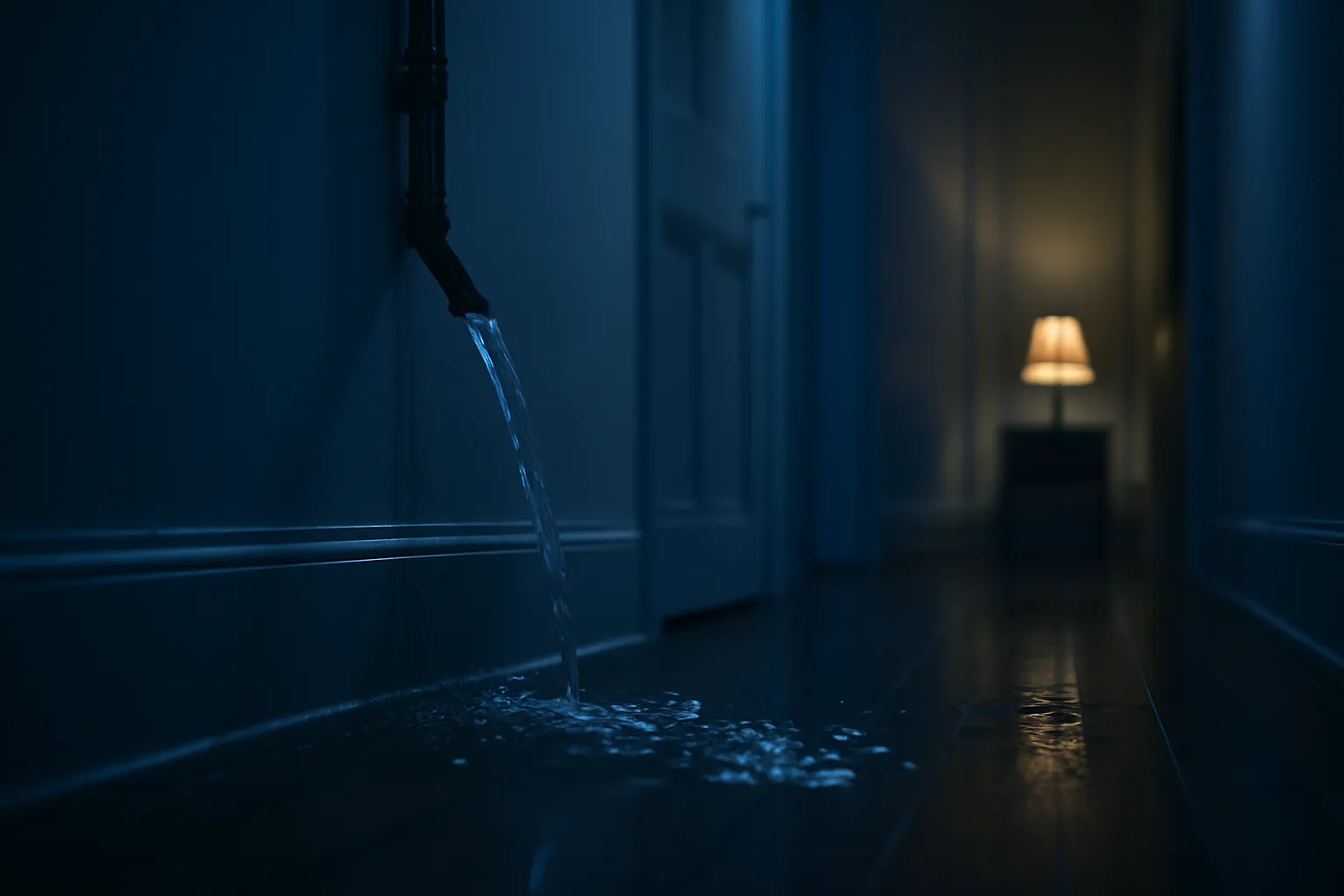
A burst pipe at 2am is alarming, but the actions you take in the first few minutes make a real difference to the damage your home suffers. Stay calm, work through the steps below, and you will have the situation under control far sooner than it feels right now.
Step 1: Turn Off the Water Supply Immediately
Your first job is to stop more water flowing into the burst pipe.
Find your stopcock. In most homes it is under the kitchen sink, but it can also be in a utility room, airing cupboard, or near the front door. Turn it clockwise until it stops. If it is stiff or seized, do not force it — move on to step 2 and call us.
If you cannot find the indoor stopcock, there is usually an external one beneath a small cover in the pavement or front garden. You may need a long-handled stopcock key to reach it.
Step 2: Drain the System
Once the supply is off, open every cold tap in the house and flush every toilet. This empties water out of the pipes and reduces the pressure behind the leak. It sounds counterintuitive, but draining the system quickly limits how much water escapes through the damaged section.
Leave the taps open until the flow stops completely.
Step 3: Turn Off Your Boiler and Hot Water
Switch your boiler off at the programmer or thermostat. If the burst is near the hot water cylinder or you are unsure where the leak is, also turn off the immersion heater if you have one.
Do not run hot taps until a plumber has checked the system — drawing hot water from an empty cylinder can damage the element.
Step 4: Protect Electrics — This Is Critical
Water and electricity are a dangerous combination.
- If water is dripping near a light fitting, socket, or consumer unit (fuse box), do not touch the switch.
- Turn off the electricity at the main fuse box if you can do so safely and without touching wet surfaces.
- If in any doubt, leave the affected room and keep others out until the supply is isolated.
If you suspect water has already entered any electrical fitting, call an electrician as well as a plumber before power is restored.
Step 5: Catch and Contain the Water
While you wait for help:
- Place buckets, bowls, or towels under the leak.
- If the ceiling is bulging with trapped water, carefully pierce it in one spot with a screwdriver so it drains in a controlled stream rather than collapsing suddenly.
- Move furniture, rugs, and valuables away from the wet area.
- Take a short video on your phone — useful evidence for your insurer later.
Step 6: Call an Emergency Plumber
Once the water is off and electrics are safe, call us. Our team covers the TW postcode area around the clock — Twickenham, Richmond, Teddington, Hounslow, Feltham, Staines, and everywhere in between.
07360 268948 — available 24 hours, every day of the year.
Let us know:
- Where the burst appears to be (which room, which pipe if visible)
- Whether the stopcock is off
- Whether there is any concern about electrics
That helps us arrive with the right parts and get you sorted as quickly as possible.
Common Causes of Night-Time Pipe Bursts
Understanding why it happened can help prevent a repeat:
Frozen pipes
Cold snaps overnight are the most common culprit in winter. Water expands as it freezes, splitting the pipe from the inside. Pipes in loft spaces, external walls, and unheated outbuildings are most at risk.
Old or corroded pipework
Older properties in the TW area often have original copper or lead pipework. Metal fatigue and corrosion weaken joints over time until a small knock or pressure spike causes a failure.
High water pressure
Mains pressure that is too high puts constant stress on joints and appliances. A plumber can fit a pressure-reducing valve if this is a recurring issue.
Accidental damage
DIY work, furniture moving, or even a nail through a wall can nick a pipe that then fails hours later when no one is watching.
A Note on Your Home Insurance
Most home insurance policies cover escape of water. Take photos and video before any drying out begins, keep receipts for any emergency work, and notify your insurer as soon as it is practical to do so — usually the next morning if the incident happens overnight.
You have done the right thing by looking this up. The steps above — stop the water, drain the system, protect electrics, contain the damage — are genuinely all you need to do right now. Everything else can wait for daylight and a professional assessment.
If you are in the TW area and need us tonight, call 07360 268948. We are here.