Insurance
What Is Trace and Access Cover on Home Insurance?
Trace and access cover pays for finding a hidden leak. Learn what it includes, what insurers ask for, and how a plumber's report supports your claim.
Published 10 July 2026
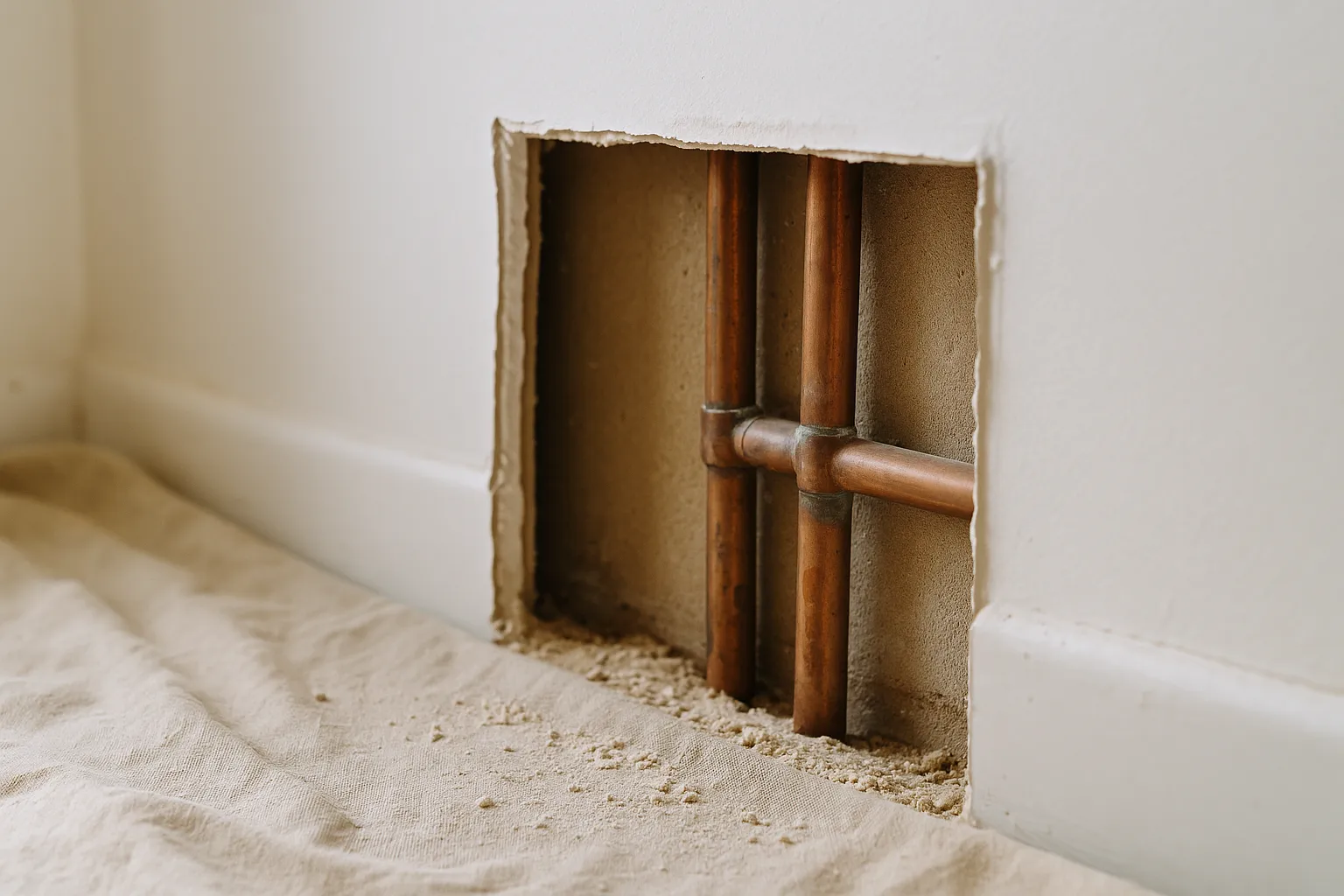
A hidden leak is bad enough. Then you discover that finding it can cost as much as fixing it. Cutting into plasterboard, lifting floorboards and exposing pipework all takes time and skill — and it is not always covered automatically.
That is where trace and access cover comes in.
What Trace and Access Means
Trace and access is the part of a home insurance policy that pays for the cost of locating a hidden leak, not just repairing it.
A standard buildings policy usually covers the repair of the pipe itself. It may not cover the labour and making-good needed to get to it. Trace and access cover fills that gap.
Typical covered work:
- Locating the origin of a concealed leak
- Removing and replacing flooring, boxing, tiles or plasterboard to reach it
- Reinstating the surface afterwards
Not every policy includes it, and some insurers sell it as an add-on.
Where a Plumber Fits In
A plumber’s job is to find the leak safely and repair it with as little destruction as possible. We use:
- Thermal imaging and acoustic listening devices where appropriate
- Pressure testing to isolate the faulty section
- Controlled cutting away of boxing, floors or walls only where necessary
As we work, we photograph the failed part, the damage caused, and the path the water took. We also record moisture readings from the surrounding area.
That record is what your insurer usually wants to see before agreeing to pay trace and access costs.
What Your Insurer Will Want
If you need to claim under trace and access cover, your insurer will typically ask for:
- Evidence the leak was hidden and could not be found without exposing pipework
- Photographs of the leak and the affected area before it is covered up
- A written scope of the work needed to reach and repair the leak
- An itemised invoice showing trace/access labour separately from the pipe repair
Keep the damaged sections until your insurer confirms they have enough evidence. Throwing them away is the single most common mistake people make.
Is There a Separate Excess?
Some insurers apply the standard policy excess to trace and access claims. Others charge a higher, separate excess specifically for escape-of-water or trace-and-access work. Check your policy schedule — the difference can be several hundred pounds.
Do I Have to Use the Insurer’s Contractor?
No. In most cases you can choose your own plumber. The insurer may ask for an estimate or report before authorising work, but the choice of who does the work is usually yours.
Choosing a local emergency plumber who understands how to document the cause properly can make the claim run more smoothly than waiting for a distant approved contractor.
What If My Policy Doesn’t Have Trace and Access?
If the cover is missing, you will likely have to pay the locating and making-good costs yourself, even if the pipe repair is covered. In that situation it is even more important to act quickly: the longer a hidden leak runs, the more damage there is to expose and put right.
Need a Hidden Leak Found?
If you suspect a leak behind a wall, under a floor or in a ceiling, call 07360 268948. We answer 24/7 across the TW area and carry leak-detection equipment so we can locate the source with as little disruption as possible. We will stop the leak, repair it, and give you the written record you need.