Emergencies
What Does Building Insurance Cover for Water Damage: A Real-World Guide
Understand what building insurance typically covers after a water leak — floors, ceilings, walls and more — and how to document your claim effectively.
Published 24 July 2026
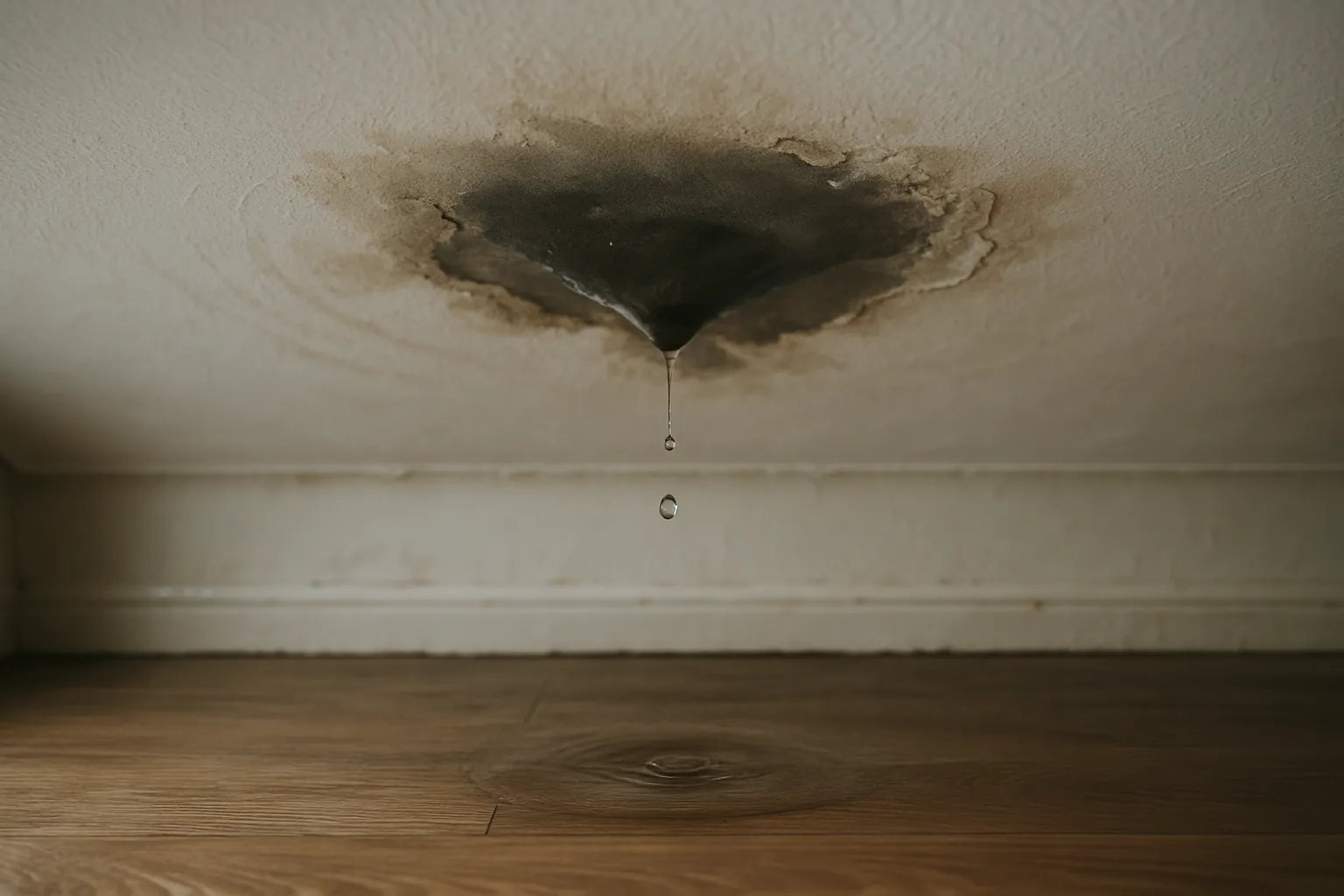
What Does Building Insurance Cover for Water Damage?
A burst pipe at 2 am, a slow leak behind the bath panel that you only notice when the ceiling below starts to bow — water damage can be devastating and expensive. If you have building insurance, you will naturally want to know what your policy is likely to pay for. This guide explains what insurers typically cover, what they often exclude, and what evidence you will need to support your own claim.
If water is still escaping right now, stop reading and call us on 07360 268948. Getting the leak stopped is the single most important thing you can do — for your home and for any future insurance claim.
The Difference Between Buildings and Contents Insurance
Buildings insurance covers the structure of your home — the fabric of the building itself. Contents insurance covers your possessions inside it. For water damage you will often need to think about both, but this guide focuses on buildings cover.
What Buildings Insurance Typically Covers After a Water Leak
Every policy is different, so always read your own schedule. That said, most standard buildings policies will consider a claim for:
- Ceilings — plasterwork that has collapsed, cracked or become saturated and unsafe
- Floors — timber floorboards that have warped or lifted; subfloor structures that have rotted; floor screeds that have crumbled
- Walls — plaster that has blown, render that has failed, or internal wall linings that have been soaked beyond drying
- Fixed kitchen and bathroom fittings — units, worktops and tiles that are damaged as a direct result of the leak (not general wear)
- Structural timbers — joists, rafters or studwork that have been weakened by prolonged water ingress
- Redecoration — painting and plastering once the structural repair is complete
The key phrase in most policies is “sudden and accidental damage”. A pipe that bursts overnight and floods a room is a clear example. A slow drip that has been seeping for two years is often treated differently.
What Buildings Insurance Typically Does NOT Cover
- The source of the leak itself — the failed pipe, the cracked fitting, the perished seal. Most policies specifically exclude the cost of repairing or replacing the component that actually leaked. You pay for the repair; the policy pays for the resulting damage.
- Gradual deterioration — damage that built up slowly over time because maintenance was neglected.
- Pre-existing damage — anything your insurer can show was already present before the incident.
- Cosmetic improvements — if your kitchen was already due a refresh, an insurer will generally pay to restore like-for-like, not to upgrade.
- Escape of water from outside the property — flooding from rivers or surface water is usually a separate peril (and sometimes a separate policy).
Rebuild Scope vs. Cosmetic Repair: How Insurers Think About It
Loss adjusters — the surveyors your insurer may send — are trained to distinguish between reinstatement (restoring what was there) and betterment (improving on what was there). You are generally entitled to the former.
In practice this means:
- If your 10-year-old laminate floor is destroyed, the insurer will typically pay for a comparable laminate floor, not a hardwood upgrade.
- If your ceiling plaster is down, they will pay to replaster and redecorate to match — not to install a feature ceiling you always wanted.
- If a wall needs to be opened to access pipework, the cost of making good that wall is usually covered; the cost of the plumber’s access itself usually is not.
What to Expect from a Loss Adjuster’s Visit
For larger claims, your insurer will often instruct a loss adjuster to visit. They are independent of your insurer (though paid by them) and their job is to assess the scope and value of the damage. You can expect them to:
- Inspect all affected areas visually
- Use moisture meters to identify hidden damp within walls and floors
- Ask about the timeline — when did you first notice the problem?
- Review any reports or invoices from the plumber who stopped the leak
- Produce a schedule of works and an estimated reinstatement cost
Being prepared, co-operative and well-documented makes this process smoother.
The Most Important Thing You Can Do: Document Everything
Your insurer will ask for evidence. Before any drying or repair work begins, make sure you have:
- Photographs and video of every affected room, taken from multiple angles
- A written report from your plumber stating the cause of the leak, when it is likely to have started, and what was done to stop it
- Moisture readings if your plumber or a specialist has taken them — these show the extent of saturation inside walls and floors
- A record of the scope of work carried out at the emergency stage
This documentation belongs to you. You use it to support your own claim with your insurer.
How a Plumber Fits Into the Process
Our role is straightforward: we stop the leak, make the situation safe, and give you a clear written record of what we found and what we did. That record — cause, photographs, moisture readings, scope of emergency works — is yours to pass to your insurer or loss adjuster as you see fit. We do not deal with insurers on your behalf; we deal with the water.
Still Got Water Coming In?
If you have an active leak anywhere in the TW postcode area — Twickenham, Richmond, Teddington, Hounslow, Feltham, Staines or nearby — call us now on 07360 268948. We are available around the clock, every day of the year. Getting the leak stopped quickly limits the damage and gives your insurance claim the best possible foundation.