How-to
Water Leak Under the House: How We Find It Without Digging Up the Floor
Suspected water leak under your house? Learn how thermal imaging, tracer gas and acoustic tools locate it without unnecessary digging.
Published 29 July 2026
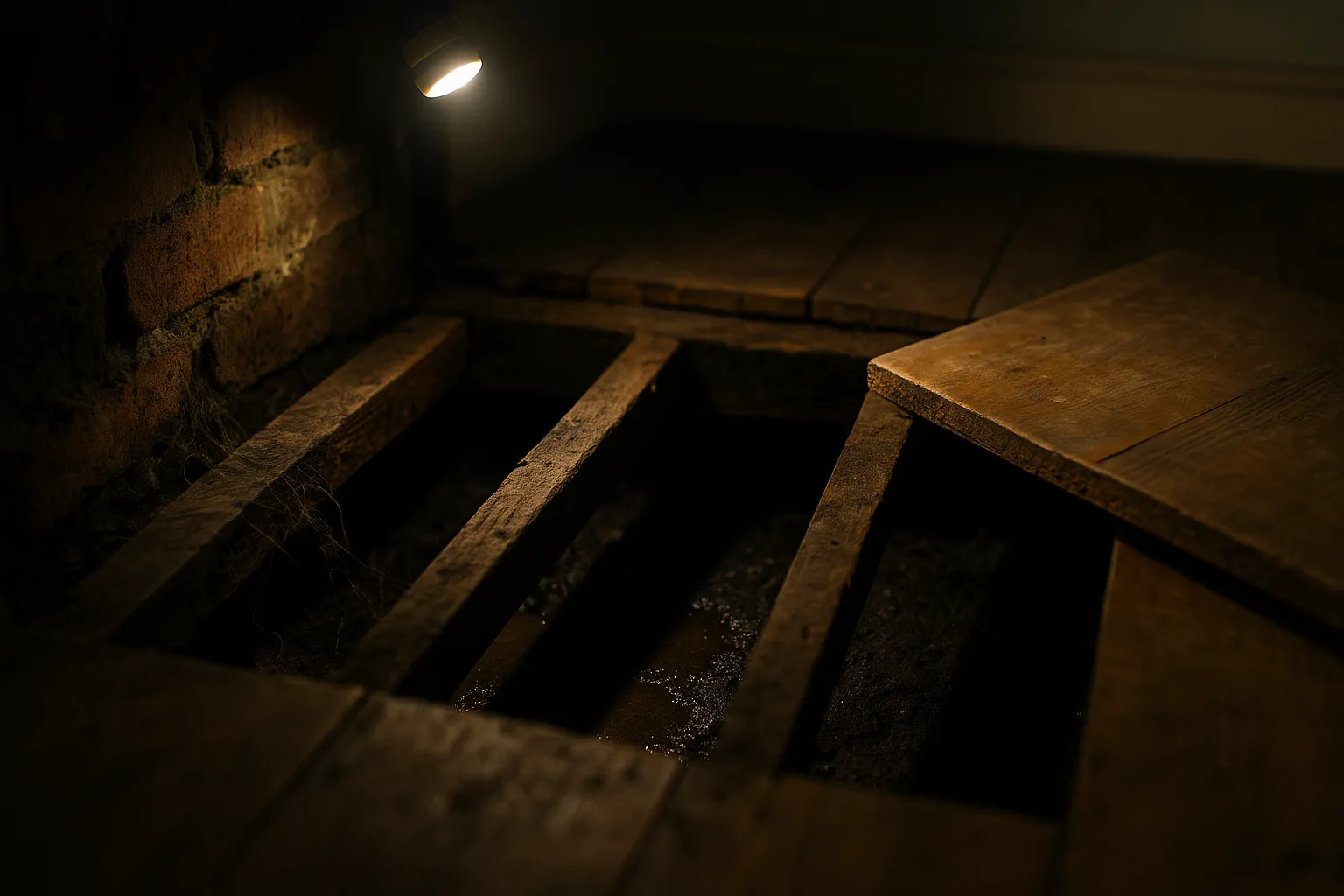
A water leak under your house is one of the more unsettling plumbing problems you can face. You can hear it, or see the signs of it — a warm patch on a cold floor, rising water bills, a damp smell that won’t go away — but you cannot see the pipe. The instinct is to start lifting floorboards or breaking into a concrete slab, but that approach is expensive, disruptive, and often unnecessary.
Modern leak detection equipment lets us pinpoint the source of a water leak inside the house before a single tile is removed. Here is how it works.
Why Underfloor Leaks Are Easy to Miss
Pipes running beneath a floor — whether under suspended timber boards, a solid concrete slab, or a screed — are out of sight and largely out of mind. A small pressurised leak can lose hundreds of litres a day into the ground beneath your home before it surfaces anywhere obvious. By then you may already have:
- Softened or buckling floorboards
- Damp patches on ground-floor walls
- A hot-water pipe leak warming a section of floor
- Unexplained mould in a corner of a room
- A water meter that keeps turning even when every tap is off
The longer it is left, the greater the risk of structural damage and the higher the eventual repair cost. If you suspect a water leak under your house, acting quickly matters.
Step 1 — Confirm There Is a Leak
Before any specialist equipment is deployed, we carry out a simple isolation test. We shut off all outlets and check whether your water meter is still moving. If it is, water is escaping somewhere on the supply side. We then isolate sections of pipework to narrow down whether the leak is on the cold-water supply, the hot-water circuit, or the central heating system. This takes minutes and tells us exactly which system to focus on.
Step 2 — Thermal Imaging
A thermal imaging camera detects differences in surface temperature invisible to the naked eye. A leaking hot-water or heating pipe warms the floor directly above it; a cold-water leak under a slab can create a cool patch as the water evaporates into the substrate.
We scan the floor surface with the camera and look for anomalies — irregular warm or cool zones that do not match the expected layout of the room. Thermal imaging is non-invasive, takes around 20 to 30 minutes, and frequently narrows the leak location to within half a metre.
It works best on solid floors. On suspended timber floors, air gaps beneath the boards reduce the thermal contrast, so we combine it with other methods.
Step 3 — Acoustic Leak Detection
Water escaping from a pressurised pipe makes a sound — a hiss, a rush, or a low-frequency vibration that travels through the surrounding material. Acoustic listening equipment amplifies these sounds through ground microphones and electronic stethoscopes placed on the floor surface.
By comparing signal strength at multiple points we can triangulate the leak position with considerable accuracy. Sub-slab acoustic detection is particularly effective on copper and plastic pipework running through concrete, where sound transmits well.
Step 4 — Tracer Gas Detection
For leaks that are too small or too deep to register clearly on thermal or acoustic equipment, we use tracer gas. A safe, inert mixture of hydrogen and nitrogen is introduced into the pipe under low pressure. The gas escapes at the point of the leak and rises through the floor material. A sensitive detector held at floor level picks up the gas concentration and pinpoints the exact location — often to within a few centimetres.
Tracer gas is the most precise method available for locating a water leak under a house and is particularly useful where:
- The pipe depth is unknown
- The floor construction is thick or insulated
- Multiple possible leak sites need to be ruled out one by one
What Happens After We Find It?
Once the leak is located we can advise on the smallest practical access point needed to reach the pipe. In many cases this means lifting two or three floor tiles rather than an entire section of floor, or cutting a small inspection hole in a screed rather than excavating. The aim is always to minimise disruption.
We provide a written report of the findings — cause of the leak, photographs, moisture readings, and the scope of work carried out. That document belongs to you and is useful if you need to provide evidence to your insurer.
Signs You May Have a Slab or Underfloor Leak
If you are not yet certain whether you have a leak, look out for these warning signs:
- A water bill that has increased without explanation
- The sound of running water when everything is turned off
- Warm or hot spots on a ground-floor solid floor
- Damp or discoloured skirting boards at ground level
- A drop in water pressure across the house
- Cracks appearing in a concrete floor
Call Us Now
If you suspect a water leak under your house, do not wait to see whether it gets worse. The longer a pressurised leak runs beneath a floor, the more damage it does to the structure around it.
Call Emergency Plumbers TW on 07360 268948 — we are available 24 hours a day, 7 days a week across the TW postcode area. We will locate the leak accurately, explain your options clearly, and carry out the repair with as little disruption to your home as possible.