How-to
How to Find a Water Leak in Your House Fast
Step-by-step guide to finding a water leak in your house: meter test, damp mapping, listening techniques and when to call an emergency plumber.
Published 31 July 2026
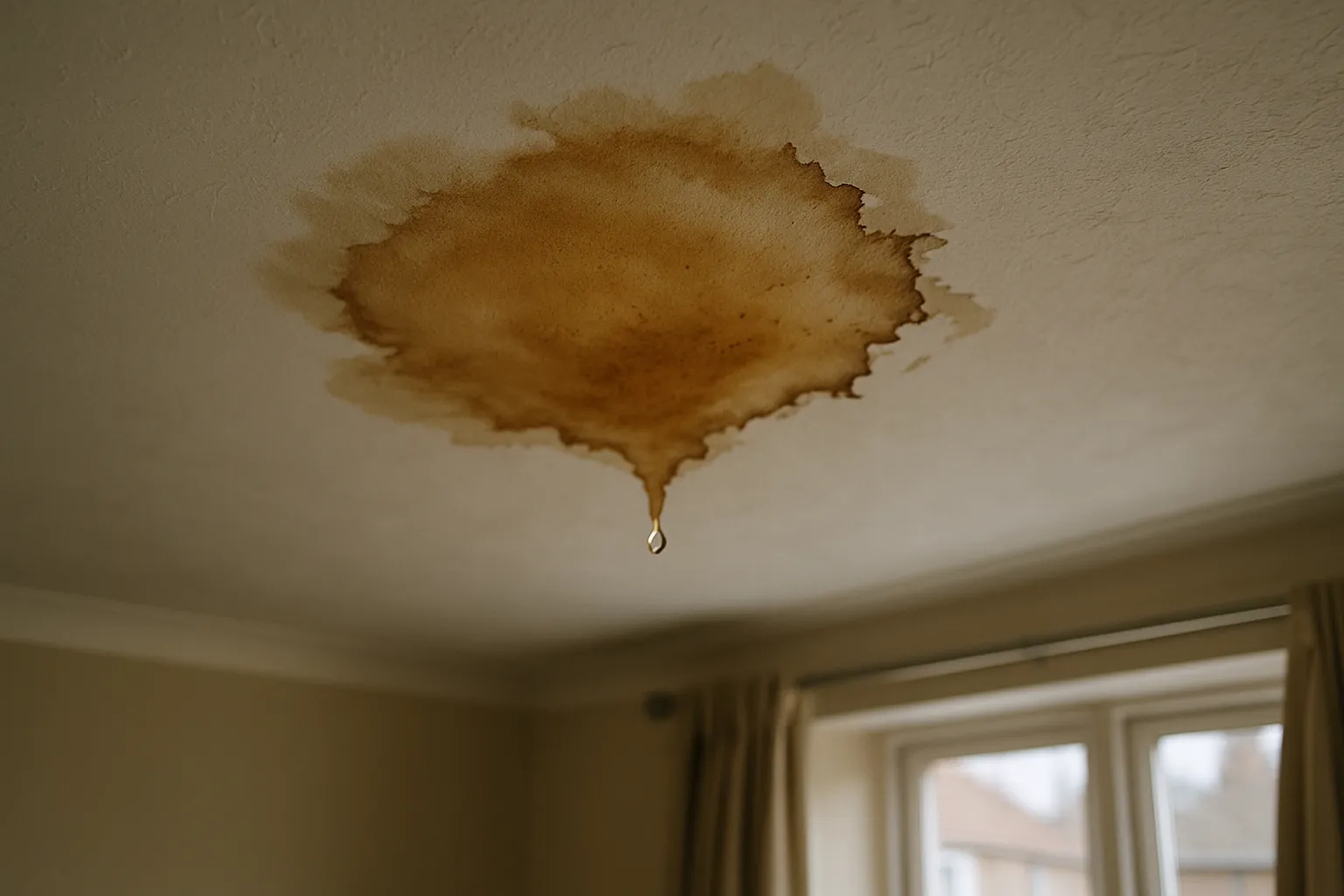
A rising water bill, a damp patch on the ceiling, or the quiet sound of running water when everything is turned off — any of these can signal a leak somewhere in your home. Finding it quickly limits damage and keeps repair costs down. Here is a straightforward method you can work through yourself before deciding whether to call a plumber.
Step 1: Confirm There Is a Leak with the Meter Test
This is the fastest way to answer the question “do I actually have a leak?”
- Turn off every tap, appliance and water-using device in the house — dishwasher, washing machine, ice maker, everything.
- Go to your water meter (usually under a small cover in the pavement outside, or occasionally inside near the stopcock).
- Note the reading, including the low-flow indicator — a small red or blue dial or digital digit that moves even when only a trickle is flowing.
- Wait 30 minutes without using any water.
- Check the reading again.
If the meter has moved, water is leaving the supply somewhere. If it has not moved, the issue may be a slow drip inside a fitting rather than a running leak — but keep investigating.
Step 2: Isolate Inside from Outside
Turn off the internal stopcock (usually under the kitchen sink or where the supply pipe enters the house) and repeat the meter test.
- Meter stops moving → the leak is inside the property.
- Meter keeps moving → the leak is in the supply pipe between the meter and your stopcock, which is your responsibility under most water company rules.
Step 3: Build a Damp Map
Walk every room systematically and look for:
- Discolouration or tide marks on ceilings, walls or floors
- Bubbling or peeling paint or wallpaper
- Soft, spongy or warped floorboards
- Mould or mildew in unexpected places
- Musty smell concentrated in one area
Mark each suspect area on a rough sketch of your floor plan. Leaks often travel — water from a first-floor bathroom can appear on a ground-floor ceiling several metres away from the actual source, so trace upward from the wet patch.
Check These Locations First
- Under sinks and around waste pipes
- Around the base of the toilet and behind it
- Seals around the bath, shower tray and enclosure
- Under and behind the washing machine and dishwasher
- Around the boiler, cylinder or any visible pipework in the airing cupboard
- Loft space — a slow drip from a cold-water tank can run down a joist for a long time before showing
Step 4: Listen for the Leak
In a quiet house — early morning is ideal — turn off all background noise and listen. A running or hissing sound behind a wall or under a floor is a strong indicator.
A simple DIY trick: press a long-handled screwdriver or a wooden broom handle against the wall or floor and put your ear to the other end. This acts as a basic listening stick and can amplify the sound of water movement through pipework. Move along the wall methodically.
Professional plumbers use acoustic leak detectors and thermal imaging cameras that do this far more accurately, but the screwdriver method can at least point you to the right room.
Step 5: Check Your Stop Valves and Fittings
Once you have a suspect area, look closely at every joint, valve and connection you can see. Leaks often start at:
- Compression fittings that have worked loose over time
- Flexible hoses under sinks or to toilets that have split or corroded at the end
- Push-fit joints that were not fully seated
- Radiator valves, particularly if they have not been touched in years
Run your hand along pipes and around fittings. Even a very slow leak will leave a wet patch or limescale residue.
When to Stop Investigating and Call a Plumber
Some leaks are safe to monitor briefly; others need immediate attention. Call a plumber straight away if:
- Water is coming through a ceiling — there is a risk of it reaching electrics
- You cannot locate the stopcock or cannot get the water to stop
- You suspect the leak is in a buried supply pipe under the floor or garden
- There is visible mould suggesting the leak has been running for some time
- The meter test confirmed a leak but you cannot find any obvious source
A leak you cannot see is not a leak you should leave. Hidden leaks inside walls and under floors cause structural damage and encourage mould growth, and they tend to get worse rather than better.
What a Plumber Will Do
If you call us, we will use acoustic detection equipment, moisture meters and, where needed, thermal imaging to pinpoint the source without unnecessary opening up of walls or floors. Once found, we repair it and give you a written record — cause, photographs and scope of work — which is yours to keep for your own purposes.
If you have worked through these steps and still cannot find the source, or if the situation feels urgent, call Emergency Plumbers TW any time on 07360 268948. We cover the TW postcode area around the clock and can usually be with you quickly. There is no need to let a leak run on while you wait.