Emergencies
Leak Detection Brentford: What Local Pipes Actually Do Wrong
A local guide to leak detection in Brentford — why the area's mix of new-builds, Georgian terraces and canal proximity creates specific plumbing risks.
Published 1 August 2026
Leak Detection in Brentford: What the Local Housing Stock Actually Does
Brentford sits at the confluence of the Thames and the River Brent, and that geography shapes everything — including what goes wrong inside the walls of its buildings. If you are searching for a plumber in Brentford because you have spotted a damp patch, heard water running when nothing is on, or noticed an unexplained rise in your water bill, this guide explains what is typically happening and what to do next.
Why Brentford Is Different From Neighbouring Areas
Most of the TW postcode covers interwar semis and Victorian terraces. Brentford is more varied. You have:
- Georgian and early Victorian terraces along the High Street and side roads near the old town — some with original lead supply pipes still in place beneath the floor
- 1960s–1980s council and private blocks where copper pipework is now old enough to develop pinhole corrosion
- The large regeneration developments around Brentford FC’s stadium and the waterfront, where new-build systems are still settling and snagging issues occasionally include poorly jointed plastic push-fit connections
- Canal-adjacent properties along the Grand Union Canal corridor, where ground moisture levels are persistently higher than average
Each of these building types fails in its own particular way.
Common Causes of Leaks in Brentford Properties
Old Town Georgian and Victorian Stock
The biggest culprits here are aged lead or early copper supply pipes running under solid floors or inside original plaster walls. Lead pipes corrode from the inside out and can develop hairline cracks that are invisible until a ceiling below starts to stain. If your property pre-dates 1970 and has never had a full re-pipe, treat any unexplained damp as a supply-pipe issue until proven otherwise.
Mid-Century Blocks
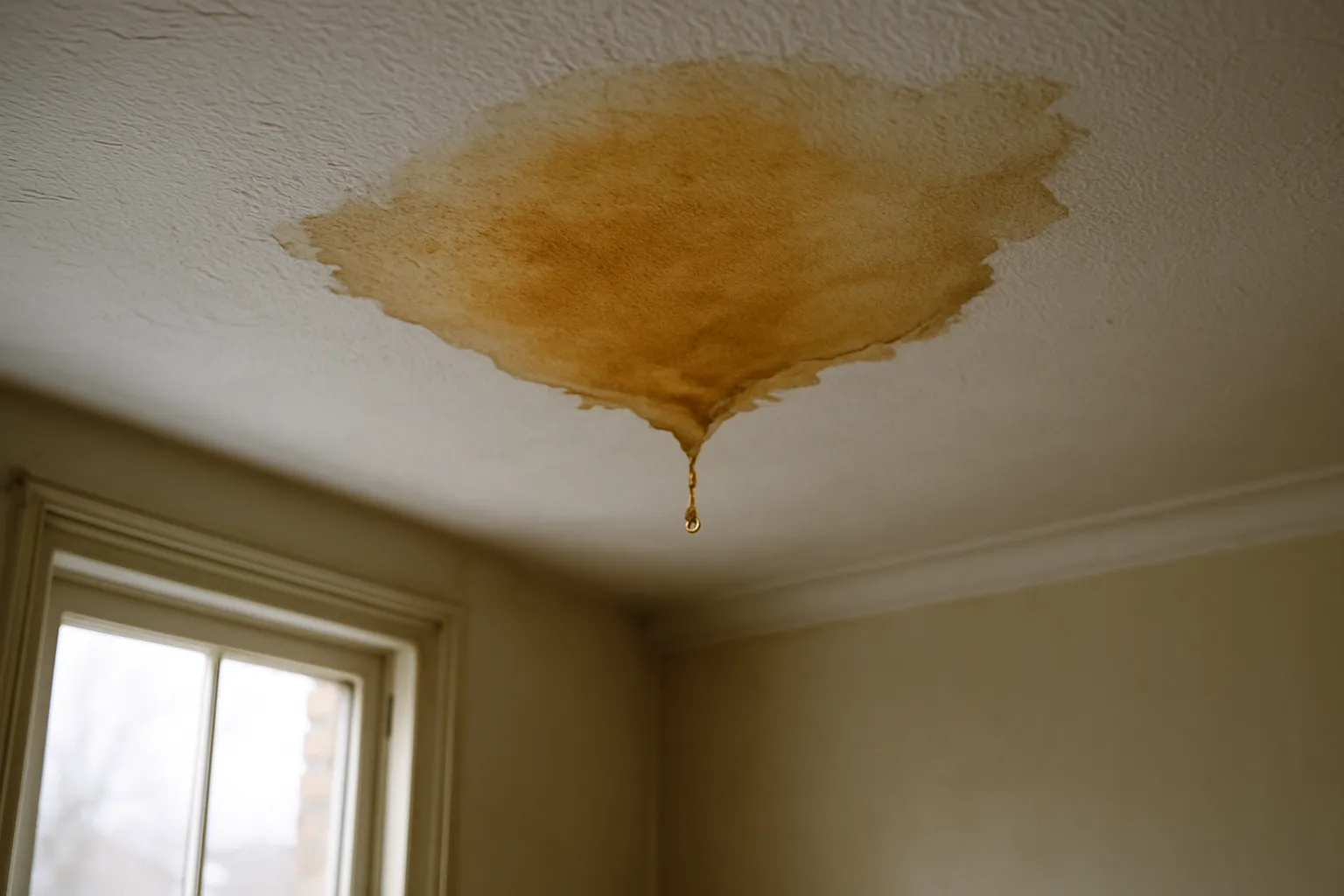
Copper pipework laid in the 1960s and 1970s is now between 50 and 65 years old. At that age, pinhole leaks caused by slightly acidic water chemistry become common. These leaks are often slow — a drip behind a panel or inside a chase — and the first sign is a soft, discoloured patch on plasterboard rather than running water.
New-Build Waterfront Developments
Push-fit plastic fittings are reliable when installed correctly, but early snagging leaks do occur. The most common failure points are compression joints that were not fully seated during construction, and flexible hoses under kitchen sinks and behind bathrooms that were kinked during fitting. These tend to show up within the first two to three years of occupation.
Canal-Proximity Damp vs. Active Leaks
This is the most important distinction for Brentford homeowners near the Grand Union Canal or the River Brent. Not all damp is a plumbing leak. Ground moisture, rising damp and condensation can mimic the appearance of a slow leak. Before assuming a pipe has burst, a plumber can use moisture meters and thermal imaging to distinguish between an active water source and ambient ground moisture. Getting this right matters — the wrong diagnosis leads to unnecessary excavation or, worse, a missed leak that continues to cause damage.
Signs You Need Leak Detection, Not Just a Visual Check
Call a plumber in Brentford if you notice any of the following:
- Your water meter is moving when every tap and appliance is turned off
- A damp patch that grows or reappears after drying out
- The sound of running or trickling water inside a wall or under a floor
- An unexplained increase in your water bill over one or two billing periods
- Cold or warm spots on a floor that do not correspond to any appliance (particularly relevant in properties with underfloor heating)
- Paint or plaster bubbling without an obvious external cause
What a Leak Detection Visit Involves
A qualified plumber will typically:
- Isolate the stop tap and check whether the meter reading changes — confirming or ruling out a supply-side leak
- Use an acoustic listening device to trace the sound of escaping water through walls and floors
- Apply thermal imaging to identify temperature anomalies caused by water movement
- Take moisture readings at multiple points to map the extent of any saturation
- Provide a written report stating the likely cause, location and recommended repair
That written record — including photographs, moisture readings and a description of the fault — belongs to you. Keep it safely; your insurer or building management company may ask for it.
What to Do Right Now if You Suspect a Leak
- Locate your stop tap — usually under the kitchen sink or where the supply enters the building — and know how to turn it off
- Turn off the stop tap if water is actively escaping or you can hear running water with everything off
- Take photographs of any visible damp, staining or damage before anything dries or is disturbed
- Note the meter reading before and after a 30-minute period with no water use — a moving meter confirms an active leak
Call Us Any Time
If you have found this page because you are dealing with a leak right now, do not wait. A slow leak in a Brentford property — especially one near the canal or in older stock — can cause significant structural damage within days.
Emergency Plumbers TW covers Brentford and the surrounding TW postcode area around the clock. Call us on 07360 268948 and we will get someone to you as quickly as possible.