Emergencies
Insurance Water Leak Claim: What to Say and Not Say in the First Call
A practical guide to your first call with your insurer after a water leak — what to say, what to avoid, and what evidence to gather first.
Published 31 July 2026
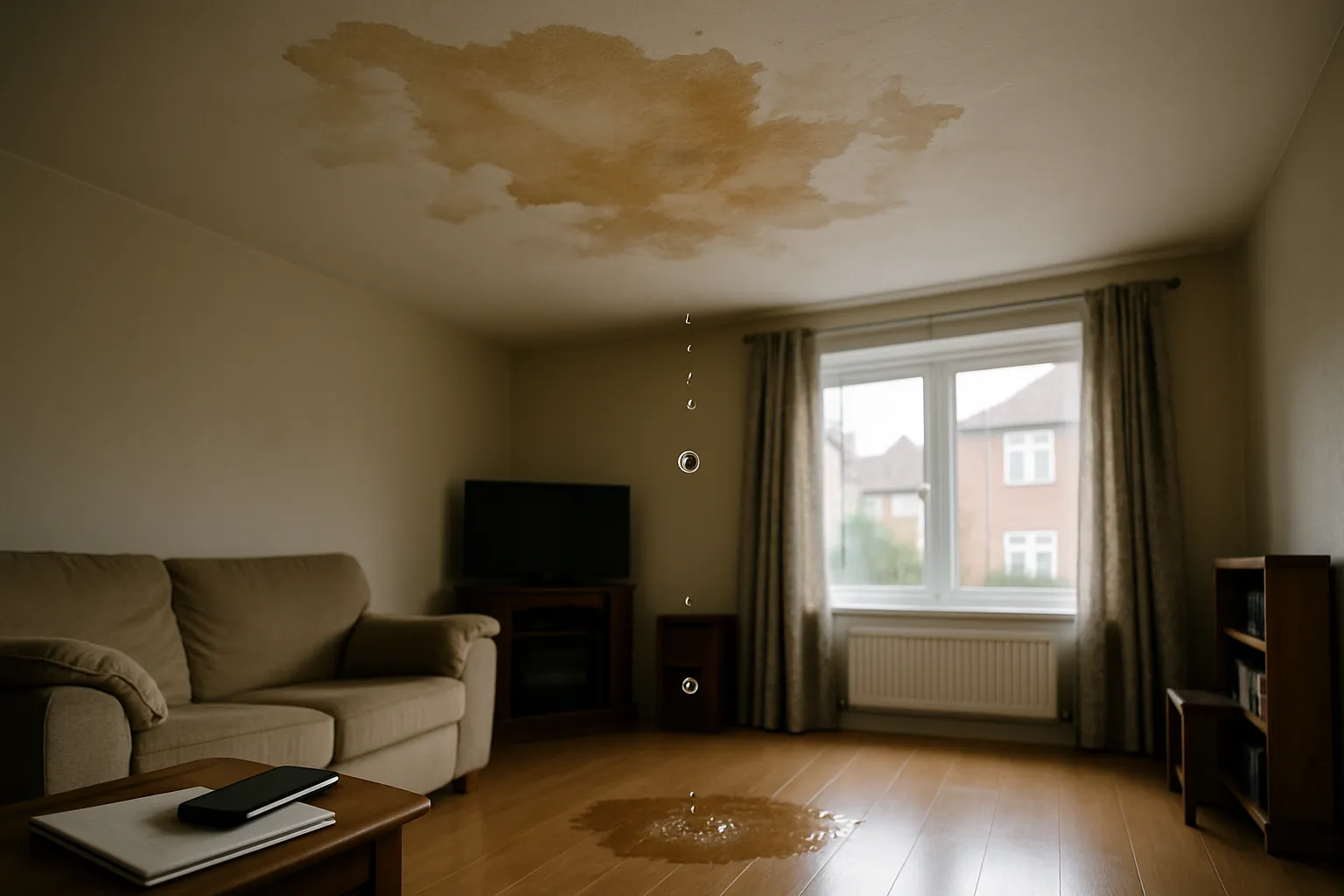
Before You Call Your Insurer, Do These Things First
A burst pipe or hidden leak can cause serious damage very quickly. Your first priority — before you speak to anyone at your insurance company — is to stop the water and protect your home from further harm. Most home insurance policies actually require you to take reasonable steps to limit damage, so this matters both practically and contractually.
Before you pick up the phone to your insurer:
- Turn off the water at the stopcock (usually under the kitchen sink or where the supply enters the property)
- Turn off any electrics in affected areas at the consumer unit if water is near fittings or sockets
- Photograph everything — the source of the leak, the spread of water, damaged belongings, wet walls, ceilings, and floors
- Note the date and time you discovered the damage
- Keep any damaged items rather than throwing them away — your insurer may want to inspect them
Once the immediate emergency is under control, then you call.
What to Have Ready Before the Call
Insurers ask predictable questions. Having answers ready means the call goes smoothly and you avoid saying something vague that could cause confusion later.
Have to hand:
- Your policy number and the name on the policy
- The date and approximate time you first noticed the leak or damage
- A brief, factual description of where the water came from (e.g. “a pipe behind the bathroom wall”, “the washing machine supply hose”)
- A rough description of which rooms or areas are affected
- Any photographs you have already taken
- Details of any emergency repair already carried out and who did it
What to Say: Keep It Factual and Specific
When you speak to your insurer, stick to what you know as fact. You are reporting an event, not making a case.
Useful phrases:
- “I discovered water coming from [location] at approximately [time] on [date].”
- “The affected areas are [rooms]. I have photographs.”
- “I turned off the water supply immediately to prevent further damage.”
- “I have had an emergency plumber attend to stop the leak. I can provide a written report of the cause and the work carried out.”
A clear, factual account helps your insurer log the claim accurately and moves things forward.
What Not to Say: Avoid Speculation
This is where many people inadvertently cause themselves problems. In the first call, you are often speaking to a call-handler who is recording everything. Speculation, guesswork, or casual remarks can be logged as statements of fact.
Avoid saying:
- “It’s probably been leaking for months” — unless you actually know this, it may affect how your insurer categorises the claim (gradual damage is often treated differently from a sudden escape of water)
- “I think it was the washing machine / boiler / old pipes” — if you are not certain, say you do not yet know the cause and that you are awaiting a written report
- “It’s not that bad” or “most of it dried out” — minimising the damage early can create difficulties if further damage becomes apparent later
- Anything about previous leaks or repairs unless you are asked directly and are certain of the facts
If you are asked something you do not know the answer to, it is perfectly reasonable to say: “I don’t have that information yet — I can confirm once I have a written report from the plumber.”
What a Loss Adjuster Does (and When They Appear)
For larger escape-of-water claims, your insurer may appoint a loss adjuster. This is an independent professional who visits your property to assess the extent of the damage and establish the cause. They work for the insurer, not for you.
When a loss adjuster is coming:
- Have your photographs ready and organised by date
- Have any written reports from tradespeople available
- Note down moisture readings if a plumber has taken them — these are useful objective evidence
- Be factual and consistent with what you told the insurer on the first call
You are entitled to ask the loss adjuster questions and to take notes during their visit. You own your claim — it is your policy and your right to manage the process yourself.
The Value of a Written Plumber’s Report
One of the most useful things you can have for an escape-of-water claim is a written record from the plumber who attended: the identified cause of the leak, photographs taken at source, any moisture readings, and the scope of work carried out. This is your document to use as you see fit.
At Emergency Plumbers TW we provide a written record of every job — cause, photographs, and work carried out — as a matter of course. That record belongs to you.
If You Still Have an Active Leak
If water is still coming in, stop reading and call us now. We cover the TW postcode area — Twickenham, Richmond, Teddington, Hounslow, Feltham, Staines, Isleworth and surrounding areas — around the clock.
Call 07360 268948 — available 24 hours a day, 7 days a week.
Stop the damage first. The paperwork can follow.