Emergencies
Trace and Access Cover: What It Is and Why It's the Line That Saves Your Claim
What is trace and access cover, why it matters on a home insurance claim, and how to check your policy before a hidden leak becomes a costly surprise.
Published 25 July 2026
What Is Trace and Access Cover?
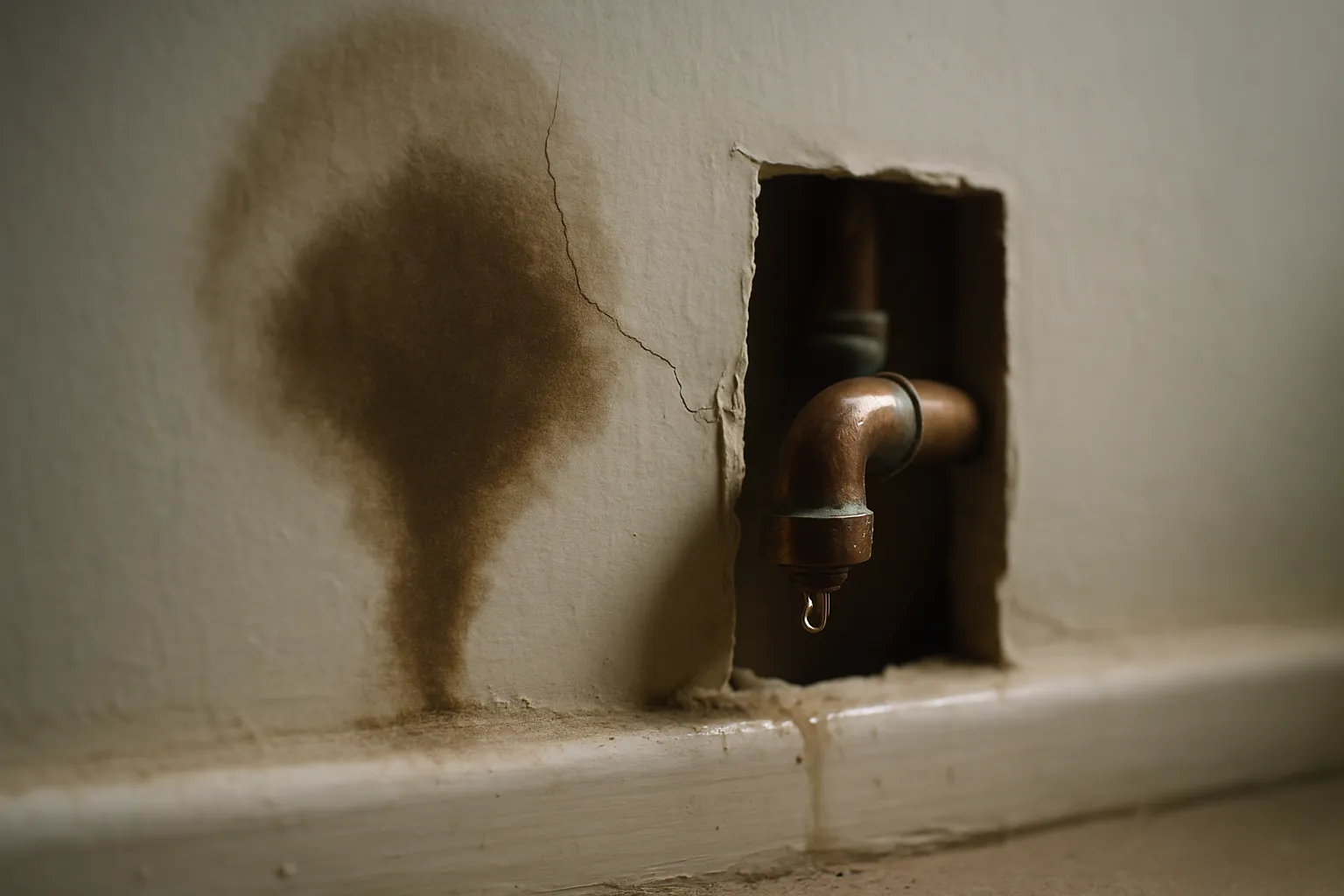
If you have a hidden leak — water seeping from a pipe buried in a wall, under a floor, or beneath a concrete slab — finding it means opening things up. Tiles come off, floorboards come up, plasterboard gets cut back. That investigative work is called trace and access: tracing the source of the leak and gaining access to it.
Trace and access cover is the section of your home insurance policy that pays for that investigative work. It is separate from the cost of the repair itself and separate from the cost of making good the damage the water caused. Understanding which pot pays for which element is the difference between a straightforward claim and a nasty shortfall.
Why It Is Not the Same as Buildings or Contents Cover
Most people assume their buildings policy simply covers “water damage.” In practice, a standard home insurance policy splits the costs into at least three buckets:
- Trace and access — the cost of finding the leak (cutting, lifting, opening)
- Repair of the defective pipe — the plumbing fix itself (often excluded or limited)
- Reinstatement — making good the fabric of the building (plastering, tiling, flooring)
- Contents damage — damaged belongings
Some policies bundle trace and access into the buildings section with no separate limit. Others ring-fence it with its own sub-limit — commonly £5,000, though you may find anything from £1,000 to £10,000 depending on your insurer and policy tier.
What “Reasonable Trace and Access” Actually Means
Insurers do not write a blank cheque for any method of investigation. Your policy will typically pay for reasonable trace and access, which in practice means:
- Using non-destructive detection methods first where practical (acoustic listening devices, thermal imaging, moisture mapping)
- Limiting physical opening-up to the area genuinely needed to locate and expose the leak
- Stopping work and reporting back to the insurer if costs look likely to exceed the policy limit before proceeding further
“Reasonable” is the word that causes disputes. A plumber who opens a 10-metre trench to find a pinhole joint two metres in has not acted reasonably. A plumber who uses thermal imaging to pinpoint the fault to a 300 mm section of screed before cutting has. The difference matters when the insurer reviews the invoice.
Why the £5,000 Limit Gets Hit Faster Than You Expect
Five thousand pounds sounds generous until you look at real-world costs:
- Thermal imaging or acoustic detection survey — can run to several hundred pounds before a single tile is touched
- Lifting a tiled wet room floor — tile removal, membrane cutting, screed breaking: easily £800–£1,500 for a modest bathroom
- Exposing a pipe in a solid concrete floor — diamond-disc cutting and debris removal can cost £1,000–£2,500 depending on depth and run length
- Opening a chimney breast or party wall — structural considerations add time and therefore cost
Add these together on a leak that has migrated along a beam or travelled under a screed before surfacing, and £5,000 is gone before the pipe is even repaired. If your policy limit is £1,000 or £2,500, the arithmetic is worse still.
How to Check Your Own Policy Right Now
You do not need to wait for a leak to understand your cover. Here is what to look for:
- Find the policy schedule — the summary document that lists your specific limits and excesses.
- Search for “trace and access” — if the phrase does not appear, check “escape of water” and read the sub-sections carefully.
- Note the sub-limit — this is the maximum the insurer will pay for investigation, not for repair or reinstatement.
- Check the excess — trace and access often carries its own excess, sometimes higher than your standard excess.
- Look for exclusions — some policies exclude gradual leaks (a slow drip over months rather than a sudden burst), leaks from flat roofs, or leaks from swimming pools or hot tubs.
- Check whether the pipe repair itself is covered — many policies explicitly exclude the cost of repairing the defective pipe, covering only the investigative work and the reinstatement of fabric.
If anything is unclear, call your insurer’s claims line and ask them to confirm the trace and access limit in writing before you start work.
What a Plumber’s Report Means for Your Claim
When a leak is found and repaired, the written record your plumber provides becomes your primary evidence. A good job report should include:
- The cause of the leak (burst joint, corrosion, failed seal, etc.)
- The location in the property
- Photographs taken before, during, and after the work
- Moisture readings if damp spread is involved
- A clear description of what was opened up and why
That document belongs to you. You submit it to your insurer as part of your claim. The more precise and evidenced the report, the less room there is for dispute about what work was genuinely necessary.
If You Have a Hidden Leak Right Now
Do not wait. A leak that has been running inside a wall or under a floor is already causing damage that compounds by the hour — timber swells, plasterboard softens, mould begins within 24–48 hours in damp conditions.
Call Emergency Plumbers TW on 07360 268948 — we cover the TW postcode area around the clock. We will locate the leak, carry out the repair, and give you a full written record of our findings to support whatever steps you take next with your insurer.
Your claim, your insurer, your decision — we just make sure you have the evidence you need.