Emergencies
Trace and Access Cover: What 'Reasonable' Actually Means
What insurers mean by 'reasonable' trace and access costs — and what they try to argue falls outside that. Practical guidance for TW homeowners.
Published 1 August 2026
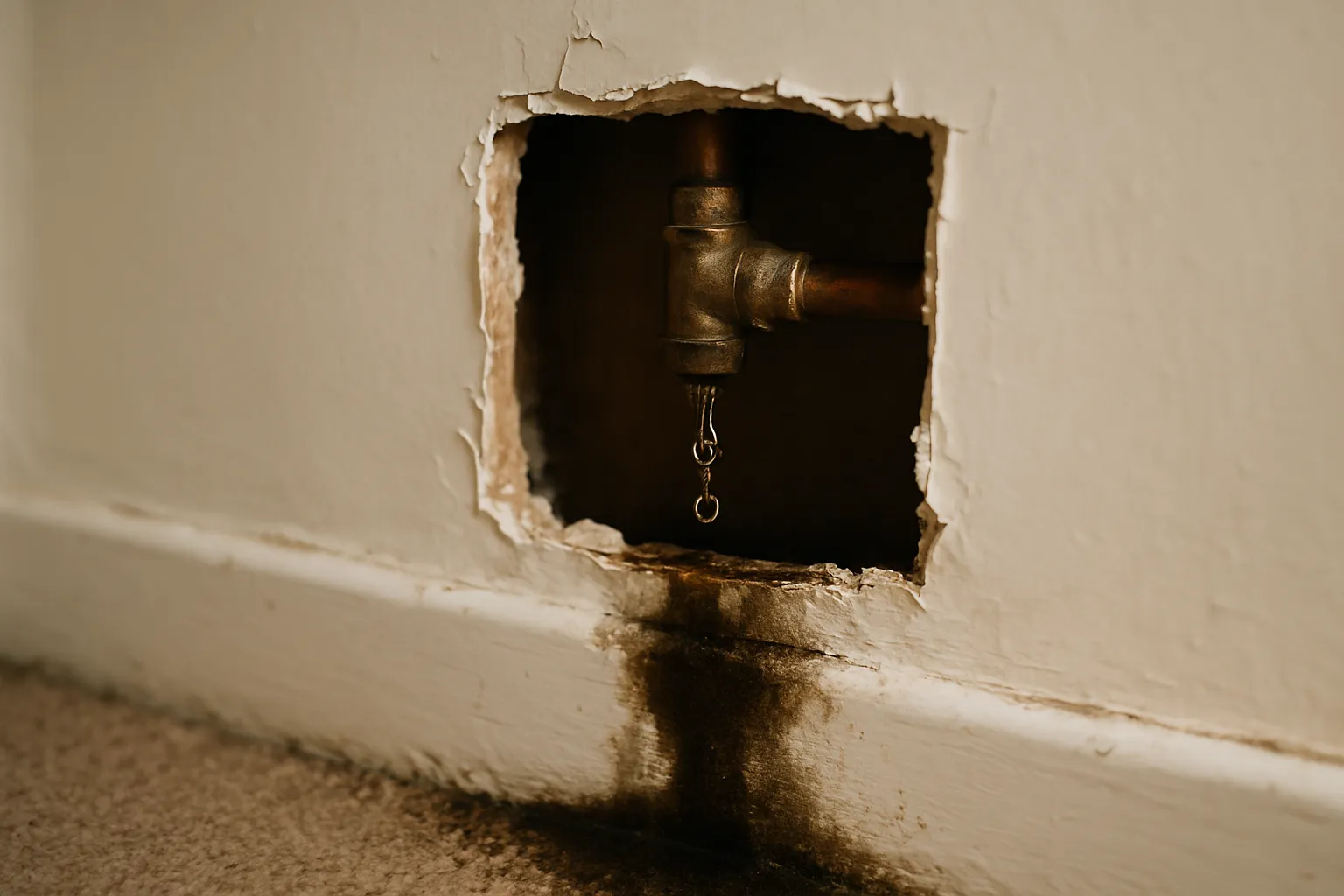
Most home insurance policies that include trace and access cover sound straightforward on paper: the insurer will pay the cost of finding a hidden leak and making good whatever was opened up to find it. In practice, the word “reasonable” does a lot of heavy lifting — and it nearly always works in the insurer’s favour unless you understand what it means and prepare accordingly.
This guide explains how insurers typically interpret “reasonable trace and access costs,” what they commonly push back on, and what you can do to protect your position before you make any claim.
What Trace and Access Cover Is Supposed to Do
When a leak is concealed — inside a wall, beneath a screed floor, above a ceiling — finding the source requires destructive investigation. Trace and access cover is meant to pay for:
- the labour and equipment used to locate the leak
- opening up the structure (lifting tiles, cutting plasterboard, taking up flooring)
- making good the fabric of the building once the source is confirmed
It does not typically cover the repair of the failed pipe or fitting itself, nor the resulting water damage to contents or finishes — those fall under different sections of your policy.
Where “Reasonable” Becomes Contested
The Method Used to Locate the Leak
Insurers sometimes argue that a plumber who went straight to destructive investigation should have used non-invasive detection first — thermal imaging, acoustic listening equipment, tracer gas. If a tradesperson lifted twelve floor tiles before using a moisture meter, an insurer may query whether that was the most cost-effective route.
What helps you: A written account from the plumber explaining why each investigative step was taken. If non-invasive methods were used first, that should be documented. If they were impractical (e.g. the floor is solid concrete with no accessible void), that reason should be noted too.
The Scope of Opening Up
Policies typically cover opening up sufficient to locate the source. Insurers may challenge costs for access that goes beyond what was strictly necessary to find the fault — for example, if a large section of ceiling was removed when a smaller cut would have sufficed.
What helps you: Photographs taken at each stage of the investigation, showing the extent of opening up and why it was necessary. A scope-of-work record that links each action to a specific investigative purpose.
Making Good vs. Full Reinstatement
“Making good” in insurance terms usually means returning the structure to a sound, weathertight condition — not necessarily a cosmetically perfect finish. Insurers may argue that re-skimming a full wall, or re-tiling an entire bathroom floor to match, goes beyond making good.
This is one of the most common points of dispute. If your tiles are discontinued or your plaster finish is decorative, the gap between “making good” and “matching reinstatement” can be significant.
What helps you: Before any work starts, photograph the existing finishes in detail. Note tile brands, grout colours, and any decorative features. This evidence supports your own assessment of what reinstatement actually requires.
Whether the Leak Was “Sudden and Accidental”
Some policies limit trace and access to sudden, accidental escape of water. A slow weep from a joint that has been seeping for months may be characterised by an insurer as gradual deterioration rather than a sudden event — and excluded on those grounds.
What helps you: A plumber’s written assessment of the likely cause and, where possible, an indication of how long the leak may have been present. Honest documentation is more useful than vague language.
The Evidence That Makes a Difference
Whatever the dispute, the quality of documentation is usually what determines whether a claim proceeds smoothly or stalls. When a plumber attends to find a hidden leak, ask for:
- a written cause-of-loss statement (what failed, and why)
- photographs of the leak source and all opened-up areas
- moisture readings taken before and after
- a clear scope of work showing what was done and why
This record belongs to you. You submit it to your insurer and use it to support your own claim. A plumber’s job is to stop the leak and hand you that paperwork — what you do with it is your decision.
A Practical Checklist Before You Claim
- Read your policy wording carefully — check whether trace and access is a named benefit or a sub-limit under escape of water.
- Note any excess that applies specifically to trace and access (it is sometimes separate from your main excess).
- Check whether your insurer requires you to notify them before authorising investigative work — some policies require prior consent for costs above a certain threshold.
- Keep all invoices, photographs, and written reports together in one place.
- If you disagree with how your insurer has assessed the claim, you can refer the matter to the Financial Ombudsman Service free of charge.
If You Have an Active Leak Right Now
If water is still escaping, the priority is to stop further damage — not paperwork. Turn off your stopcock, contain what you can, and call a plumber.
We cover the TW postcode area around the clock. Call 07360 268948 any time and we will find the source, stop the leak, and give you the written record you need.