How-to
Slow-Draining Shower or Bath: Hair, Limescale or Something Deeper?
Shower draining slowly or bath not emptying? Diagnose the cause — hair, limescale or a deeper blockage — and know when to call a plumber.
Published 19 July 2026
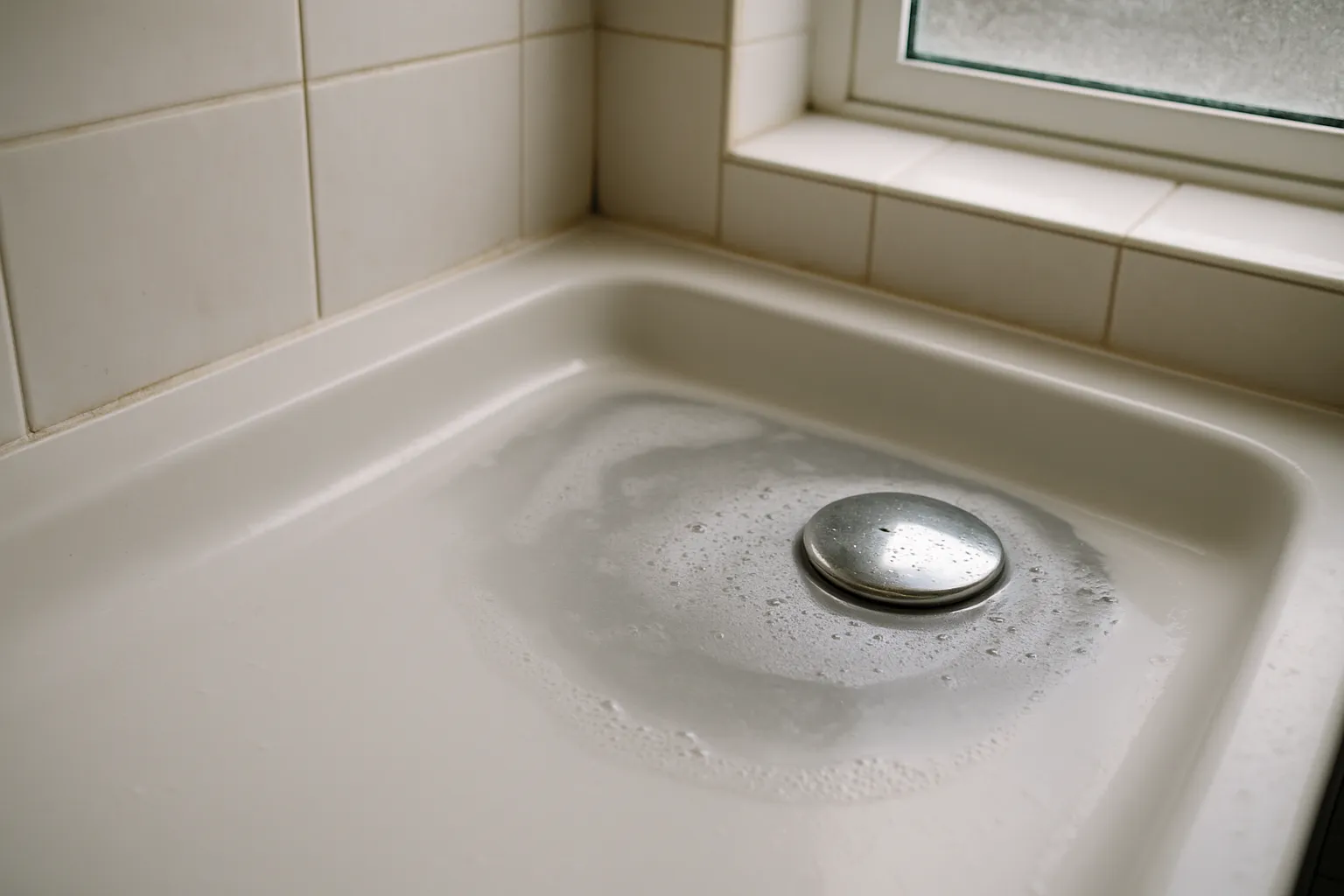
A shower that takes five minutes to empty is annoying. One that leaves you standing ankle-deep in soapy water is a sign that something needs attention before it becomes a full blockage. The good news is that most slow drains follow a predictable pattern, and you can often pinpoint the cause — and the fix — before picking up the phone.
The Diagnostic Ladder: Start at the Top
Stage 1 — Hair in the Trap (Most Common)
The trap is the curved section of pipe directly beneath your shower tray or bath. In showers, a removable cover sits over the drain opening. This is the single most common cause of a slow shower drain, and it is almost always a DIY fix.
What to do:
- Unscrew or unclip the drain cover (most twist off anticlockwise or lift straight up).
- Use a pair of long-nose pliers or a purpose-made drain hook to pull out accumulated hair and soap scum.
- Run hot water for 30 seconds to flush the trap.
- Replace the cover and test.
If the shower drains noticeably faster, you are done. Repeat every four to six weeks to stay ahead of it.
Stage 2 — Soap Scum and Limescale Build-Up
In the TW postcode area — which sits in one of the harder water zones in the South East — limescale is a genuine nuisance. Over time, calcium deposits narrow the inside of the drain pipe, and soap scum sticks to those rough surfaces more readily. The result is a gradual, progressive slowdown rather than a sudden blockage.
What to try:
- Pour a kettle of hot (not boiling, to protect plastic traps) water slowly down the drain.
- Follow with a cup of white vinegar, leave for 20 minutes, then flush again with hot water.
- A proprietary enzyme-based drain cleaner used monthly can slow the build-up significantly.
Avoid caustic soda or strong chemical drain unblockers in older or plastic pipework — they can cause more damage than the blockage itself.
Stage 3 — Partial Blockage in the Branch Pipe
If cleaning the trap and flushing with vinegar makes little difference, the restriction is further along the branch pipe that connects your shower or bath to the soil stack. This is still a partial blockage — water is getting through, just slowly — but it is beyond what you can reach by hand.
Signs you are at this stage:
- The shower or bath drains slowly even with a clean trap.
- You can hear gurgling from the drain after the water finally clears.
- Other nearby fittings (basin, toilet) are also slow or gurgling.
At this point a plumber with a drain rod or a small electric eel (drain auger) can clear the pipe in a single visit. This is not an emergency, but it is worth booking promptly — a partial blockage that is ignored tends to become a complete blockage.
Stage 4 — Blockage in the Soil Stack or Main Drain
If multiple fittings are affected, or if water is backing up into the bath when you flush the toilet, the blockage is in the shared soil stack or the underground drain. This is the point where slow-draining tips stop being useful.
Symptoms of a deeper drain problem:
- Water backing up from the bath when the toilet is flushed
- Unpleasant smells rising from multiple drains
- A manhole cover that is wet or showing signs of overflow
- Complete failure to drain rather than just slowness
A CCTV drain survey is the most reliable way to locate and identify the blockage without unnecessary digging. A plumber can then advise on whether jetting, rodding or a repair is the right approach.
What Each Stage Typically Involves
| Stage | Likely cause | DIY possible? | Plumber needed? |
|---|---|---|---|
| Trap | Hair and soap scum | Yes | No |
| Limescale build-up | Scale on pipe walls | Usually | Sometimes |
| Branch pipe | Grease, debris | Rarely | Yes |
| Soil stack or main drain | Accumulated waste, root ingress | No | Yes |
When Slow Becomes Urgent
A slow drain becomes an emergency when:
- Water is overflowing onto the floor or into adjacent rooms
- Raw sewage is backing up through the drain
- You have no working shower or bath and cannot use an alternative
In those situations, do not wait. A blockage that is allowed to overflow can cause water damage to floors, ceilings and subfloor timbers — and the longer it is left, the more expensive the consequences.
Keeping Drains Clear Long-Term
- Fit a hair-catcher insert over the shower drain — they cost very little and catch the majority of blockage material before it enters the pipe.
- Run hot water for a minute after every shower to flush soap residue through.
- Use a monthly enzyme treatment if you are in a hard-water area.
- Have a plumber check the drain if you notice any change in drainage speed — catching it at Stage 2 is far cheaper than dealing with Stage 4.
If your shower or bath has stopped draining entirely, or you suspect a deeper blockage in the stack or underground drain, we are available around the clock across the TW area. Call 07360 268948 any time — we will diagnose the problem and clear it properly.
If there is nothing in the trap and it still drains slowly, our sister drainage firm Drainiacs explain slow drains with no visible clog.