Emergencies
Heating Leak Detection Ashford: How We Trace a Cold-Radiator Loss
Falling boiler pressure or a cold radiator in Ashford? Learn how central heating leak detection works and when to call an emergency plumber.
Published 1 August 2026
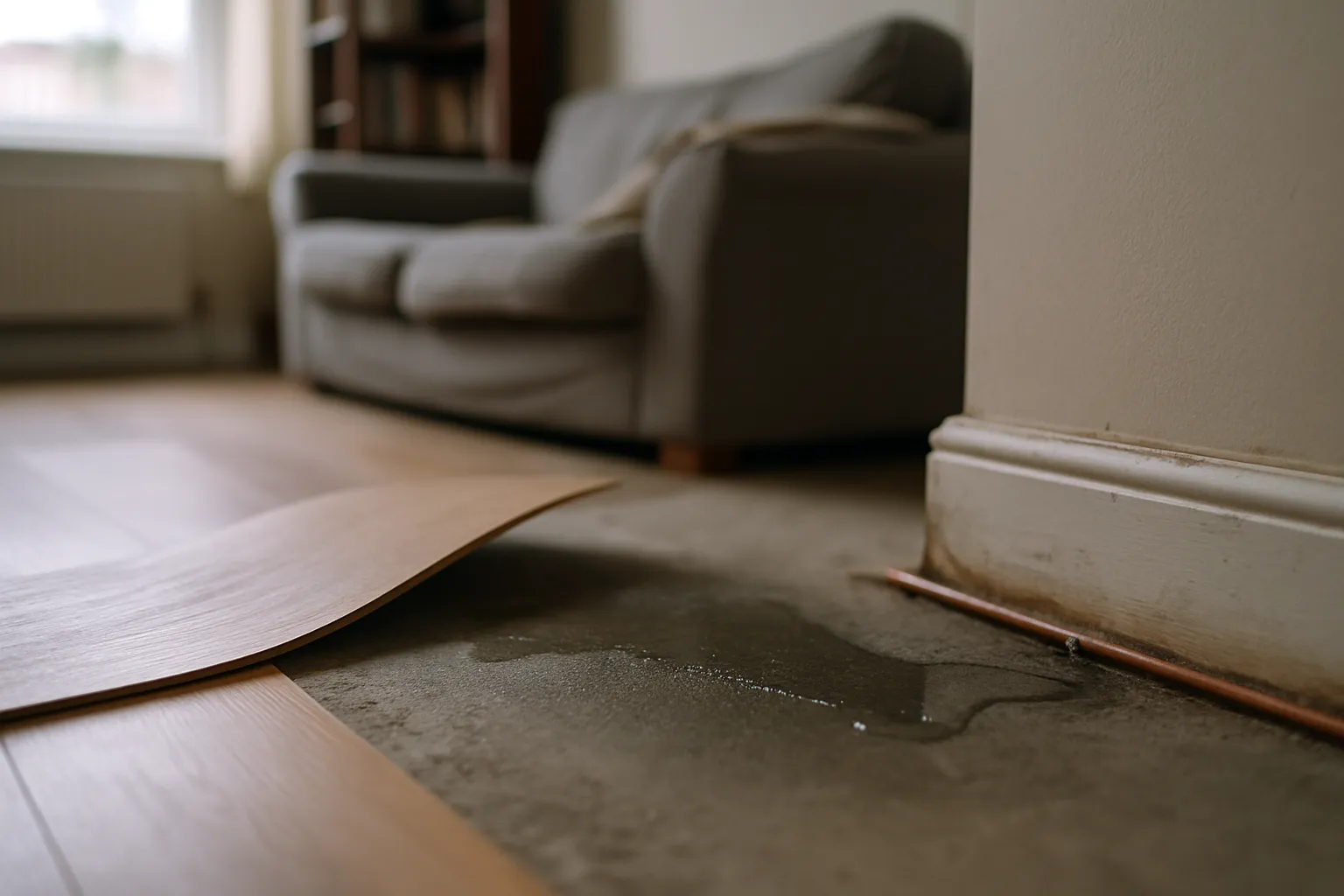
Falling Pressure, Cold Radiators — What Is Your Heating Trying to Tell You?
A sealed central heating system should hold its pressure. If you are topping up the boiler more than once a fortnight, or if one radiator stays cold while the others warm up, the system is losing water somewhere. In Ashford — where a good proportion of homes have solid concrete floors and pipes buried beneath them — that somewhere can be genuinely difficult to find without the right equipment.
This guide walks through the detective work we carry out when we attend a heating leak detection call in the TW15 area.
Step 1 — Read the Boiler Pressure Gauge
A healthy sealed system sits between 1.0 and 1.5 bar when cold. Below 0.8 bar and most boilers lock out. If you are refilling regularly and cannot see any obvious wet patches, the leak is almost certainly concealed — either behind plasterboard, under a screed floor, or at a buried pipe joint.
What to do right now:
- Note the current gauge reading and the date.
- Check under any visible radiator valves and around the boiler connections for drips.
- Look for damp patches on ceilings below upstairs pipework or on ground-floor walls.
- Do not keep topping up indefinitely — repeatedly diluting inhibitor accelerates corrosion.
Step 2 — Isolate the Circuit
Before any detection equipment goes in, we isolate the system and carry out a static pressure test. We cap off sections of the circuit one at a time to narrow down which loop is losing pressure. This alone can point us straight at the problem zone — particularly useful in Ashford properties with separate ground-floor and first-floor circuits.
Step 3 — Trace the Leak Without Unnecessary Damage
Once we have a suspect zone, we use a combination of methods:
Thermal Imaging
An infrared camera shows the heat signature of warm water escaping into a screed or behind a wall. Even a slow seep leaves a temperature contrast that is clearly visible on screen. This is our first choice for underfloor heating leak detection in Ashford, where pipes run in the concrete slab.
Acoustic Listening Equipment
A leak under pressure creates a faint but distinctive sound. We use acoustic listening devices pressed against the floor or wall surface to pinpoint the exact location — often to within a few centimetres. This is particularly effective on solid floors common in the newer-build estates around Ashford and Stanwell Moor.
Tracer Gas Detection
For very slow leaks where thermal and acoustic methods are inconclusive, we introduce a safe hydrogen/nitrogen tracer gas into the drained pipe. A sensitive detector then picks up where the gas escapes through the floor or wall surface.
Step 4 — Targeted Repair, Not Wholesale Excavation
Once the leak is pinpointed, we open only what we need to. A precise location means a small, controlled cut rather than lifting an entire room of flooring. We repair or reline the affected section, pressure-test the circuit again, and refill with fresh inhibitor before handing the system back to you.
Common Causes of Central Heating Leaks in Ashford
- Corroded or pinhole-pitted copper pipe — older properties with original pipework are particularly susceptible, especially where the system has run low on inhibitor.
- Failed compression fittings — a fitting that was under-tightened or disturbed by building work can weep for months before becoming obvious.
- Underfloor heating pipe damage — screed movement, nail penetration from flooring work, or manufacturer defects in the pipe itself.
- Radiator valve bodies — the valve body itself can crack, especially on older thermostatic radiator valves that have seized and been forced.
- Microbore pipe joints — common in 1970s and 1980s Ashford housing, these small-diameter connections can work loose over time.
What to Photograph Before We Arrive
Good documentation helps you if you need to make a home insurance claim later. Take photos of:
- The boiler pressure gauge reading.
- Any visible damp patches or staining on walls, ceilings or floors.
- The affected radiator(s) and their valve positions.
- Any areas of lifted or discoloured flooring.
The written report we leave you — including cause, photographs, moisture readings and scope of work — belongs to you and is yours to pass to your insurer if needed.
When to Call Immediately
Call us straight away if:
- Pressure is dropping rapidly (more than 0.5 bar in a few hours).
- You can see water actively dripping from a ceiling or wall.
- The boiler has locked out and will not restart after a single repressurise.
- You can smell damp or see mould forming near a skirting board.
A slow leak that is ignored will cause far more damage than the repair itself. Wet screed, saturated insulation and mould growth are all avoidable if you act early.
We Cover the Whole Ashford Area
We attend heating leak detection calls across Ashford, Stanwell, Stanwell Moor, Bedfont and the surrounding TW15 postcode — around the clock, every day of the year.
If your pressure is dropping or a radiator is staying cold and you cannot find the source, give us a call on 07360 268948. We will talk you through what you are seeing and get an engineer to you as quickly as possible.