Emergencies
Central Heating System Leaks: The Hidden Ones That Drop Your Pressure
Losing boiler pressure but can't see a drip? Hidden central heating leaks hide under floors, behind valves and in microbore pipes. Here's where to look.
Published 2 August 2026
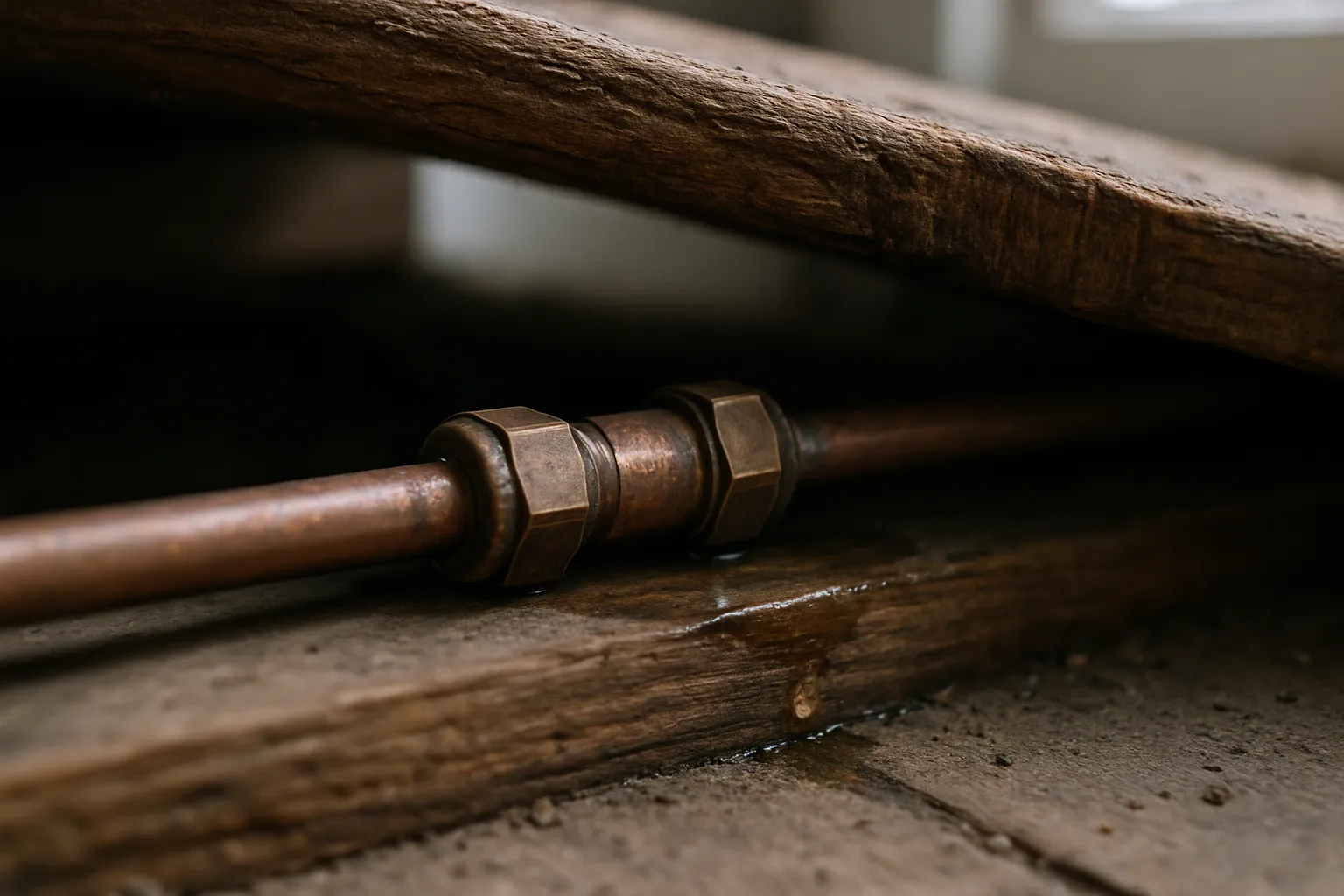
Why You Can’t Always See a Central Heating Leak
A dripping radiator valve is easy to spot. The central heating leaks that cause real headaches are the ones that leave no puddle on the floor — yet steadily drag your boiler pressure down from 1.5 bar to 0.5 bar overnight. If you keep topping up the system and the pressure keeps falling, there is almost certainly a leak somewhere. The question is where.
This guide covers the places those leaks hide and what you can do before a plumber arrives.
How a Hidden Leak Differs from an Obvious One
Visible leaks drip onto a surface you can see. Hidden central heating system leaks do one or more of the following:
- Seep slowly into a concrete screed or timber subfloor and evaporate before surfacing
- Weep from a valve seat rather than the joint, soaking insulation or a joist before anyone notices
- Drip into a ceiling void, appearing only as a damp patch weeks later
- Occur in a microbore pipe that runs inside a wall chase, where even a pinhole causes a significant pressure loss over 24 hours
The common thread: the system loses pressure, but there is nothing obvious to find.
The Most Common Hiding Places
Under Suspended Timber Floors
Older TW-area properties — Victorian and Edwardian terraces in Twickenham, Richmond and Isleworth in particular — often have heating pipework running through the void beneath ground-floor floorboards. A small leak here can soak the subfloor for months before any staining appears at skirting level. If your pressure drops and your ground floor feels slightly springy underfoot, this is worth investigating.
Beneath Concrete Screeds
Homes built from the 1960s onwards frequently have underfloor pipework buried in a sand-and-cement screed. A pinhole in copper or a failed joint in older plastic pipe can weep continuously into the screed. The floor surface may feel warm in one spot even when the heating is off — that warmth is your lost water.
Radiator Valve Seats and Spindles
Thermostatic radiator valve (TRV) bodies can develop internal weeps at the valve seat. The leak travels down the spindle and soaks the valve body insulation or drips behind the radiator, hidden by the shroud. Run your finger behind each TRV body and check the insulation around the valve body itself.
Pump Seals and Manifold Connections
The circulation pump and any manifold connections in an airing cupboard or plant room are under constant pressure. Pump seal failures often produce a very slow weep that evaporates off the pump casing before it reaches the floor. Look for white limescale deposits or rust staining on the pump body — both are signs of a past or current micro-leak.
Microbore Pipework Joints
15 mm and 22 mm pipe is common, but many 1970s and 1980s systems used 8 mm or 10 mm microbore copper. The olive-and-compression fittings used on microbore pipe are prone to work-hardening and can develop hairline leaks at the olive seat. These are almost invisible to the naked eye but enough to drop pressure by 0.5 bar over 12 hours.
What to Check Before Calling
You do not need tools to do a useful first check. Work through this list and note what you find — it will help the plumber diagnose faster.
- Record the pressure at the boiler gauge morning and evening for two days. Note how fast it falls.
- Check every visible joint and valve — use dry tissue paper rather than your finger, as it shows the smallest moisture.
- Feel along skirting boards on ground-floor rooms for any softness or dampness.
- Look for ceiling stains in rooms below first-floor pipework runs.
- Check the condensate trap and overflow pipe on the boiler — these are sometimes mistaken for a system leak.
- Do not keep topping up the system repeatedly. Constant inhibitor dilution accelerates corrosion, and masking the pressure loss makes diagnosis harder.
When to Stop Investigating and Call Immediately
Call 07360 268948 straight away if:
- Pressure drops below 0.5 bar and the boiler locks out
- You see any water near an electrical consumer unit, sockets or light fittings
- A ceiling is bulging or visibly wet
- You can hear running water inside a wall or floor with the heating pump switched off
- The property is unoccupied and you cannot monitor it
What a Plumber Will Do
A plumber attending a suspected hidden central heating leak will typically pressurise the system and isolate sections to localise the fault, use a thermal imaging camera or moisture meter to trace water movement through structure, and carry out a written record of findings — cause, photographs, moisture readings and scope of work. That record is yours to keep for your own purposes, including any insurance paperwork your insurer asks you to provide.
Reassurance
Hidden central heating system leaks feel alarming, but they are almost always fixable once located. The key is not to ignore a falling pressure gauge and not to keep topping up the system in the hope it will resolve itself — it will not. If you are in the TW postcode area and you cannot find the source, our team is available around the clock.
Call 07360 268948 any time — day or night.