Emergencies
Does Building Insurance Cover the Water Supply Pipe to Your House?
Who owns the supply pipe from the mains to your stopcock, who fixes it, and when buildings insurance is likely to cover the repair.
Published 24 July 2026
The Short Answer
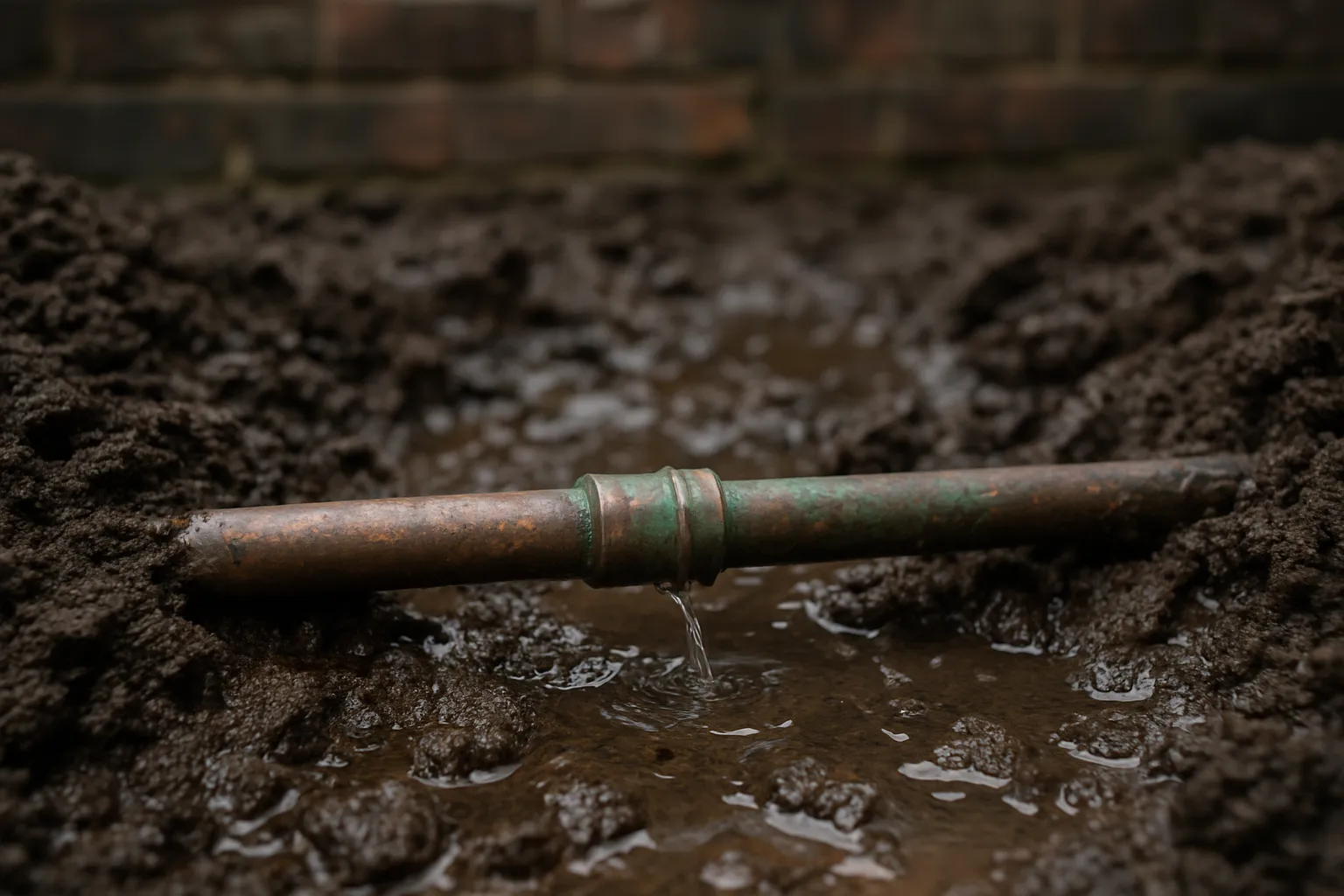
In most cases, yes — buildings insurance can cover damage caused by a burst or leaking supply pipe. But whether it actually does depends on your specific policy wording, the cause of the leak, and which section of pipe we are talking about. The ownership question is the key to understanding everything else.
Who Owns the Water Supply Pipe?
The water supply pipe runs from the water company’s main in the street all the way to your internal stopcock (usually under the kitchen sink or near the front of the house). This pipe is divided into two distinct sections with different ownership:
- The communication pipe — from the mains to the boundary of your property (often to the edge of the pavement or the boundary of your garden). Thames Water owns and maintains this section.
- The supply pipe — from your property boundary to your internal stopcock. You own this section. You are responsible for maintaining and repairing it.
This distinction matters enormously. If the leak is in the communication pipe, Thames Water should repair it at no cost to you. If the leak is in the supply pipe on your side of the boundary, the repair falls to you — and that is where buildings insurance becomes relevant.
When Does Buildings Insurance Usually Cover a Supply Pipe Leak?
Buildings insurance policies vary, but most standard policies cover sudden and unforeseen escape of water. A burst supply pipe — caused by, for example, ground movement or a sharp frost — would typically fall into this category.
Cover is more likely when:
- The damage was sudden rather than gradual
- There is traceable, physical damage to the pipe
- You can demonstrate the pipe was in reasonable condition beforehand
- You report the damage promptly and take steps to limit further loss
Cover is less likely when:
- The leak has been seeping slowly over a long period (gradual deterioration is usually excluded)
- The pipe has visibly corroded over time without being addressed
- The damage is attributed to wear and tear
Some policies also include trace and access cover, which pays for the cost of locating the leak and making good any excavation (such as digging up a path or garden). Check your policy schedule carefully — this is sometimes a separate section with its own limit.
What About Thames Water?
Thames Water offers a free leak repair scheme for supply pipes in some circumstances, particularly for vulnerable customers or where the pipe runs beneath a public footway. It is worth ringing them to check eligibility before assuming the cost is entirely yours. Their responsibility ends at the boundary, but their advice is free.
What to Do If You Suspect a Supply Pipe Leak
1. Check your meter
If you have a water meter, turn off every tap and appliance in the house and check whether the meter dial is still moving. If it is, water is escaping somewhere — possibly underground.
2. Look for signs
Unexplained wet patches in the garden, a sudden drop in water pressure, or a higher-than-usual water bill can all point to a supply pipe leak.
3. Turn off the internal stopcock
If you suspect an active leak, locate your internal stopcock and turn it off (clockwise) to stop water flowing into the property.
4. Call a plumber
A plumber can carry out a pressure test to confirm whether the supply pipe is leaking, locate the fault, and give you a written report detailing the cause, the location, and the scope of work needed.
5. Gather evidence for your insurer
Before any repair work begins, photograph the area thoroughly. Note the date and time you first noticed the problem. Keep any relevant bills or correspondence. Your insurer will typically ask for evidence of the cause and the extent of the damage — the more clearly documented, the better. A written report from your plumber, including photographs and moisture readings, is exactly the kind of record your insurer is likely to request. That report is yours to submit as part of your own claim.
What a Plumber’s Report Should Include
When you instruct a plumber to investigate a supply pipe leak, ask them to provide written documentation covering:
- The cause of the failure
- The location of the leak (including depth if underground)
- Photographs of the damaged pipe
- Any moisture readings taken
- The scope of remedial work carried out
This record belongs to you and supports your claim with your insurer. It is your evidence — keep it safe.
The Bottom Line
The supply pipe from your boundary to your stopcock is your responsibility. Buildings insurance often covers sudden burst or escape of water from this pipe, but gradual leaks and wear and tear are commonly excluded. Check your policy wording, speak to Thames Water about their schemes, and get a proper written report from a qualified plumber before you submit anything to your insurer.
If you have an active leak right now, do not wait. Turn off your stopcock and call us on 07360 268948. We cover the TW postcode area around the clock and can attend quickly, carry out the repair, and provide the written documentation you will need.