Emergencies
Why Is My Water Bill Suddenly So High? (Hidden Leak Checklist)
A sudden spike in your water bill often points to a hidden leak. Use this checklist to find the cause and act before the damage gets worse.
Published 29 June 2026
Why Is My Water Bill Suddenly So High?
A water bill that jumps without any obvious reason is one of the most reliable early warnings of a hidden leak. In many homes the leak is slow, silent, and completely out of sight — inside a wall, under a floor, or buried in the garden — yet it can waste thousands of litres a month and cause serious structural damage if left alone.
This guide walks you through a simple checklist you can work through yourself before calling a plumber.
Step 1: Rule Out the Obvious Causes First
Before assuming the worst, quickly check these straightforward explanations:
- Change in household size. Has someone moved in, or have you had guests staying?
- Seasonal use. A hot spell often means more showers, paddling pools, and garden watering.
- Billing period. Thames Water and other suppliers occasionally estimate rather than read your meter. Compare the number of days covered on each bill.
- New appliances. A recently installed dishwasher or washing machine may be running more cycles than you expect.
If none of these apply, it is time to look for a leak.
Step 2: Check Your Water Meter
This is the single most useful test you can do.
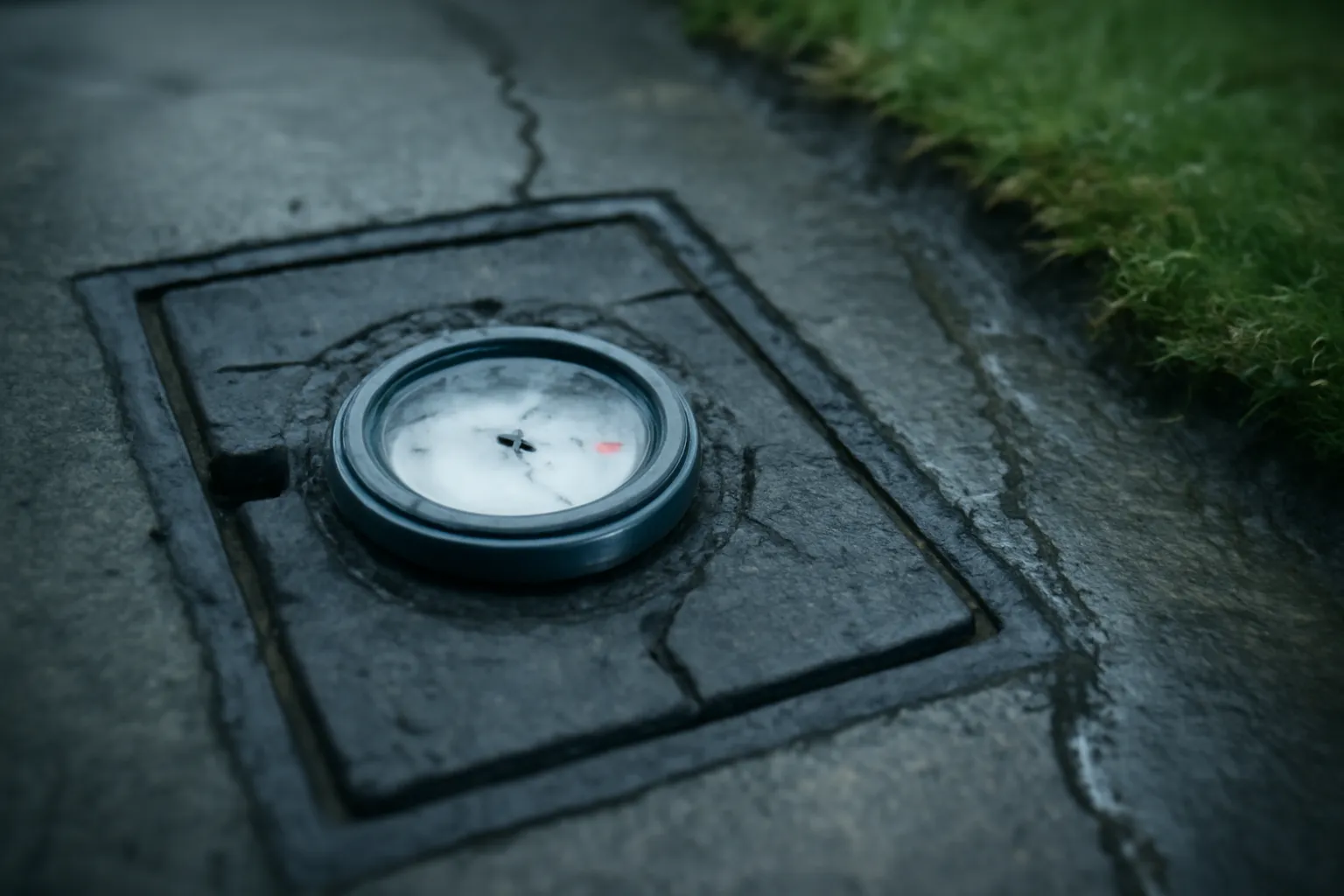
- Find your stop tap and meter — usually near the boundary of your property, under a small pavement cover, or inside a kitchen cupboard.
- Write down the meter reading.
- Do not use any water for at least two hours (overnight is better).
- Read the meter again.
If the number has moved and nobody used any water, you have a leak somewhere on your side of the supply pipe.
Step 3: Work Through the Hidden Leak Checklist
Toilets
A constantly running toilet is the most common source of unexplained water loss in UK homes. Remove the cistern lid and listen. Drop a few drops of food colouring into the cistern; if colour appears in the bowl within 15 minutes without flushing, the flapper valve is leaking.
Under sinks and vanity units
Open the cupboard doors and feel along the pipes and around the base of the cabinet. Damp wood, staining, or a musty smell all point to a slow drip.
Boiler and heating system
Check around the boiler casing, radiator valves, and any visible pipework in the airing cupboard. A small weep from a compression fitting can add up quickly over a billing period.
Garden taps and irrigation
Turn off every external tap and hose connection. If the meter reading still moves, the issue is indoors. If it stops, the problem is outside.
Supply pipe between meter and house
This section of pipe — often running several metres underground — is your responsibility as a homeowner. A leak here is invisible but can shift significant volumes of water into the soil daily. Signs include an inexplicably soggy patch of lawn, subsidence near the path, or a persistent damp smell in the hallway.
Hot water cylinder and tank
If you have a vented system with a cold water storage tank in the loft, check the overflow pipe on the outside of the house. If water is trickling from it, the ball valve inside the tank needs attention.
Step 4: Check for Damp Patches and Discolouration
Walk around every room and look at:
- Skirting boards (soft, swollen, or stained wood)
- Ceiling plaster (yellow or brown rings)
- Wall surfaces (bubbling paint or wallpaper lifting at the seams)
- Floor tiles (grout cracking or tiles lifting without impact damage)
Any of these alongside a high water bill is strong evidence of a leak inside the building fabric.
When to Call a Plumber Immediately
Some situations should not wait for a weekday appointment:
- The meter is moving rapidly with all taps off
- You can see or hear water running inside a wall or ceiling
- There is visible damp spreading across a ceiling below a bathroom
- Your water pressure has dropped noticeably at the same time as the bill rose
- You notice any sign of damp near your electrical consumer unit or fuse board
Leaving an active leak can lead to mould, timber rot, damaged plasterwork, and in the worst cases structural problems — all of which cost far more to put right than the plumber’s call-out.
What a Plumber Will Do
A qualified plumber can carry out a pressure test on your supply pipework to confirm whether a leak is present and roughly where it is. Trace-and-access work — finding and exposing the exact point of failure — is often covered by home insurance, so it is worth checking your policy before work begins.
Reassurance
A high water bill is alarming, but working through this checklist methodically usually narrows the problem down quickly. Many leaks, once found, are straightforward to repair. The key is not to ignore it — water finds its way into places that are expensive to dry out and restore.
If your meter is moving with everything switched off, or you can see or hear evidence of an active leak, call us now on 07360 268948. We cover the full TW postcode area — Twickenham, Richmond, Teddington, Isleworth, Hounslow, Feltham, Staines and surrounding areas — around the clock, every day of the year.