Maintenance
Should You Turn Off the Water When You Go on Holiday?
Find out why isolating your water supply before a holiday is one of the simplest ways to avoid a costly leak while you are away.
Published 1 July 2026
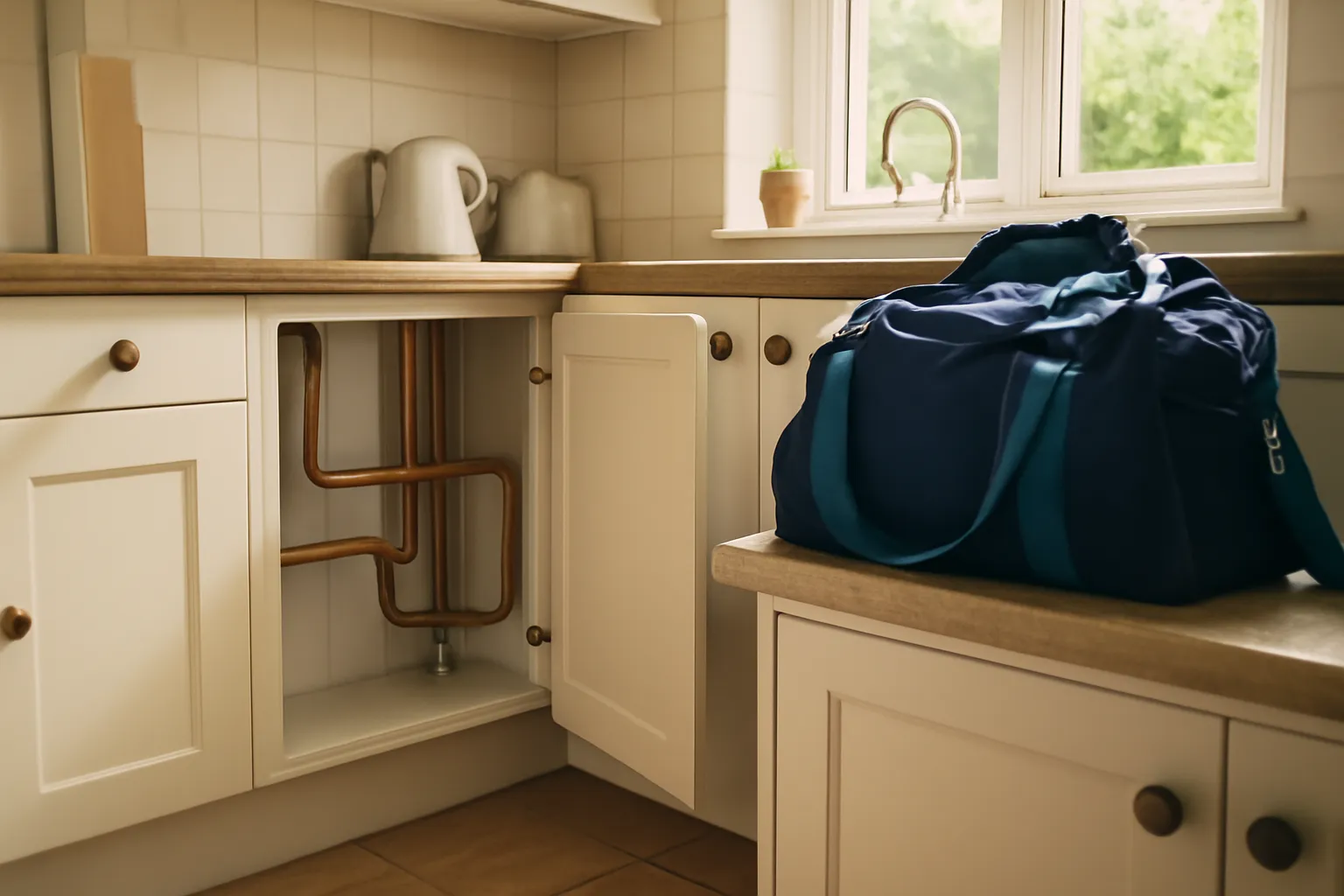
The Short Answer: Yes, Almost Always
Before you zip up your suitcase, turning off your home’s water supply takes about thirty seconds and could save you thousands of pounds. A slow leak or a burst pipe in an empty house can run for days before anyone notices — and by then the damage to floors, ceilings, walls and belongings is often far worse than the plumbing fault itself.
It is one of those jobs that feels unnecessary right up until the moment it very much is.
What Can Go Wrong While You Are Away
Pipes and fittings do not care that you are on a beach somewhere. Common causes of away-leaks include:
- Flexible hoses under sinks, behind toilets and feeding washing machines — these degrade over time and can fail without warning
- Washing machine inlet valves left under constant mains pressure
- Older compression fittings that have worked slightly loose over years of use
- Frozen pipes in winter if the heating is left off entirely
- Toilet fill valves that stick open and overflow
Even a modest drip at mains pressure can release hundreds of litres over a long weekend. A full hose failure can flood several floors in hours.
How to Isolate Your Water Supply Before You Leave
Step 1 — Find Your Stopcock
Your internal stopcock is usually under the kitchen sink, in a utility room or near the front door. Turn it clockwise until it stops. If it has not been moved in years it may be stiff; give it a gentle but firm turn rather than forcing it.
Step 2 — Open a Tap to Release Pressure
Open the cold kitchen tap and let it run until the flow stops. This releases residual pressure from the pipes. You do not need to drain every drop — just relieve the pressure.
Step 3 — Consider Draining Exposed Pipes in Winter
If you are travelling in colder months and leaving the heating off, water left sitting in pipes near external walls can freeze and expand. Either leave the heating on a low frost-protection setting (typically 7–10 °C) or drain the system more fully. A plumber can advise on the safest approach for your property.
Step 4 — Leave the Heating on Frost Protection
Even in summer, if the property will be empty for more than a week, a low background temperature keeps the building dry and prevents any residual moisture issues. In winter this step is essential.
When You Might Leave the Water On
There are a handful of situations where leaving the supply on makes sense:
- Someone is house-sitting and will be in the property regularly
- You have a combi boiler that needs a live supply to function and you are relying on a timer for heating
- You have fish, plants or other systems that require a water connection
Even in these cases, consider isolating individual supplies — turning off the valves under sinks and behind the toilet, for example — while leaving the main supply live for the boiler only.
The Away-Leak Nightmare: What Actually Happens
Insurers deal with escape-of-water claims every day. A typical scenario: a family returns from two weeks abroad to find a flexible hose under the bathroom basin failed on day three. Water has seeped through the bathroom floor into the kitchen ceiling below, warped the wooden flooring in between, and soaked into the plasterboard walls. The repair bill runs to several thousand pounds, the family is displaced for weeks, and the excess on the insurance policy still hurts.
The stopcock turn that would have prevented all of it takes half a minute.
Check Your Insurance Policy Too
Many home insurance policies include conditions around unoccupied properties — often requiring the heating to be maintained above a minimum temperature or the water to be turned off if the property is empty beyond a certain number of days (commonly 30 to 60 days, though this varies). Check your policy wording before you travel.
A Quick Pre-Holiday Plumbing Checklist
- Stopcock turned off and tested
- Cold tap opened to release pressure
- Flexible hoses under sinks and behind toilets checked for bulging or corrosion
- Heating set to frost protection (especially in autumn and winter)
- A trusted neighbour or keyholder knows where the stopcock is
- Insurance policy conditions checked
If You Come Home to a Leak
If you return to find water damage or an active leak, turn off the stopcock immediately if it is safe to do so, switch off electricity in affected areas at the consumer unit, and call a plumber straight away. Do not delay — the longer water sits in a structure, the worse the secondary damage becomes.
If you are in the TW postcode area and you have come home to a plumbing emergency — or you want a quick check of your pipework before you travel — call Emergency Plumbers TW any time on 07360 268948. We are available 24 hours a day, seven days a week.