Maintenance
How to Winter-Proof Your Pipes Before the Cold Hits
Practical steps to winter-proof your pipes in the TW area — lagging, heating settings, outside taps and more — before the first frost arrives.
Published 30 June 2026
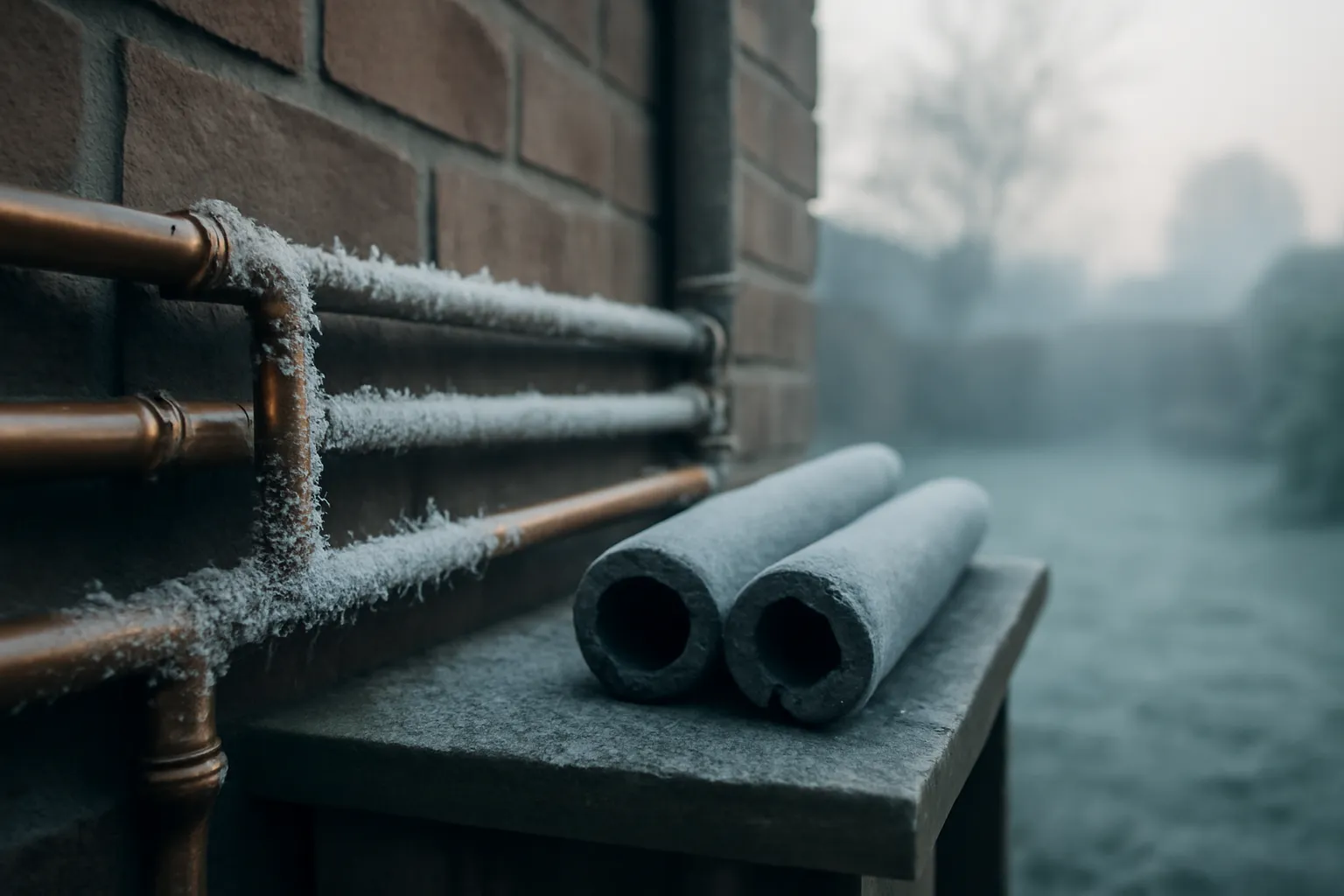
Winter-Proof Your Pipes Before the Cold Hits
A burst pipe is one of the most disruptive plumbing emergencies a homeowner can face — and one of the most preventable. Water expands as it freezes, and that pressure is more than most pipes can handle. A few hours of preparation in autumn can save you from a flooded ceiling, a ruined floor, and an emergency call-out in the middle of January.
Here is what to do before the cold weather arrives.
1. Lag Your Pipes
Pipe lagging (foam insulation sleeves) is cheap, widely available at DIY stores, and straightforward to fit. Prioritise these areas:
- Loft and roof space — pipes here are most exposed to freezing air
- Garage and outbuildings — often unheated and overlooked
- Under suspended floors — draughty and cold in older TW-area properties
- Pipes running along external walls — these cool down fastest
Cut the foam sleeves to length, open them along the split, and press them around the pipe. Secure the joins with tape. Even a thin layer makes a significant difference.
What about the boiler doom pipe?
The condensate pipe on a condensing boiler runs outside on many installations. It is a common culprit in cold snaps — when it freezes, the boiler shuts down. Lag this pipe with waterproof outdoor-grade insulation and make sure the lagging is sealed at both ends.
2. Keep the Heating on Low When You Are Away
Turning the heating off completely when you go away in winter is a false economy. A frozen and burst pipe will cost far more than a few extra days of low-level heating.
The rule of thumb: set your thermostat to no lower than 12–13 °C when the property is unoccupied. This keeps the fabric of the building — and the pipes within it — above freezing even on the coldest nights.
If you have a smart thermostat, use the frost protection or holiday mode. If not, set the programmer to come on for a short period morning and evening.
3. Drain and Isolate Outside Taps
Garden taps are directly exposed to the elements and are a very common source of winter pipe damage.
Steps to winterise an outside tap:
- Turn off the isolating valve inside the house (usually under the kitchen sink or in a cupboard near the tap).
- Open the outside tap fully to release any remaining water in the pipe.
- Leave the tap in the open position over winter so any residual moisture can drain away.
- Fit an insulating tap cover — available at most hardware shops for a few pounds.
If your outside tap does not have an internal isolating valve, it is worth having one fitted before winter. It is a small job for a plumber and gives you proper control.
4. Know Where Your Stopcock Is
This is not a winter-proofing task as such, but it is essential preparation. If a pipe does freeze and then burst, the first thing you need to do is turn off the water supply.
Find your internal stopcock now — typically under the kitchen sink, in a utility room, or under the stairs — and make sure it turns freely. Stopcocks that have not been moved in years can seize up. Give it a quarter-turn open and back again to keep it operational.
Write the location down and make sure everyone in the household knows where it is.
5. Check for Draughts Near Pipework
Cold air getting into a loft hatch, a gap around a pipe where it enters through an external wall, or a broken air brick can be enough to freeze a nearby pipe on a very cold night.
- Seal gaps around pipes where they pass through walls with expanding foam or silicone
- Ensure loft hatch insulation is in good condition
- Check that any ventilation bricks in older properties are not directing cold air directly onto pipework
6. Look After Unoccupied Properties
If you own or manage a property that will be empty over winter — a holiday let, a property between tenants, or a second home — consider draining down the system entirely if the heating will not be running. Turn off the water at the stopcock, then open taps at the lowest and highest points of the property to drain the pipes.
If in doubt, ask a plumber to carry this out properly. An empty property with a burst pipe can sustain serious damage before anyone notices.
When Prevention Is Not Enough
Even with the best preparation, a severe cold snap can catch pipes out — particularly in older properties with limited insulation. If you come home to no water, or suspect a pipe has frozen, act carefully and quickly. Never use a naked flame to thaw a pipe; a warm air gun or hot water bottle applied gently is safer.
If a pipe has already burst, turn off the stopcock immediately, turn off any electrical circuits that may be affected by water, and call a plumber.
Emergency Plumbers TW are available 24 hours a day, 7 days a week across the TW postcode area — including Twickenham, Richmond, Teddington, Hounslow, Feltham, Staines and surrounding areas. Call us any time on 07360 268948.
A little preparation now goes a long way. Get the lagging on, sort the outside tap, and you can face the winter with considerably more confidence.